North Central IPM Center Updates
Stay informed with the latest news from the Center with the stories below. Be sure to share your favorites!
2026 Funds Available
The North Central Integrated Pest Management (IPM) Center has funding available for 2026 projects related to integrated pest management. Applicants may request a maximum of $30,000 per project.
Projects may focus on creating working groups, forming partnerships, researching emerging pests or increasing IPM activities in the region. More details are available on the North Central IPM Center website. Applications are due on Monday, December 1, 2025, at 6 pm ET (5 pm CT).
Other regional IPM centers also have grant opportunities available:
Southern IPM Center: RFA is available now; applications are due Friday, Nov 21.
Western IPM Center: RFA is available now; applications are due Friday, Dec. 5.
Webinar Recording: IPM Strategies for Reducing Insect Pest Damage in Midwest Blueberries
New monitoring and management methods are available for spotted-wing drosophila (SWD). Learn about the new, cheap and easy method for detecting SWD larvae, which helps you know when to begin spray applications. In addition, two parasitoid wasps are helping to control SWD populations.
More details are shared by Dr. Rufus Isaacs, professor and extension entomologist at Michigan State University in this webinar: “IPM Strategies for Reducing Insect Pest Damage in Midwest Blueberries.”
The goal of this work is to help farmers reduce the need for pesticides while avoiding development of insecticide resistance in SWD.
November Webinar: Spying on Insects with the Insect Eavesdropper
Explore the hidden world of insect communication and feeding behavior! Dr. Emily Bick, assistant professor from the University of Wisconsin-Madison will share details about how advanced contact microphones were attached to plants in order to capture the vibrations and sounds of insects.
The Insect Eavesdropper detects insects and then uses AI to identify and count them, making scouting easier and allowing for ideal timing of management efforts.
This webinar qualifies for 0.5 CCA Integrated Pest Management CEU for live attendees.
The next Pests and Progress webinar will be held on Wednesday, November 19, 2025, at 1:00 pm ET (12:00 pm CT). Pests and Progress webinars are free, and you must register to attend. More details are on the North Central IPM Center website.
Recent War Against Weeds Podcasts
- Canola
Interviewees: Dr. Breanne Tidemann from the Agriculture and Agrifood Canada and Dr. Mike Cowbrough from University of Guelph - Wheat Gene Flow
Interviewee: Dr. Allan Fritz from Kansas State University - Cytochrome P450s with Dr. Todd Gaines
Dr. Todd Gaines from Colorado State University. - The HERMON Project
Interviewee: Dr. Eric Patterson from Michigan State University.
Recent I See Dead Plants Podcasts
- The IPM Triangle: Making a Plan to Use Integrated Pest Management
Interviewee: Dr. Adam Ingrao from Michigan State University. - A New Threat to Cotton: The Cotton Jassid
Interviewees: Dr. Isaac Esquivel from the University of Florida and Dr. Phillip Roberts from the University of Georgia. - Blightmare on Stem Street: Alfalfa Bacterial Stem Blight
Interviewee: Dr. Deb Samac from the USDA Agricultural Research Service.
IPM Highlights
Here’s interesting stories related to progress in integrated pest management.
Funding Available from North Central SARE
The North Central Region Sustainable Agriculture Research and Education Program (NCR-SARE) has several funding opportunities available:
- Professional Development Grant. Receive up to $120,000 per award. Deadline: Nov. 5, 2025.
- Partnership Grant. Receive up to $50,000 per award. Deadline: Nov. 20, 2025
- Farmer Rancher Grant. Receive up to $30,000 per award.
Deadline: Dec. 4, 2025 - Research and Education Grant. Receive up to $250,000 per award.
Deadline: Dec. 4, 2025.
IPM Institute Rallies Support for Smarter, Safer Pest Management
The IPM Institute of North America is advocating for integrated pest management (IPM) as a means of reducing the use of pesticides while protecting farmers, consumers, and the environment.
The Institute has created a letter to be shared with Secretary Kennedy and Secretary Rollins, and is currently collecting signatures to demonstrate the efficiency of building on current IPM infrastructure.
Preparing for Next Season
Get ready for next year with these learning opportunities.
Birds enjoy eating grapes as much as we do and fortunately, there are multiple options available to protect grapes from birds. Some are expensive, such as covering the plants with netting. Visual methods, such as kites or streamers, and loud sounds can help deter birds for awhile. The cheapest option is a non-toxic chemical bird repellant.
Manage Next Year’s Strawberry Weeds this Fall (June-Bearing Focus)
Implementing weed-control strategies in the fall can help save you time in the spring. Prevent weeds from spreading seeds by removing them in the fall. You may also want to use mulch, apply pre-emergent herbicides or cultivate between strawberry rows.

FDA Announces Conditional Approval of Screwworm Drug
New World screwworm populations are approaching the US/Mexico boarder, and farmers are eager to have options for treating cattle when they are infested with larvae. The U.S. Food and Drug Administration has conditionally approved an injectable treatment called Dectomax-CA1 to prevent and treat “serious or life-threatening disease” associated with screwworm infestations.
Resources
Read, use or share the latest IPM resources.
Beech Leaf Disease Invasive Species Fact Sheet
This fact sheet from Cornell’s Integrated Pest Management program describes the causes and symptoms of beech leaf disease along with management options. Details about the leaf gall nematodes that spread the disease are also included.
According to EDDMapS, beech leaf disease has been confirmed in two North Central states: Michigan and Ohio.
Organic Agronomy Training Service (OATS) Self-Paced Courses
The Organic Agronomy Training Service provides educational support about organic methods to agronomists, certified crop advisors, extension agents, and technical service providers.
Check out this bundle of video courses that will help you learn about organic methods. Many are free!
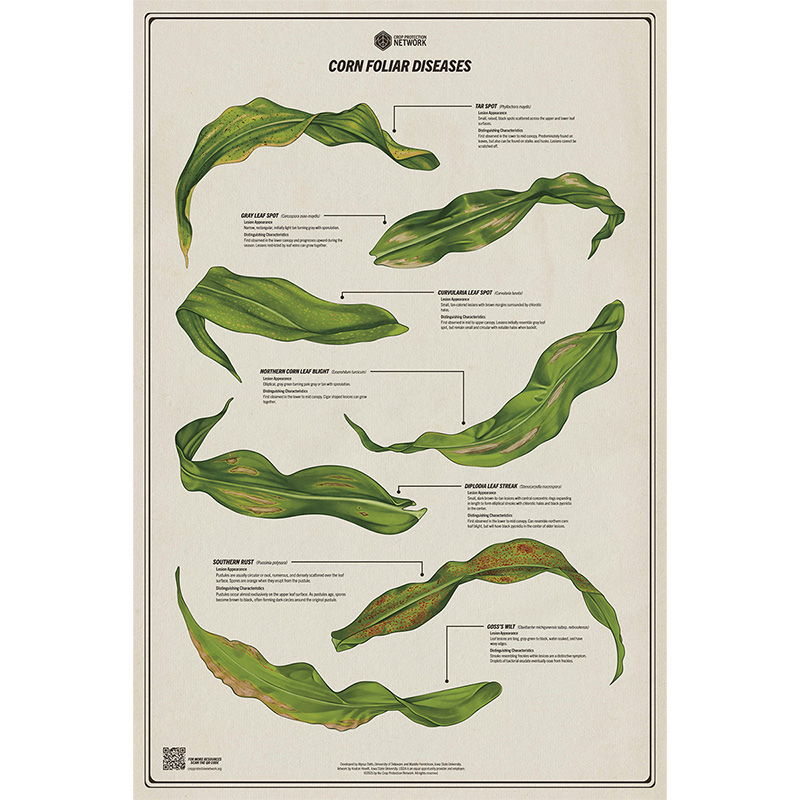
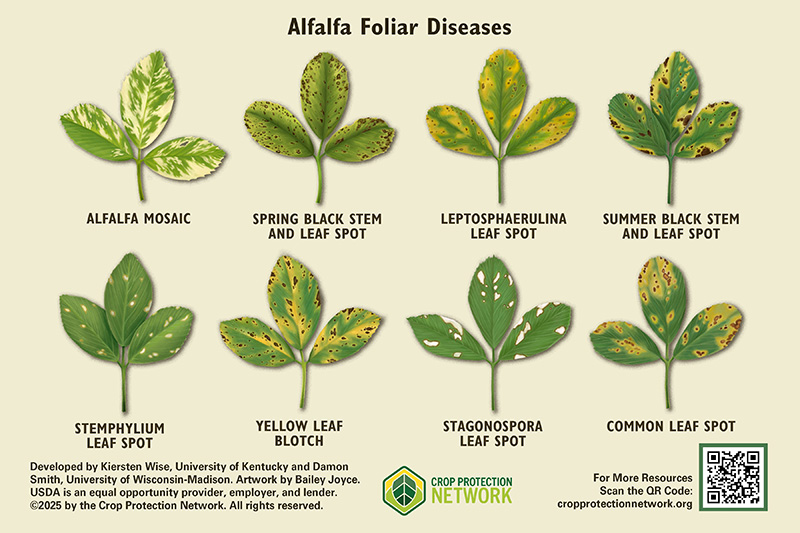
Corn and Alfalfa Foliar Disease Diagnostic Posters Now Available for Download!
Have an empty wall? Fill the gap with one or two educational posters created by the Crop Protection Network.
One highlights seven common foliar diseases in corn, and the other poster covers eight alfalfa diseases. Postcard versions are also available.
Advances in Biocontrol of Crop Insect Pests
While biocontrols provide opportunities to decrease the use of pesticides and focus management efforts on target species, the field is growing rapidly. This publication called, “Advances in Biocontrol of Crop Insect Pests,” includes 312 pages of detail about using biocontrols effectively.
A detailed table of contents will help you decide whether this resource is useful. Be sure to check your university’s library before you purchase.