
Webinar Recording: Spying on Insects with the Insect Eavesdropper
In the “Spying on Insects with the Insect Eavesdropper” webinar, Dr. Emily Bick, an assistant professor at the University of Wisconsin–Madison, shared her vision for digital entomology—using technology to learn about how insect populations move and change in space and time so this information can be used to make better, data-driven decisions in agriculture.
Dr. Bick explained that models are only as good as the data that go into them, and she wondered how to collect better, more detailed data.
Dr. Bick initially formed a partnership with Innovation Fund Denmark to track insects flying through infrared light beams using LIDAR. The system was effective, but it only captured insect movement in one location within the field, and even this was expensive at $30,000 per unit.
Enter the Insect Eavesdropper
As Dr. Bick looked for ways to make the technology cheaper, she began to experiment with a different strategy: listen instead of look. Dr. Bick’s team connected four microphones to a sound card and a small computer and protected it with a 3-D printed case. A solar panel powers the device, which is able to record sounds for a long time.
The Insect Eavesdropper is much more affordable at about $120 per device. So far it has been used to capture data at 30 different sites. This technology is patented but is available for free for academic purposes.
Now that sounds can be easily recorded, work has begun to learn what the sounds mean. Sounds from plants with an active insect were compared to sounds from a plant without insect pests to determine which sounds might come from the plant itself. Moving microphones outdoors introduces a number of additional background noises that must be filtered out.
Noises that remain are examined and identified. Tapping sounds different from munching or sucking, allowing the team to distinguish between different insect pests. The Insect Eavesdropper is still quite new so stay tuned to hear more about this innovation and how it makes scouting easier and improves management decisions.
Presenter
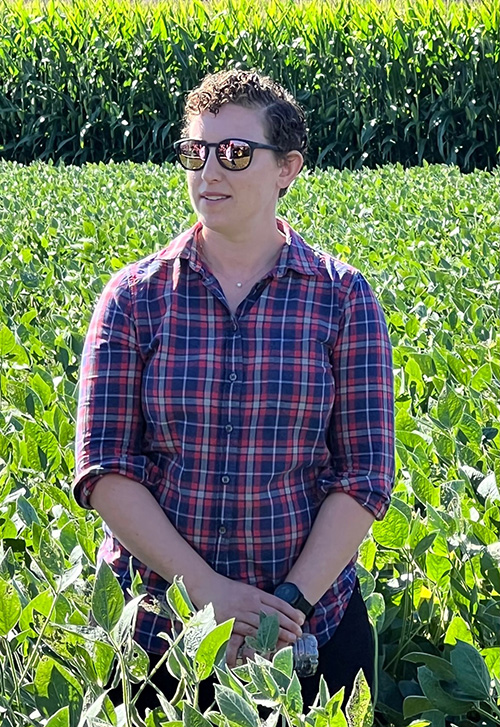
Assistant Professor
University of Wisconsin-Madison