North Central IPM Center Updates
Stay informed with the latest news from the Center with the stories below. Be sure to share your favorites!
Webinar Recording: Spying on Insects with the Insect Eavesdropper
After noting that insect-movement models are only as strong as the data that built them, Dr. Emily Bick, an assistant professor at the University of Wisconsin–Madison, was inspired to come up with a better data collection method.
Dr. Bick partnered with Innovation Fund Denmark to create a device that tracked insect movements through infrared beams. Even though it worked, this method was not practical for large-scale monitoring. Next, Bick wondered if it would be possible to track insects even in areas we cannot see, such as underground.
Now Dr. Bick’s team has developed the Insect Eavesdropper, a low-cost device that uses microphones attached to plant stalks, a sound card, and a small computer to record sounds coming from the plant. Then the sounds are analyzed to remove background noise and determine which sound patterns come from insect damage.
The Insect Eavesdropper not only allows detection of insect feeding, the sound patterns can even be used to distinguish between different types of insect.
Watch the full webinar to learn more about the Insect Eavesdropper and opportunities for using it to improve insect detection and management decisions.
Join the Suction Trap Network: Help Track Airborne Crop Pests
The Suction Trap Network is looking for new collaborators in the Southern United States!
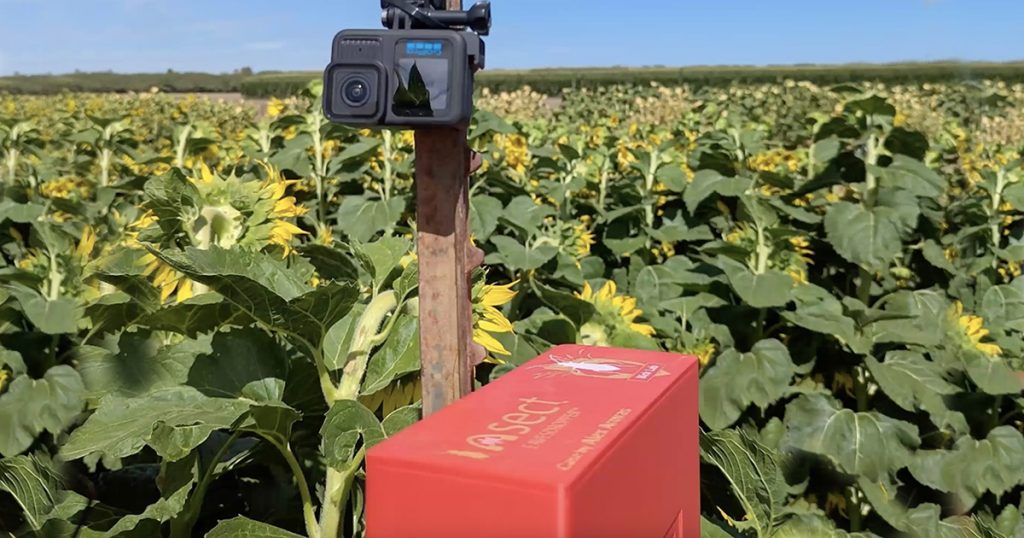
If you are passionate about pest monitoring and looking for a meaningful way to get involved, join the Suction Trap Network, a coordinated, multi-regional effort to collect real-time data on aerially dispersed insects, including aphids, parasitoid wasps, other important crop pests, and beneficial insects.
Email Dr. Doris Lagos-Kutz, entomologist from the Illinois Natural History Survey.
War Against Weeds Podcasts
- Group 5 Herbicides
Interviewees: Dr. Aaron Hager from the University of Illinois and Ryan Henry from UPL Corp - Redvine
Interviewee: Dr. Jason Bond from Mississippi State University
New Episodes—I See Dead Plants Podcasts
- Alternate Hosts: Was Ergot To Blame For The Salem Witch Trials?
Interviewees: Dr. Madeline Henrickson and Dr. Chelsea Harbach from Iowa State University - Dr. Doom’s Crash Course in Ag Economics part 1
Interviewee: Dr. Chad Hart from Iowa State University - Dr. Doom’s Crash Course in Ag Economics part 2
Interviewee: Dr. Chad Hart from Iowa State University
IPM Highlights
Here’s interesting stories related to progress in integrated pest management.USDA Announces Opening of Sterile Fly Dispersal Facility in Mexico
A new sterile fly dispersal facility in Tampico, Mexico, will help slow the spread of New World screwworm. The USDA is adding the Tampico facility to provide aerial dispersal of sterile screwworm flies across northeastern Mexico. Previous dispersals in this area were done using ground-release chambers, which have a limited dispersal range. Aerial sterile fly dispersals are already being used in southern Mexico, and adding a northern aerial dispersal site is important as screwworm populations expand toward the US border. Learn more about efforts to manage screwworm in Mexico. The February 2026 “Pests and Progress” webinar will include details about engineering fly strains for genetic control programs of screwworm. Registration is open, and more details will be available in January.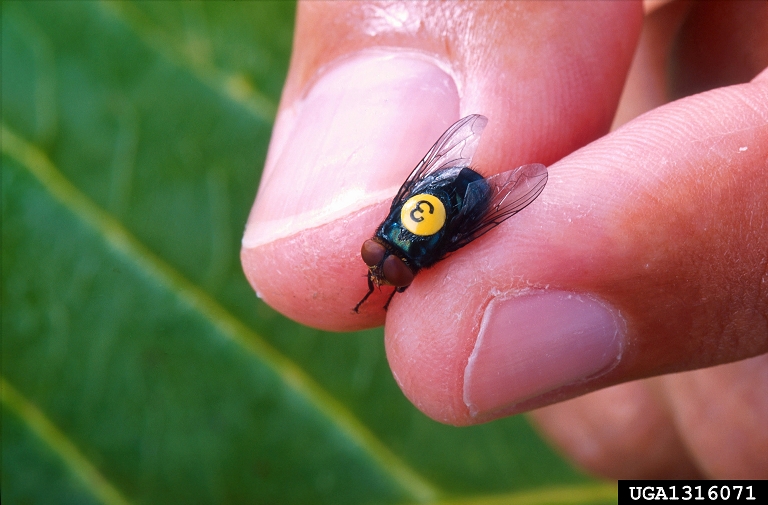
Increasing Resource Conservation Through Adoption of Integrated Pest Management 595 Conservation Practice Systems
Be sure to share this opportunity to learn the basics of integrated pest management (IPM). The free webinar called, “Increasing Resource Conservation Through Adoption of Integrated Pest Management 595 Conservation Practice Systems,” will be held on Wednesday, December 17, 2025, from 1:00 to 2:00 p.m. ET (12:00 to 1:00 p.m. CT). This webinar will describe how IPM strategies can be incorporated into the Environmental Quality Incentives Program (EQIP) and other Natural Resources Conservation Service (NRCS) programs to address concerns to address concerns about plant health, water, air and biodiversity. Presenters will use specific examples based on real world experiences to explain how NRCS and conservation district staff, land grant scientists, extension agents, and crop consultants can work together to support development and use of the 595 Conservation Practice Standard. Since this webinar is being offered by the Science Societies, you will need to create a free membership account before you register. A continuing education unit in IPM is available for live attendees.A New Approach to Measuring and Incentivizing Sustainability in Pest Management
Two graduate students at North Carolina State University, Madison Love and Liz Kreick, have co-authored companion papers in Frontiers in Insect Science and Frontiers in Agronomy. These papers propose a new approach for measuring and incentivizing sustainability in pest management. The first paper is focused on measurement and is called, “Tracking Sustainability in Crop Pest Management in the United States Using an Eco-efficiency Index.” This paper describes a national eco-efficiency index, which is the ratio of agricultural productivity to the total toxicity of applied pesticides. Data from 1992 to 2018 and from ten major U.S. crop groups were used to test the index. Results demonstrate that this index can serve as a data-driven sustainability metric to evaluate pesticide risk reduction, guide integrated pest management (IPM) research and extension priorities, and inform policy decisions. The second paper, called “Can We Resolve the Pesticide Quandary with Eco-Efficiency Metrics?” focused on supporting the transition between pesticide use and other management practices. The pesticide quandary describes the situation where use of pesticides to control an insect, disease or weed, leads to resistance and the need for increased pesticide use to achieve the same control. This new paper describes the lack of standardized, outcome-based metrics that would support adoption and funding of additional management options as part of an IPM program. The authors explore the idea of eco-efficiency scoring, which can be used in decision-support tools, certification systems, and incentive programs to expand the use of IPM techniques.Preparing for Next Season
Get ready for next year with these learning opportunities.
Elm Zigzag Sawfly Webinar
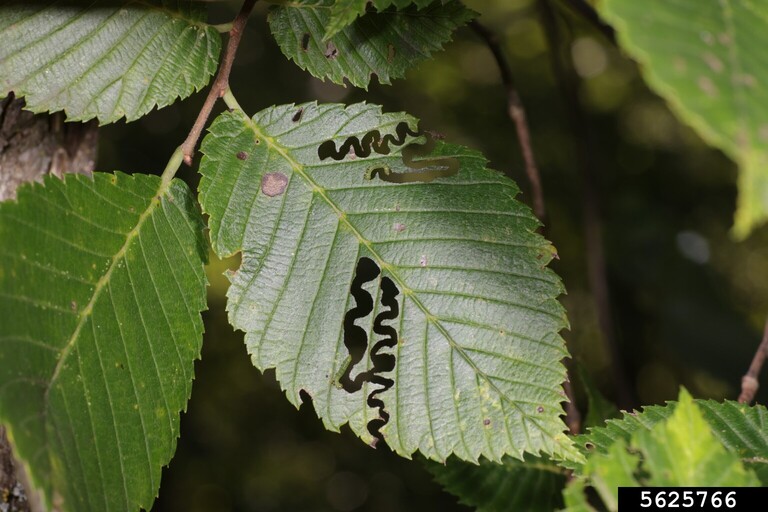
Learn about the elm zigzag sawfly during this webinar called, “I Know What You Did Last Summer: Spread, Impact, and Management of Elm Zigzag Sawfly.”
Dr. Kelly Oten, from North Carolina State University will share details about this sawfly on Tuesday, December 2 from 10 to 11 a.m. ET (9 – 10 a.m. CT). Be sure to register to attend.
Cattle Disease that Causes Anemia Spreading in Missouri
A disease caused by a protozoal organism called Theileria orientalis (ikeda) is spreading in Missouri. Recent outbreaks are linked to the Asian longhorned tick, a tick that prefers to feed on livestock.
In cattle, mild disease symptoms include elevated temperature, depression and pale mucous membranes. Severe cases can cause depression along with jaundiced mucous membranes around the eyes and the vulva.
The Missouri Department of Agriculture has a map of the counties where the disease has been confirmed. Management options for the disease are limited so the best option is to minimize spread of the Asian longhorned tick.

Planning Ahead: Use Research to Guide Fungicide Choices
As you review the disease issues you have encountered in your fields and prepare for the 2026 growing season, be sure to review the efficacy ratings of fungicide options to maximize disease control. Fungicide efficacy ratings are available for corn, soybean, wheat and alfalfa.
NDSU Extension to Host Getting It Right Crop Production Webinars
North Dakota State University Extension is hosting several webinars to share the latest research on agronomic best practices, pest and disease management, market forecasts related to corn, soybean, sunflower and dry beans. Each webinar will include a Q&A session.
These Zoom webinars are free, but registration is required.
Statewide Evaluation of Foliar Fungicides on Soybeans in 2025 in Iowa
In 2025, commercial foliar fungicides were tested in six Iowa locations to evaluate effectiveness of disease control and yield response on soybeans. Disease pressure during the growing season was relatively low, although cases of septoria brown spot and SDS were observed.
Under these low disease conditions, a few locations showed an increased yield where fungicides were used; however, these results were not consistent. To preserve efficacy of fungicide tools, farmers are encouraged to choose an integrated approach that combines crop rotation, use of resistant soybean varieties, and fungicides with multiple modes of action.
Resources
Read, use or share the latest IPM resources.New Infographics Describe Proper Versus Improper Use of Mothballs
Cooler fall weather encourages mice, rats, and voles to look for warm spaces, which often includes our homes. While many people have heard of using mothballs to repel these rodents, this approach is not effective and can have unhealthy consequences. Check out these infographics from the National Pesticide Information Center, and be sure to share them with your network: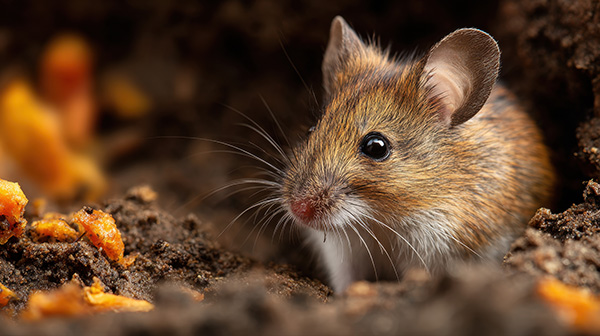
New Experimental Weed Emergence Scouting Tool
To be effective, herbicides need to be applied while weeds are in early stages of growth. The experimental Weed Emergence Scouting Tool (W.E.S.T.) was developed to help farmers estimate when weeds are likely to emerge based on growing degree day (GDD) modeling. Currently, the W.E.S.T. is focused on waterhemp and giant ragweed emergence, but the goal is to seek funding to expand predictions to other weeds.Evaluation & Logic Model Guides
A logic model is often part of a grant application process. The purpose of a logic model is to visually show the relationships between invested resources and activities, and the benefits and impacts that result from the funded efforts. A completed logic model includes the following sections: situation and priorities, inputs, outputs, outcomes, assumptions/external factors, and evaluation. Additional resources are available to help define these terms:- The University of Wisconsin-Madison has a logic model resource that explains logic model basics, along with layout suggestions.
- Also, the Southern IPM Center’s “Evaluation Resources” page has a section dedicated to logic model evaluation and planning tips.