
New Gulf Coast Tick Pest Alert Published
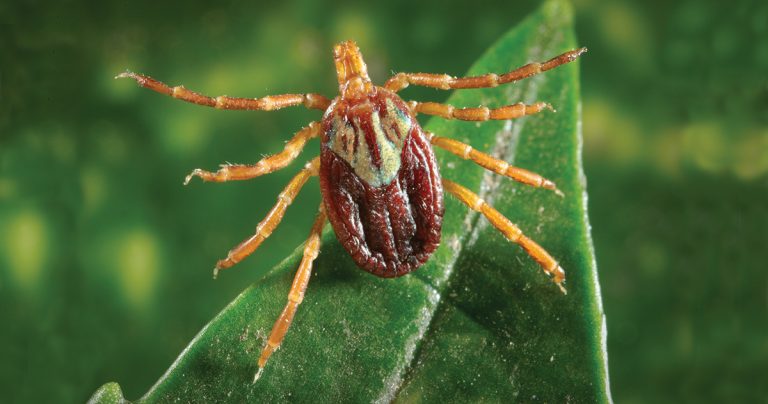
The pest alert explains how to distinguish the Gulf Coast tick from the similar-looking American dog tick by examining the tick’s mouthparts. While both ticks can have silvery-white markings on their backs, Gulf Coast ticks have long, narrow mouthparts.
Information about the tick’s two-year life cycle, preferred habitats and host animals at each stage of development are also described in the pest alert. Details about human and animal health concerns associated with the Gulf Coast tick are also included.
The Gulf Coast tick is the primary vector of Rickettsia parkeri, the bacterium that causes Rickettsia parkeri rickettsiosis, a spotted fever illness that is generally less severe than Rocky Mountain spotted fever. In rare cases, Gulf Coast ticks can also cause tick paralysis.
For animals, the Gulf Coast tick transmits the parasite responsible for American canine hepatozoonosis and has demonstrated the ability to transmit the pathogen that causes heartwater disease in livestock under laboratory conditions.
Practical recommendations for reducing tick exposure are also included. For example, maintaining short grass, creating landscape barriers between lawns and natural areas, using EPA-registered tick repellents, wearing protective clothing and performing thorough tick checks after spending time outdoors can all be helpful.
Guidance is also included for safely removing attached ticks using fine-tipped tweezers.
The Gulf Coast Tick Pest Alert is part of the North Central IPM Center’s growing collection of science-based pest alerts that provide timely, research-backed information on emerging pests affecting the North Central region and beyond.
Read the Gulf Coast Tick Pest Alert to learn more about identifying this expanding tick species, understanding the diseases it can transmit and protecting people and animals from tick bites.
The new Gulf Coast Tick Pest Alert includes identification tips, life cycle information, human health concerns, animal health concerns and management recommendations. Check out the Gulf Coast Tick Pest Alert for more information. Free printed copies are also available and may be requested with this online form.
This pest alert was authored by the Public Tick IPM Working Group and is available thanks to the Regional IPM Centers and funding generously provided by the USDA National Institute of Food and Agriculture, Crop Protection and Pest Management Program (2022-70006-38001).