Yellow-Legged Hornet Pest Alert Supports Georgia Eradication Efforts
The yellow-legged hornet is a new, invasive insect that was first found in Georgia in 2023. The Georgia Department of Agriculture has taken the lead to communicate with the public, set traps, and locate and eliminate nests. A new two-page summary is available to support outreach efforts and encourage the public to set traps and report sightings of the yellow-legged hornet.
Much like the northern giant hornets you may have heard about in 2020, yellow-legged hornets also seek out bee hives and feast on large numbers of honey bees. So far, yellow-legged hornets have been found in Georgia, and one adult was confirmed in South Carolina. It would be ideal to eliminate the yellow-legged hornet population before it spreads further.
Information about how to trap and monitor for yellow-legged hornets is available in this new resource. Spring is the best time to place traps for the yellow-legged hornet. Each trapped queen means thousands of hungry worker hornets are avoided. It is also easier to eradicate nests when they are smaller in the spring and early summer.
Since last year, nine yellow-legged hornet nests have been destroyed; in 2024, twenty-one queens have also been found.
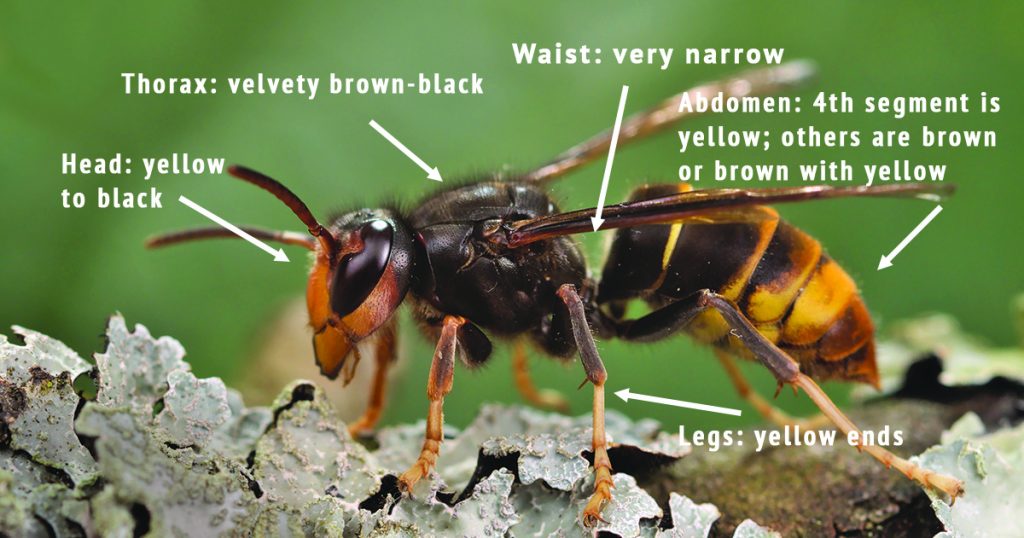
Bee keepers can help protect hives by placing traps and watching for hornets lurking close to hive entrances. Traps can easily be made at home using inexpensive materials, but they are likely to catch other wasps as well. Identification tips are available, and suspected sightings should be reported to the Georgia Department of Agriculture.
In addition to setting traps, the public can also help by watching for hornet nests in man-made structures and in trees. Some early nests can even be found in bushes, rocks or in the ground. Again, if a yellow-legged hornet nest is suspected, contact the Georgia Department of Agriculture. Bald faced hornet nests look very similar so it’s best to let professionals make the identification and proceed with eradication when needed.
For more information, read through this pest alert summary about the yellow-legged hornet. Free prints are available.
This pest alert is available thanks to the Georgia Department of Agriculture, the Regional IPM Centers and funding generously provided by the USDA National Institute of Food and Agriculture, Crop Protection and Pest Management Program (2022-70006-38001).