Webinar Recording: RNAi and Varroa Mites-New Technology for Managing an Old Pest
One of the most pressing challenges facing modern beekeeping is the relentless spread of Varroa mites and the search for effective management methods.
Beyond weakening individual bees, Varroa mites create a cascade of colony-wide problems. These mites weaken brood, spread harmful viruses within the hive, and contribute to winter colony losses.
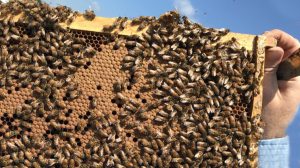
While several products are available to manage Varroa mites, some are becoming less effective as the mites develop resistance, and others lose efficacy in summer heat or cannot be used late in the season to avoid honey contamination.
Iowa State University researchers Dr. Matthew O’Neal and Jarod Perez have been using popular products like Amitraz to control Varroa in University hives, but they are trying out a new RNA interference (RNAi) product called Norroa in 2026.
In the recent webinar “RNAi and Varroa Mites: A New Technology for Managing an Old Pest of Honey Bees,” Dr. O’Neal and Perez described how this RNAi can target a specific biological process within the mite, providing precise pest control with reduced harm to bees and the environment.
Perez has just started using Norroa for mite management this year, but he shared that it is an easy and fast hive treatment. Another advantage is that Norroa is a useful control option regardless of hive temperature, even in summer heat.
Yet it’s important to apply Norroa at the correct time in order to for it to be effective. Norroa does not directly kill adult Varroa mites; it disrupts the breeding cycle and impacts the next generation. Thus it is most effective when mite levels are low.
In infected hives, Perez suggests applying a spring mite treatment first to reduce the Varroa population. Then use Norroa to keep mite numbers low. This process can be repeated in fall, if needed.
Learn more about current Varroa control methods, application timing, and how to add Norroa into your management protocol by watching the full webinar. Norroa research trials will continue this year, and additional results and tips will be available next year.
Presenters
Matthew O’Neal
Professor, H.A. Wallace Chair for Sustainable Agriculture, Iowa State University
Dr. O’Neal is an applied entomologist who conducts research to develop more economic and environmentally sustainable pest management solutions.
This includes exploring how RNAi-based technology can improve pest management, resulting in more selective pesticides. During the past 10 years he has also worked with honey bees to address the many challenges affecting beekeepers in the Midwest agricultural landscape.

Jarod Perez
Graduate Student Research Assistant, Iowa State University
Jarod Perez is a master’s student in the O’Neal lab at Iowa State University. His research has been focused on comparing honey bee colonies that use an agricultural practice called prairie strips against conventional beekeeping sites for honey production. Jarod has been working with honey bees for four years, and is interested in colony nutrition and Varroa management.