June 2026 Central Issue
Explore the June 2026 edition of the Central Issue, the monthly newsletter from the North Central IPM Center. Read about the latest integrated pest management (IPM) news, research, and educational resources.
This month’s issue features emerging pest alerts, pollinator health innovations, extension publications, webinars, podcasts, and practical strategies for managing insects, weeds, diseases, and invasive species. Explore the stories below to stay informed about the latest developments in IPM across agriculture, communities, and the environment.
Subscribe to receive the Central Issue newsletter monthly via email.
North Central IPM Center Updates
Stay informed with the latest news from the Center with the stories below. Be sure to share your favorites!
July Webinar: AI-driven Image Analysis for Increased Accuracy and Precision of Honey Bee Colony Health
Dr. Ashley St. Clair from Corteva Agriscience will highlight a new AI-driven technology that replaces subjective manual hive inspections with automated image analysis. These tools deliver more accurate and reliable data on honey bee colony health for critical environmental safety studies, setting a new standard for pollinator research.
This webinar qualifies for 0.5 CEU in IPM for Certified Crop Advisers.
This Pests and Progress webinar will be held on Wednesday, July 15, 2026, at 1:00 p.m. ET (12:00 p.m. CT). Pests and Progress webinars are free, and you must register to attend.
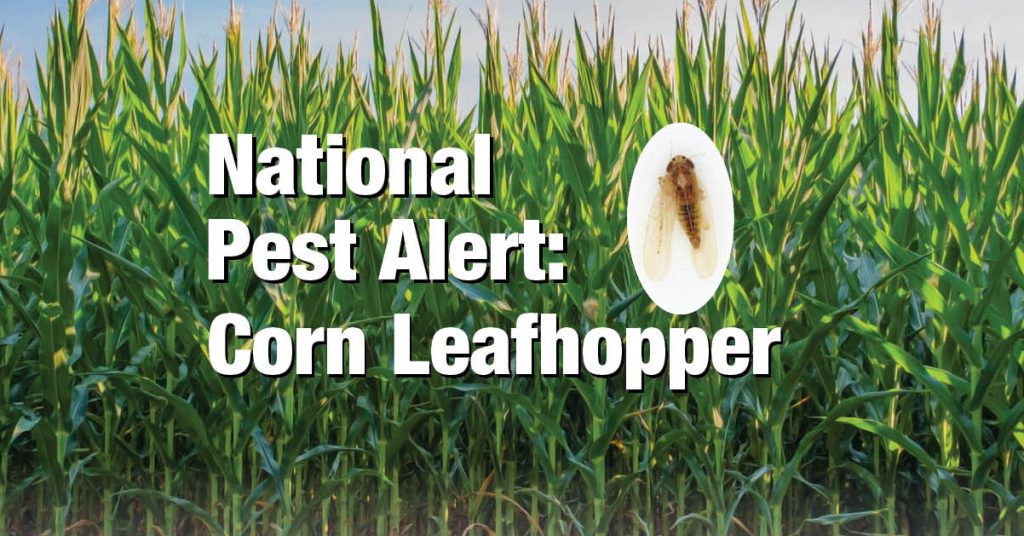
New Corn Leafhopper Pest Alert Published
Corn leafhopper (Dalbulus maidis) is a tiny, sap-feeding pest that transmits corn stunt diseases pathogens, which can reduce corn crop vigor and impact yields.
To help improve awareness and monitoring efforts, the Suction Trap Network and the Corn Leafhopper and Corn Stunt Working Group have created a new Corn Leafhopper Pest Alert.
This two-page factsheet is available online, and prints can be ordered for free. Whether you work in crop production, Extension, or pest management, this free resource can help you stay informed about this emerging threat and support timely detection and management decisions.
I See Dead Plants Podcasts
- Nematode Allies: Exploring Entomopathogenic Nematodes
Interviewee: Dr. David Shapiro-Ilan from the USDA-ARS - Attack of the Spray Drones! Part 1
Interviewee: Dr. Tom Wolf from Agrimetrix - Attack of the Spray Drones! Part 2
Interviewee: Dr. Tom Wolf from Agrimetrix - Seeing the Unseen: New Technologies for Studying Plant-Parasitic Nematodes
Interviewee: Dr. Sebastian Eves-van den Akker from the University of Cambridge in the United Kingdom
USDA Animal and Plant Health Inspection Service
Here’s the latest news from the USDA.
USDA Invests in Projects to Strengthen New World Screwworm Preparedness and Response
The U.S. Department of Agriculture is funding forty research projects to help combat New World screwworm. By improving detection, expanding sterile fly production, developing new treatments, and enhancing surveillance, the USDA hopes to prevent establishment and additional spread of this destructive pest.
The complete list of funded projects is available as a pdf.
USDA Natural Resources Conservation Service
Here’s the latest news from the USDA Natural Resources Conservation Service.
USDA Invests up to $310 Million in Partnership Projects to Boost Farm Operations and Conserve Natural Resources
The U.S. Department of Agriculture has $310 million in funding available through the Regional Conservation Partnership Program (RCPP), supporting collaborative projects that help farmers, ranchers, and forest landowners improve their operations through local conservation efforts.
Project proposals are being accepted through August 24, 2026, with funding available for initiatives that address soil health, water quality, wildlife habitat, and other natural resource concerns.
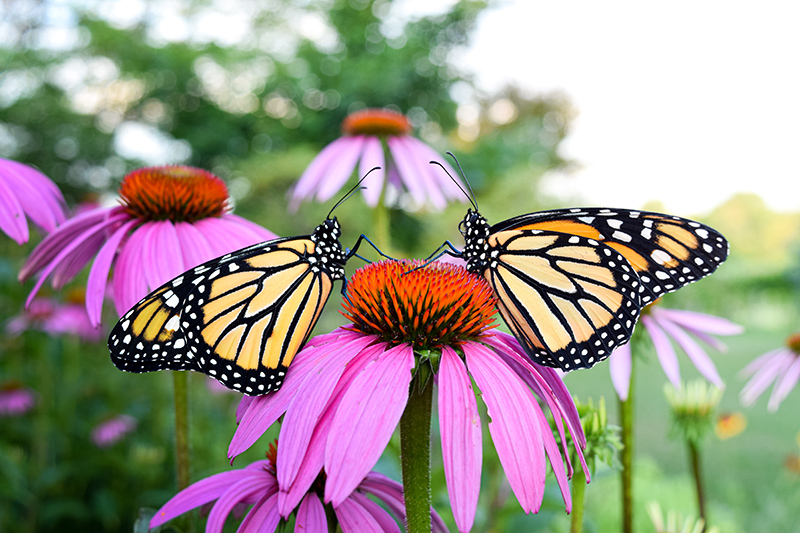
Pollinator Special Issue
Enjoy this collection of pollinator news.
Pollinator Champions
Michigan State University’s Pollinator Champions program offers a free, self-paced online course that explores why pollinators matter, the diversity of pollinator species, the challenges they face, and practical actions anyone can take to support them.
Through videos, articles, and interactive activities, participants learn about pollination, pollinator biology, habitat conservation, and pollinator-friendly pesticide practices. The course is open to everyone and can be completed at your own pace.
Your Hub for Illinois Pollinators
Looking for ways to help pollinators? The Illinois Pollinators website is a comprehensive resource filled with science-based information, practical gardening tools, and educational materials designed to help you create your own pollinator habitat.
One of the site’s standout features is its interactive Plant Selector Tool, which suggests pollinator-friendly plants based on bloom time, flower color, sunlight, moisture requirements, and other growing conditions.
You may also enjoy pre-designed pollinator garden plans, habitat design guides, community science opportunities, and educational resources that make it easy to turn any yard, garden, or landscape into a haven for pollinators.
In-Depth New Synthesis Confirms Prairie Strips’ Value for Pollinators
Small areas of native grasses and wildflowers integrated into corn and soybean fields consistently support more abundant and diverse pollinator communities, including native bees, monarch butterflies, and honey bees.
These “prairie strips” support honey bee colonies located nearby, allowing these colonies to collect more pollen, grow larger, and have better winter survival rates than colonies in other areas.
Balance is Key for Nurse Honey Bees’ Diets
Honey bees need more than just pollen—they need the right nutritional balance. In a recent study by researchers with the USDA Agricultural Research Service and Texas A&M University, nurse bees responsible for feeding developing larvae consistently preferred diets containing a specific balance of protein and lipids.
These findings suggest that nurse bees actively regulate their nutrient intake and stop feeding once they reach certain nutritional thresholds, highlighting the importance of balanced diets for colony health and development.
Supporting & Sustaining Bee Health
This impact report from the Multistate Research Fund highlights how researchers from land-grant universities across the country are working together to better understand the complex factors affecting both managed and wild bees.
Check out this summary learn how pesticide exposure, extreme weather, habitat loss, transportation stress, and changing landscapes can influence bee survival. Practical tips for helping pollinators thrive are also included.
IPM Highlights
Here’s interesting stories related to progress in integrated pest management.
Introducing: “This is IPM” Website
Looking for trusted, science-based IPM information in one place? The new “This is IPM” website serves as a collection of integrated pest management resources, success stories, educational materials, and outreach tools developed by IPM programs across the United States.
Designed for educators, researchers, pest management professionals, and the public, the site highlights how IPM protects crops, landscapes, homes, and public health through practical, sustainable pest management approaches.
One of the site’s most valuable features is its searchable Resource Database, a national aggregation of thousands of resources on insect, weed and disease pests. Users can search by pest, topic, or resource type to quickly find fact sheets, videos, training materials, outreach tools, and best management practices from universities and IPM programs nationwide.
Pests This Season
Stay informed and know which insects, diseases, and weeds are showing up in fields this season.
New World Screwworm: What You Need to Know
The New World screwworm, a fly whose larvae feed on living tissue, was found in Texas this month after being eradicated from the United States for decades.
This article from the University of Missouri Extension explains how New World screwworm spreads, what symptoms livestock owners should watch for, and the steps USDA, Food and Drug Administration, and state agencies are taking to protect animal health.
- Map of confirmed New World screwworm locations
- USDA resources for New World Screwworm
- Webinar about the Sterile Insect Technique for New World Screwworm Control
Insect Pest Alerts (WI)
Sign up for weekly insect text alerts to stay informed about which insect pests are emerging and active in Wisconsin fields. These texts will help you know when to scout for pests, and they also include relevant resources to help you prepare.
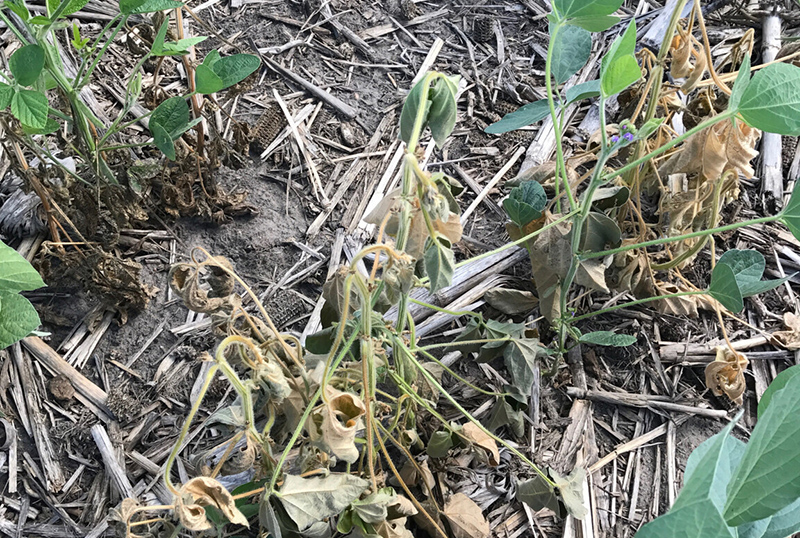
2026 Soybean Gall Midge Research Update
This update from University of Minnesota Extension includes details about soybean gall midge distribution and monitoring efforts, along with impacts on soybean production and yield. Options for management using biological controls and cultural control strategies are also described.
If you’re looking for a quick overview of soybean gall midge identification, scouting and management, this summary from Kansas State University is useful.
Japanese Beetles Ahead of Schedule in 2026
Japanese beetles emerged early in Iowa this year due to the warm spring weather. Resources for identification and management options are linked.
Making Fungicide Decisions for Corn and Soybean in 2026
While cases of tar spot are being confirmed in Nebraska, it’s too early to treat with fungicides. Be sure to consider crop growth stage, disease severity, weather conditions, and field history as you make fungicide decisions for corn and soybean this year.
Check out the full article for more tips along with a detailed map of 2026 tar spot observations.
Events
Learn and network at these upcoming in-person events.
Webinar: Utilizing Native Resistance from Wild Relatives for Integrated Insects and Disease Management in Sustainable Corn Production
August 5, 2026
1 p.m. ET (12:00 p.m. CT)
Speaker: Megha Parajulee, Texas A&M
North American Invasive Species Management Association Meeting
October 19-22, 2026
Alexandria, Virginia
Early registration prices are available now through August 31.
2026 Entomological Society of America
November 8 – 11, 2026
Columbus, Ohio
Early registration prices are available until September 14. The theme for the 2026 meeting is “Bridging Generations—uniting the wisdom of the past with the innovations of the future, all fueled by our shared passion for entomology.”
Job Board
Consider applying for these job opportunities.
Editor-in-Chief, Environmental Entomology, Entomological Society of America, remote
Lecturer – Online Entomology Program, The University of Nebraska–Lincoln, Lincoln, NE
Agronomist (Farm Manager), USDA -Agricultural Research Service – US Dairy Forage Research Center, Prairie Du Sac, Wisconsin
Research Geneticist, USDA Agricultural Research Service, Ames, Iowa
Entomologist, USDA, National Veterinary Services Laboratories, Ames, Iowa