January 2026 Central Issue
News stories shared in the January 2026 Central Issue appear below. Subscribe to receive the Central Issue newsletter monthly via email.
North Central IPM Center Updates
Stay informed with the latest news from the Center with the stories below. Be sure to share your favorites!
February Webinar: Genetic Biocontrol of New World Screwworm and Spotted Wing Drosophila
Dr. Maxwell Scott, a professor in the Department of Entomology and Plant Pathology at North Carolina State University, has been working to develop a way to suppress populations of the New World screwworm in the USA.
Dr. Scott’s efforts have led to a sterile insect technique (SIT), which involves mass rearing insects, sterilizing them using radiation and releasing them over a targeted area. A female New World screwworm that mates with a sterile male will not produce offspring.
To improve the efficiency of SIT, Scott’s team has developed methods for mass producing only sterile males for both New World screwworm and spotted wing drosophila. Dr. Scott will share this work, along with future technologies based on gene drive that promise to be a very efficient means for control.
This webinar qualifies for 0.5 CCA Integrated Pest Management CEU for live attendees.
This Pests and Progress webinar will be held on Wednesday, February 18, 2026, at 1:00 pm ET (12:00 pm CT). Pests and Progress webinars are free, and you must register to attend.
More details are on the North Central IPM Center website.
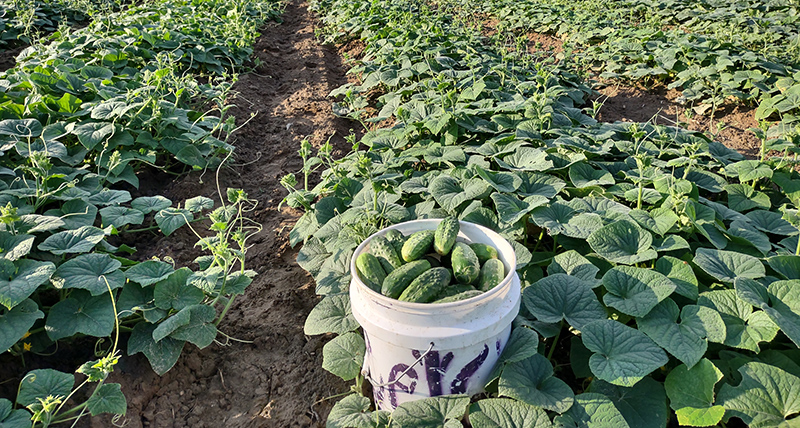
Webinar Recording: Breeding Efforts to Curb Cucurbit Downy Mildew
Learn about efforts to breed cucumbers, winter squash, and cantaloupe melons to improve resistance to cucurbit downy mildew without sacrificing flavor, fruit quality, or yield. Edmund Frost from Common Wealth Seed Growers has fine-tuned his breeding program with grant support Southern SARE and the Organic Farming Research Foundation.
Frost describes his hands-on, practical breeding process, which involves closely tracking individual plants, saving seed from top performers, and evaluating fruit for eating and keeping quality, yield, concentrated fruit set, and market traits like shape, size, and resistance to rot.
So far, the results are especially promising for winter squash and cucumbers. Two cucumber varieties—one pickler and one slicer—have emerged and are available for sale.
Progress with cantaloupes has been slower but steady, and Frost expects a new variety to be available soon.
Be sure to check out the full webinar to see the improvements that have been made in the disease-resistance varieties in terms of plant health and productivity.
War Against Weeds Podcasts
- Looking to the Future
Interviewees: Dr. Larry Steckel from the University of Tennessee and Dr. Aaron Hager from the University of Illinois
I See Dead Plants Podcasts
- Boring Problems? Managing the Dectes Stem Borer Part 1
Interviewee: Dr. Adam Varenhorst from South Dakota State University - Boring Problems? Managing the Dectes Stem Borer Part 2
Interviewee: Dr. Adam Varenhorst from South Dakota State University - Alternate Hosts: Lack of Chestnuts on an Open Fire
Interviewee: Dr. Danielle Mikolajewski from the University of Florida - Blights Get Sick Too: Chestnut Blight and Hypovirulence
Interviewee: Dr. Danielle Mikolajewski from the University of Florida
USDA Update
Here’s the latest news from the USDA.
USDA Identifies Research Priorities
Protecting American agriculture from invasive species has been confirmed as one of the five research priorities to be funded by the U.S. Department of Agriculture. The U.S. Secretary of Agriculture Brooke L. Rollins recently released a Secretary’s Memorandum, which instructs all USDA agencies and staff offices to direct new activities and research toward these priorities:
- Increasing profitability of farmers and ranchers
- Expanding markets and creating new uses of U.S. agricultural products
- Protecting the integrity of American agriculture from invasive species
- Promoting soil health to regenerate long-term productivity of land
- Improving human health through precision nutrition and food quality.
IPM Highlights
Here’s interesting stories related to progress in integrated pest management.
Bringing Integrated Pest Management into NRCS Conservation Efforts
Learn about NRCS conservation programs and how to merge them with a variety of practices to avoid relying exclusively on pesticides. Using NRCS programs along with integrated pest management (IPM) practices can save money while also enhancing soil, improving water quality and protecting the environment.
Invasive Species Awareness Week Communication Toolkit & Webinars
National Invasive Species Awareness Week is February 23 – 27, 2026, and the theme this year is “Defending our Health by Stopping the Spread.”
The North American Invasive Species Management Association (NAISMA) has prepared a communication toolkit with an event overview, social media posts, and a press release. NAISMA will also be hosting several relevant webinars that could be promoted.

Preparing for Next Season
Get ready for next year with these learning opportunities.
Apple and Grape Pruning Workshops to Build Your Skills in 2026 (MN)
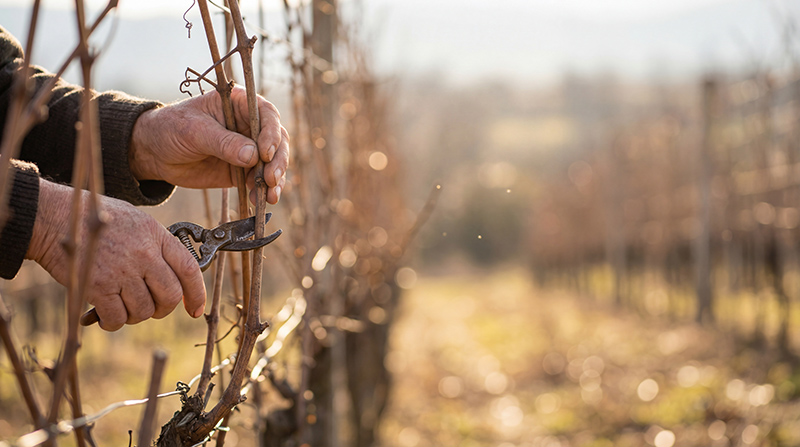
The University of Minnesota Extension team is offering several in-person workshops to demonstrate how to prune apple trees or grapevines. Sessions will be held in a variety of locations during February, March and April. The cost is $20, and registration is required.
Comparing Cover Crop Mixture Performance after Oats and its Effect on Corn Yield the Following Year
South Dakota State University Extension conducted cover crop trials to observe which cover crop mixtures had the most biomass and how variations affected subsequently planted row crops.
Cover crops planted after oats in 2024 produced similar biomass to other cover crop mixtures. This may be due to volunteer oats growing and increasing biomass.
Corn yield was not affected by the cover crop mixture planted, but a decrease was recorded when residue was removed. Most soil properties remained constant as well.
Season Four of CPN TV
The Crop Protection Network has new CPN TV episodes available, and more are coming soon! So far, topics include:
- Weed Control in Canola,
- The Risks of Oversimplifying Herbicide Recommendations,
- Mapping Cover Crop Biomass with Sensors,
- Managing Cotton Jassid,
- Managing Areolate Mildew, and
- Using Robotics to Evaluate Corn Management Practices.
Some of these webinars offer Continuing Education Units for Certified Crop Advisers through related quizzes.
Join a Study! Black Soldier Fly Derived Compost On-Farm Research
Fifteen urban farm sites in Indiana and Ohio will be selected to participate in a composting project. Black soldier flies will be used to enhance the composting process, which can improve soil health, plant yields, and identify the nutritional value and safety of food.
Participants will receive monetary compensation along with the supplies (eggs, compost bins, resource logs, and scales). This project is a collaboration between Purdue University and The Ohio State University.
Research
Keep learning with these IPM-related research articles.
New Methods Improve Monitoring of Biocontrol for Invasive Japanese Beetle
Use of biocontrol to control Japanese beetles began in the Midwest in 2017 using a microsporidian parasite called Ovavesicula popilliae. Efforts to assess the success of this biocontrol program depends on the ability to detect O. popilliae in beetle samples.
A group of researchers led by David Smitley, Ph.D., professor emeritus in the Department of Entomology at Michigan State University have improved the sensitivity of the quantitative polymerase chain reaction (qPCR) technique used to confirm the presence of O. popilliae and also improved sampling efficiency.
More detail can be found in the recent research article published in the Journal of Economic Entomology.
Could Insect Viruses Open New Doors in Biological Pest Control?
Can viruses be used biological controls? A team of entomologists from Israel’s Agricultural Research Organization recently discovered a double-stranded RNA virus, Anagyrus vladimiri Reovirus (AnvRV). This virus resides in the ovaries of female wasps (Anagyrus vladimiri), which are widely used to control mealybug pests.
After comparing wasps infected with AnvRV and uninfected wasps, the study revealed that infected wasps have a surprising benefit: their eggs are significantly more likely to hatch inside their mealybug hosts.
Midwestern Field Trials Suggest Overuse of Rootworm-Resistant Corn Reduces Farmers’ Profits
Corn rootworm pressure has decreased since 2004 and may not be a yield-limiting factor in many areas. While it can be easy to find seed varieties that include a Bt trait, using the trait repeatedly when it is not needed will gradually erode its effectiveness.
Events
Learn and network at these upcoming in-person events.
Balancing the Intended and Unintended Effects of Managing Pests
Finding solutions to complex challenges like feeding billions of people and ensuring access to clean water depends on engagement and dialogue among stakeholders who rarely find themselves in the same room. Consider joining the next Critical Conversations event called, “Balancing the Intended and Unintended Effects of Managing Pests.”
This Critical Conversations event is meant to provide that opportunity by inviting engineers, social and physical scientists, politicians, lawyers, industry leaders, and nongovernmental organizations to an intellectual forum for innovating solutions. A tentative agenda is available. Please share your recommended participants by January 31.
The Critical Conversations event will be held March 5–6, 2026, at the Illini Center in Chicago.
Organic Apple Orchard Academy
Improve your orchard! Come learn about everything from site selection and disease-resistant apple varieties to bio-intensive pest management, efficient harvest strategies and savvy marketing for fresh and value-added products. The 2026 Organic Apple Orchard Academy will be held February 9, 11, 16 and 18 from 5:30 to 8:30 p.m. ET (4:30 to 7:30 p.m. CT).
The Organic Apple Orchard Academy virtual course is hosted by the IPM Institute of North America and the Organic Fruit Growers Association. It’s designed exclusively for aspiring growers in the Midwest and Northeast.
The cost is $300—or $275 for Organic Fruit Growers Association members.
Job Board
Consider applying for these job opportunities.
Plant Health Care Specialist, SavAtree, St, Carmel, Indiana
Plant Health Care Specialist, SavAtree, Afton, Minnesota
Research Senior Technician, The Ohio State University, Columbus, Ohio
Lead Native Plant Nursery Assistant, Metroparks Toledo, Whitehouse, Ohio
Assistant Professor: Insect Ecologist, University of Georgia, Athens, Georgia
Temporary Laboratory and Research Technician I, Cornell Cooperative Extension, Batavia, New York