North Central IPM Center Updates
Stay informed with the latest news from the Center with the stories below. Be sure to share your favorites!
February Webinar: Pollinator-Safe Fungicides: Floral Microbial Biocontrol of Anthracnose in Blueberry
The February Pests and Progress webinar will feature Dr. Caitlin Rering, research chemist at the USDA Agricultural Research Service. Dr. Rering will share, “Pollinator-Safe Fungicides: Floral Microbial Biocontrol of Anthracnose in Blueberry” on Wednesday, February 19, 2025, at 1:30 pm ET (12:30 pm CT).
Blueberry flowers are susceptible to fungal infections, which if left unmanaged, can devastate yields. To protect blooms, growers apply synthetic fungicides to flowers. However, these fungicides are harmful to pollinators.
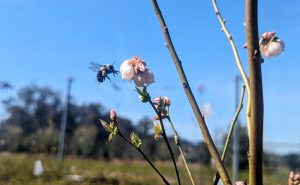
Learn about a potential solution being developed in the lab of Dr. Rering. Preliminary field results reveal that this biocontrol product could reduce the number of anthracnose infected berries by half, without interfering with fruit development.
Pests and Progress webinars are free. More details are on the North Central IPM Center website.
Innovative Approaches in Phytopathometry, Epidemiology, and Microbiology: Focus on Corn Tar Spot – Webinar Recording
Tar spot is a relatively new disease that has spread rapidly in corn crops in the Midwest. Dr. C.D. Cruz, associate professor from Purdue University, is working to improve early disease detection, modeling, and monitoring of disease progression. He shares results of recent research in this webinar called, “Innovative Approaches in Phytopathometry and Epidemiology with a Focus on Corn Tar Spot.”
Cruz used his experience developing assessments and imaging techniques to identify infestations of wheat blast to come up with strategies for identifying tar spot infestations earlier. Visual assessments were performed by people, and drones were used to collect photos to detect and monitor disease progression. Algorithms were created, tested and used to model disease severity. This effort to monitor disease progression shows that tar spot is possible to detect early, before it becomes widespread and difficult to treat. Learn more about methods, results and future goals in the full webinar.

2025 Grant Proposal Submission Summary
The North Central IPM Center recently received 25 grant proposals for its 2025 funding cycle, requesting a total of nearly $720,000. These proposals encompassed a wide range of range of projects, including 16 Working Groups (four new and 12 continued), seven Critical Issues proposals, and two Community Initiatives. Proposal themes, such as crop protection, weed management, human and animal health, and pollinator conservation, directly align with the Center’s regional priorities. These priorities emphasize the protection of a wide range of cropping systems, food security, and the overall health of humans, animals, and the environment through integrated pest management (IPM) approaches.
Geographic representation in the proposals was widespread, with eight out of 12 states in the region submitting Working Group applications, seven participating in critical issues projects, and two involved in community initiatives. Notably, 12 out of the 25 proposals demonstrated a commitment to inter-state collaboration, highlighting a regional approach to addressing pressing IPM challenges. This collaborative spirit is crucial for effective pest management, as it allows for the sharing of resources, expertise, and best practices across state lines.
The proposals are currently under review, and funding decisions will be announced in February. The North Central IPM Center anticipates that the funded projects will significantly contribute to the development and implementation of innovative and sustainable IPM strategies within the region.
New Episodes—I See Dead Plants Podcasts
- The Rusted Brew: Re-Visiting Coffee Rust Part 1
Interviewee: Dr. Cathie Aime from the Aime lab at Purdue University - The Rusted Brew: Re-Visiting Coffee Rust Part 2
Interviewee: Dr. Cathie Aime from the Aime lab at Purdue University - Bunker of Doom: The Mycotoxin Threat in Corn Silage Part 1
Interviewee: Dr. Lindsey du Toit from Washington State University - Bunker of Doom: The Mycotoxin Threat in Corn Silage Part 2
Interviewee: Dr. Lindsey du Toit from Washington State University
IPM Highlights
Here’s interesting stories related to progress in integrated pest management.
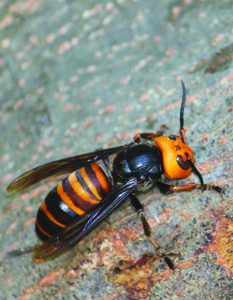
WSDA, USDA Announce Eradication of Northern Giant Hornet from the United States
The northern giant hornet (Vespa mandarinia) made a media splash in 2020 as the “murder hornet” and quickly became known for its threat to honey bees hives and its ability to sting through beekeeper suits. Now due to collaborative efforts of the Washington State Department of Agriculture (WSDA), the United States Department of Agriculture (USDA), the public, and other local organizations, these non-native hornets have been eradicated from Washington state. Monitoring efforts and reports from the public led to the detection of nests, which were then removed carefully by experts.
Innovative Light Technology Is Safe, Effective for Mitigating Fungal Contamination of Cereal Grains
Far-ultraviolet C (far-UVC) light at 222 nm has been shown to be safe for people so researchers from the University of Illinois Urbana-Champaign decided to test whether far-UVC light can be used to manage fungal contamination of cereal grains. The researchers tested the light on two fungi, Aspergillus flavus and Fusarium graminearum. The far-UVC light succeeded in deactivating spores of both fungi and also was able to inactivate growth of mycelium.
National Invasive Species Awareness Week Coming in February
National Invasive Species Awareness Week will occur February 24 to February 28, 2025. A number of webinars related to invasive species are planned, and a communications toolkit is available that includes a press release and social media posts.
Preparing for Next Season
Get ready for next year with these learning opportunities.
Educational Lectures from the Crop Protection Network
Twelve new e-lectures focusing on crop disease and pest management will be available in February from the Crop Protection Network (CPN). Each lecture is eligible for Certified Crop Adviser continuing education units. Subscribe to the CPN YouTube channel to be notified when these new lectures are posted.
Targeted Spray Technology Highlighted on Strategic Farming: Let’s Talk Crops
Could targeted spray technology lead to lower costs on your farm? Learn what targeted spray technology is, potential costs and savings, as well as how to make applications effective with this webinar recording from University of Minnesota Extension.
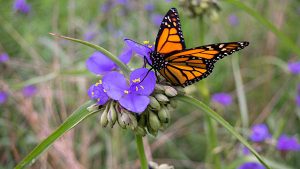
Overview of Proposed Decision to List the Monarch Butterfly Under the ESA (webinar)
How will the monarch butterfly’s “threatened” listing decision under the Endangered Species Act affect landowners and farmers? Find out with Brigit Rollins, staff attorney from the National Agricultural Law Center. Rollins will present, “Overview of Proposed Decision to List the Monarch Butterfly Under the ESA” on Wednesday, February 19 from 12 to 1 p.m. ET (11 a.m. to 12 p.m. CT).
Details about the proposed listing decision and background information are summarized well on the National Agricultural Law Center website if you would like to learn more before the webinar.
Spotted Lanternfly Resources for Michigan
The spotted lanternfly was confirmed in two new counties (Macomb and Lenawee) in Michigan in January. Michigan State University has prepared several resources to help you learn and share information about this lanternfly.
Keep an eye out for spotted lanternfly egg masses on tree of heaven, nearby trees or other hard materials, such as rocks or bricks or even buildings. Be sure to report sightings on the Eyes in The Field website.
Bird Flu Flares up Again in Michigan Poultry-Risks to Other Species
A strain of bird flu, or H5N1, has been circulating in the United States since 2021. In addition to affecting wild birds and poultry, this H5N1 strain has infected mammals. In March of 2024, the first case of bird flu was found in dairy cattle. Cows experience symptoms of illness, along with a decrease in milk production. While the virus can be found in the milk of sick cows, pasteurization kills the virus. Most cows recover on their own, but it’s important to avoid spreading the virus from dairy farms to poultry facilities. While a few cases of H5N1 have occurred in people, the threat is currently low.