February 2026 Central Issue

News stories shared in the February 2026 Central Issue appear below. Subscribe to receive the Central Issue newsletter monthly via email.

North Central IPM Center Updates

Stay informed with the latest news from the Center with the stories below. Be sure to share your favorites!

March Webinar: Pesticide Risk Tool: Understanding Risk and Measuring Impact

Join Ariel Larson and Peter Werts from the IPM Institute of North America as they introduce the Pesticide Risk Tool. This webinar will explore how the tool is being integrated into supply chains and certification programs to measure and mitigate environmental and human health risks. Real-world examples will be highlighted throughout the presentation.

For Certified Crop Advisors, this webinar qualifies for 0.5 Integrated Pest Management CEUs for live attendees.

This Pests and Progress webinar will be held on Wednesday, March 18, 2026, at 1:00 p.m. ET (12:00 p.m. CT). Pests and Progress webinars are free, and you must register to attend.

More details are on the North Central IPM Center website.

Pesticide Risk Tool: Science Informing Decisions logo

Webinar Recording: Genetic Biocontrol of New World Screwworm and Spotted Wing Drosophila

Dr. Maxwell Scott, a professor in the Department of Entomology and Plant Pathology at North Carolina State University, shares research progress for managing fly pests by using genetics to control populations.

For years, the Sterile Insect Technique (SIT) has been used to control New World screwworm, keeping populations as far south as Panama. This method works by sterilizing males with radiation and releasing them in large numbers to mate with wild females. Since females usually mate only once, mating with a sterile male prevents them from producing viable eggs.

Recently, the New World screwworm has been making a return, spreading north through Central America and into Mexico. Dr. Scott shared details about efforts to increase the efficiency and effectiveness of fly breeding programs to help stop this spread, ideally keeping New World screwworm out of the United States.

Scott’s research on New World screwworm is focused on rearing a final generation of male-only flies. This is more efficient in multiple ways and helps reduce costs and wear on radiation equipment.

Similar breeding efforts are being done on spotted wing Drosophila as well. Engineered male flies carry a female-killing gene. When they are released to mate with wild females, all their female offspring die. Male offspring can even pass the female-killing gene to part of the next generation.

While more work is needed before these techniques are widely used, they have excellent potential to make it easier to control these flies. Learn more by watching the full webinar.
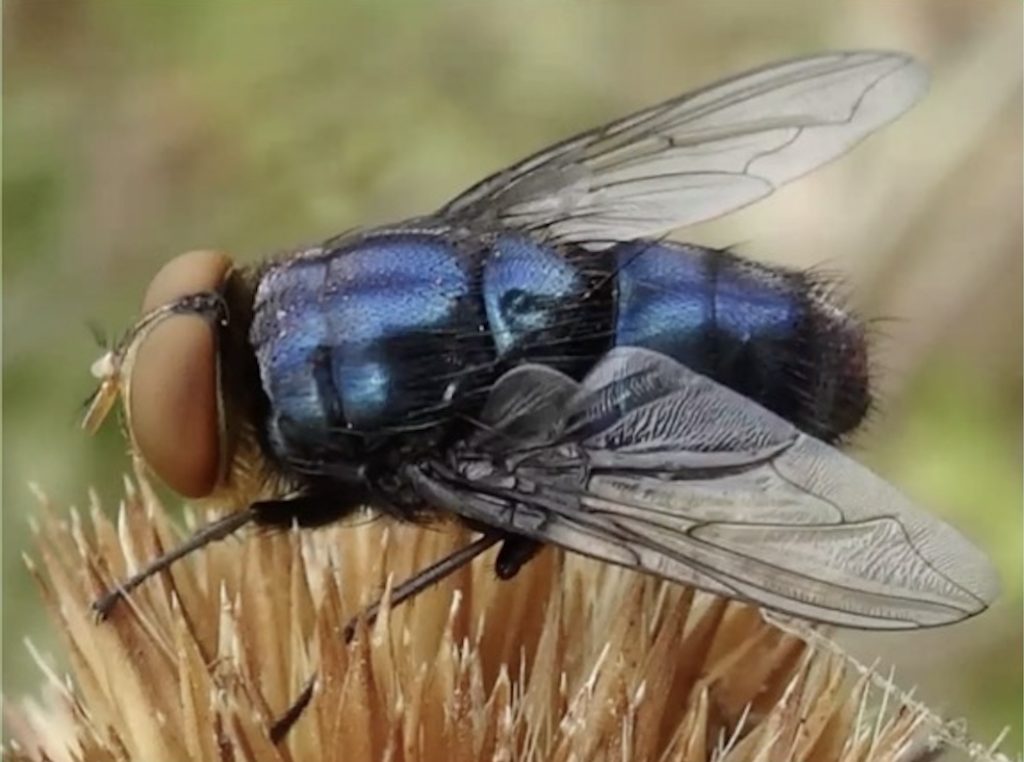
New World screwworm adult fly
New World screwworm adult. Photo by Zohara Scott.

War Against Weeds Podcasts

USDA

Here’s the latest news from the USDA about New World Screwworm.

USDA Announces Completion of Sterile Fly Dispersal Facility in Texas

The first U.S.-based sterile fly dispersal facility for New World screwworm was completed in Edinburg, Texas in February. This facility allows a strategic location shift for release of sterile male New World screwworm flies if wild populations reach northern Mexico. Control efforts will continue throughout Mexico.

USDA National Institute of Food and Agriculture

Here’s the latest news from the USDA NIFA.

New Name, Same Opportunity: RFA is now NOFO

In the past, funding opportunities from USDA have been called Request for Applications (RFA). Going forward, these funding announcements have been renamed: Notice of Funding Opportunity (NOFO). Only the name has changed; the application process, eligibility requirements, deadlines and review procedures all remain the same. Current NOFOs are available on the USDA Funding Opportunities page.

IPM Highlights

Here’s interesting stories related to progress in integrated pest management.

HERMON Project Aims to Rapidly ID and Map Herbicide Resistance

Ideally, farmers eliminate weed populations that develop herbicide resistance before they go to seed. Unfortunately, the easiest method to screen weeds for resistance takes a lot of time, and it begins with farmers waiting for the weeds to make seed.
 
Once weed seeds are collected, they are sent away for screening, where they germinate, grow and are then sprayed with a variety of herbicides to test for resistance. Only then can results be shared with farmers.
 
The new Herbicide Resistance Monitoring Network (HERMON) project seeks to shorten this timeline by screening the weed’s DNA for resistant genes. Farmers send weed leaf samples to their nearest cooperating HERMON university for testing; nine land grant universities are currently collaborating. The Southern IPM Center is also partnering to map results.

Tool Developed at Montana State Aims to Help Farmers Implement New Technologies

Faculty at Montana State University have created a tool to help farmers estimate the return on investment associated with one of the most high-impact precision ag resources: smart spray technology.

This new tool, called the Smart Spray Annual ROI Calculator, allows Montana farmers to input values for their operation so they can better estimated how long it would take for a smart sprayer to save them money.

The Bugwood Summit

To celebrate its 30th anniversary, join the virtual Bugwood Summit on April 16 at 2:00 p.m. ET (1:00 p.m. CT). The Summit will highlight recent enhancements, including Bugwood Images, EDDMapS, Wild Spotter, and the Connect platform. Join this free event to learn how these tools are being refined to improve usability, collaboration, and impact tracking.

Be sure to register to attend.

Center for Invasive Species and Ecosystem Health University of Georgia. Bugwood Summit 2026. April 16, 2026. 2:00 - 5:30 p.m. ET

New World Screwworm Resources

Read, use or share these resources.

What is the New World Screwworm?

Wondering why New World screwworm is such a hot topic? This 2-minute video featuring Dr. Phillip Kaufman, a leading expert on the New World screwworm and the head of the Department of Entomology at Texas A&M University, explains why this is such a harmful pest, how it got its name, and previous management efforts.

This video introduction also includes screwworm expert Dr. Phillip Kaufman from Texas A&M. He goes a bit deeper into New World screwworm biology and history and includes details about where they thrive, including the habitat they prefer. Impacts to wildlife are also discussed.
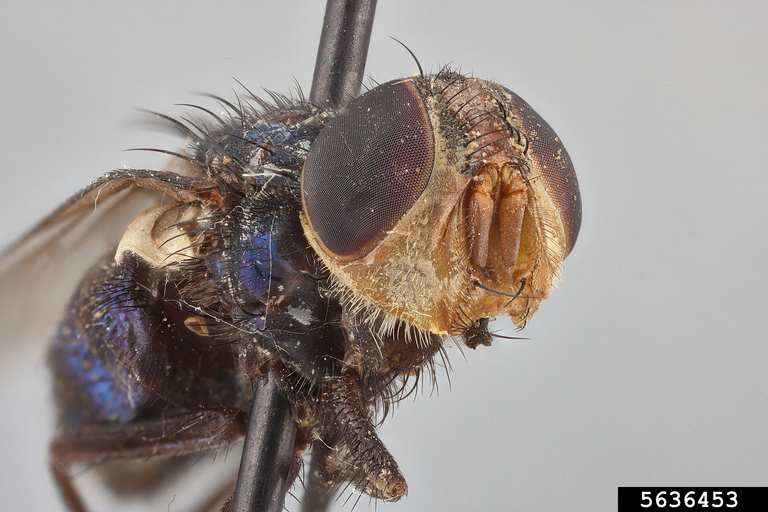
Frontal view of a pinned New World screwworm adult
New World screwworm. Photo by Paul Langlois, USDA APHIS PPQ, Bugwood.org.

Stop Screwworm Website

The Stop Screwworm website from the USDA Animal and Plant Health Inspection Service provides updated information about New World screwworm status, prevention efforts, and how to report a suspected case. It includes a map of where New World screwworm has been confirmed and where eradication efforts are active in Mexico.

The site also includes an elaborate section dedicated to the various audiences who may need details about New World screwworm.  National news is also featured on the Current Status page.

New World Screwworm Fact Sheets

Texas A&M also has fact sheets available to help you share information about New World screwworm. The fact sheet topics cover what to do if you suspect it is infecting your herd, livestock management tips and wildlife impacts.

For professionals interested in New World screwworm, this lengthy video covers the topics you need, including
  • New World screwworm biology, identification, sterile insect technique, and eradication history
  • Prevention and treatment strategies for livestock
  • Wildlife impacts
  • Public health–people and pets
  • Government response and surveillance systems

Image

Research

Keep learning with these IPM-related research articles.

Increasing the Use of Biological Pesticides in Integrated Pest Management Programs

Even though biopesticides have potential to increase crop yields and quality, several challenges are preventing widespread adoption. These challenges include lack of education and awareness of the unique modes of action that biopesticides exploit. There is also uncertainty about effectiveness and return on investment. Check out this article for suggestions for how to increase farmer confidence when using biologicals in integrated pest management programs.

Breeding for Integrated Pest Management (B-IPM): A New Concept Simultaneously Optimising Plant Resistance and Biocontrol

Consider the goal of breeding plant cultivars not only to have resistance to pathogens but also to make their own biocontrol agents. This research team from the Swedish University of Agricultural Sciences identified wild strawberry genotypes that demonstrated resistance to grey mold disease, demonstrated resistance to anthracnose disease or supported the growth of beneficial biocontrol agent Aureobasidium pullulans. Resistance to both pathogens was confirmed in some genotypes, which suggests some wild strawberry lines may have a trait that provides resistance to multiple pathogens. Authors were able to demonstrate that a genotype that was resistant to multiple pathogens was also compatible with biocontrol agent A. pullulans.

Plant Uptake Models of Pesticides: Advancing Integrated Pest Management, Food Safety, and Health Risk Assessment

Understanding how pesticides move within plant tissues is essential for maximizing effectiveness while also minimizing pesticide accumulation in crops. Plant uptake models demonstrate how pesticides interact with plants, thereby assisting in risk assessment, ensuring food safety, optimizing pesticide delivery, and establishing safe application guidelines.

Events

Learn and network at these upcoming in-person events.

Plant Health 2026

August 1-4, 2026 Providence, Rhode Island

International Conference on Agriculture and Biotechnology

Oct 4-5, 2026 Chicago, United States