Spotted wing drosophila (SWD), Drosophila suzukii, is a small vinegar fly that damages many fruit crops. Unlike most other vinegar flies that attack only damaged fruit, SWD damages healthy fruit when the female cuts a slit in the fruit and lays her eggs inside. This insect is a pest of blueberry, blackberry, raspberry, strawberry, cherries, grapes and tree fruits, with a preference for softer-fleshed fruit. Given its potential to infest fruit, it is important to learn about monitoring and management of SWD to minimize the risk of larvae developing in fruit and affecting fruit marketability.
Spotted wing drosophila was first discovered in the western United States in 2008 and is now well-established in North America. States where SWD has been found are highlighted on EDDMapS.
Damage
Female SWD can cut into intact fruit using their serrated ovipositor to inject eggs under the skin. Consequently, the larvae of SWD can be present during ripening, and will be in the fruit after harvest. Damage to fruit by egg laying and larval feeding can lead to secondary fruit rots as fungal diseases may be introduced, further affecting fruit quality. There is a greater risk of fruit contamination at harvest from SWD compared with native vinegar fly species that lay eggs only in already damaged and rotting fruit.
The adult SWD lives for about two weeks and can lay more than 300 eggs. This demonstrates their high potential for fruit infestation and distribution through a field if not controlled.
Identification
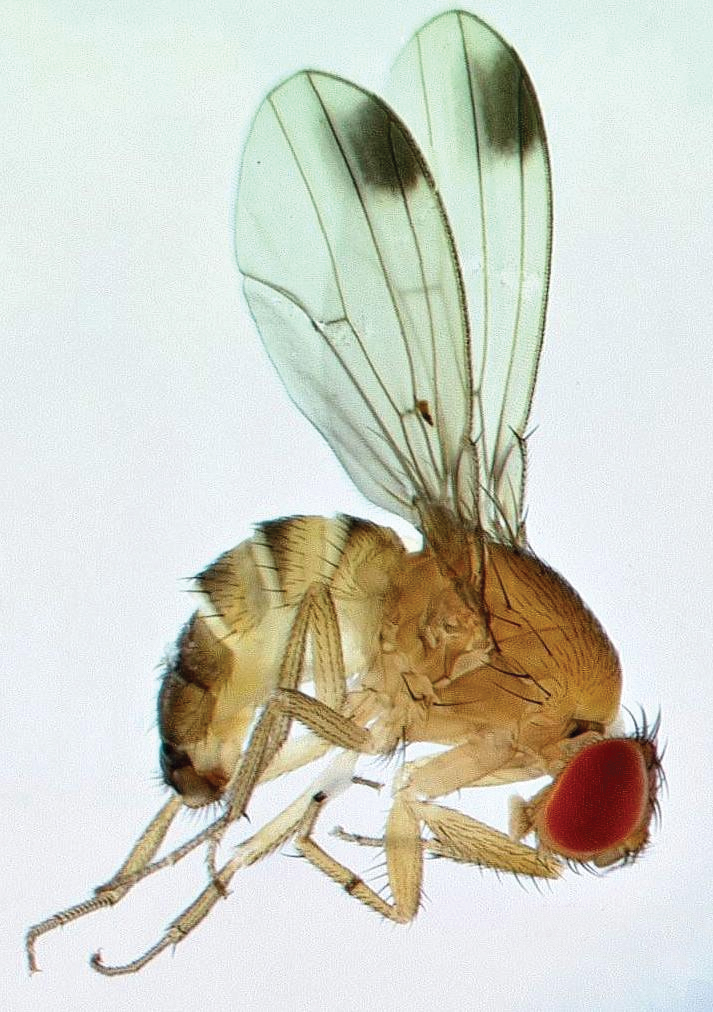
Identifying male SWD is relatively straightforward using distinctive wing spots, but identifying females requires magnification of the abdomen. Female SWD do not have the wing spots.
The male SWD has a distinctive dot on each wing. Photo by Gevork Arakelian.
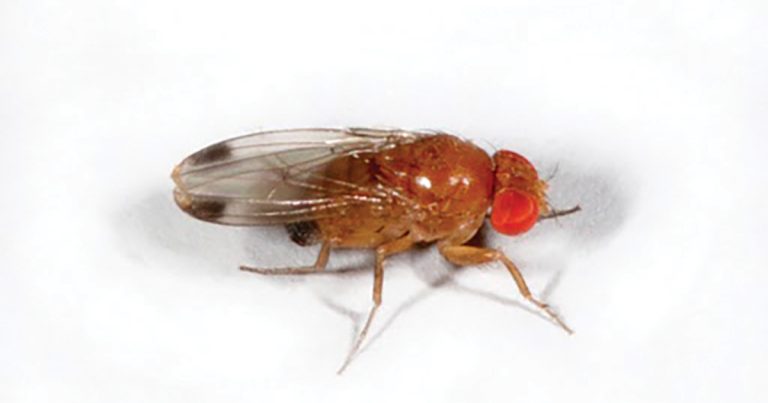
Spotted Wing Drosophila male, full body photo. Adult males are 2-3 mm long and may be seen on the outside of fruit. Photo by Martin Hauser.
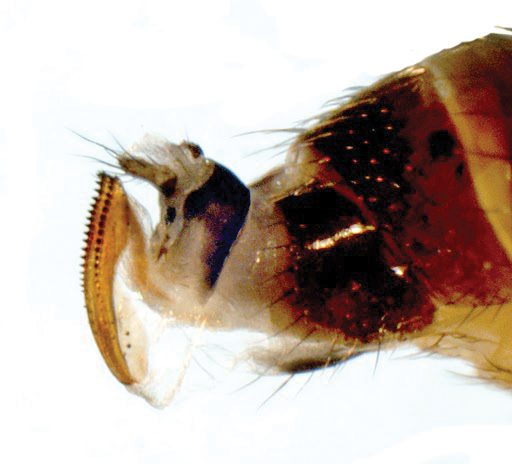
On the female SWD, the serrated ovipositor is a distinctive feature. It has two rows of serrations that it uses to cut into healthy fruit. Photo by Martin Hauser.
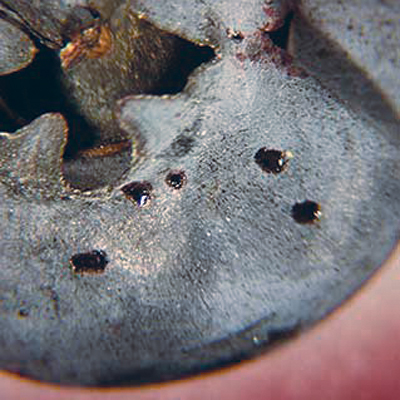
Infested fruit do not show obvious symptoms of infestation at first, with only a small pin-prick visible from egg-laying. Within a few days, the fruit flesh will start to break down, leading to discolored regions and eventual collapse of the tissues. By this point, the white larvae can be relatively easy to detect.
Fruit infestation symptoms: Blueberry with oviposition holes from female SWD. Photo by Tracy Hueppelsheuser, British Columbia Ministry of Agriculture and Food.
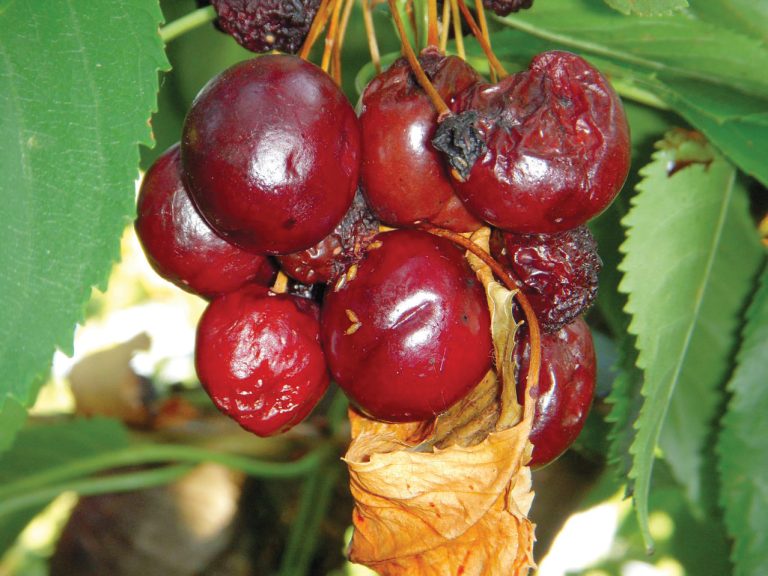
Diseased cherry tissue associated with SWD infestation. Photo by Peter Shearer.
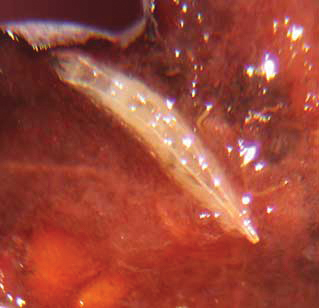
Spotted wing drosophila larvae are white and visible against darker fruit. Photo by Tracy Hueppelsheuser, British Columbia Ministry of Agriculture and Food.
Management
Effective management of SWD begins with monitoring and includes practices to slow reproduction, along with chemical controls when necessary.
Monitoring
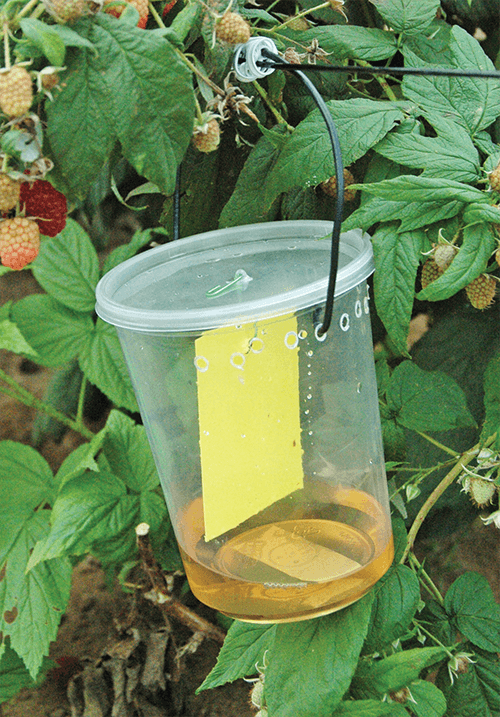
The first and most important step is to determine whether SWD are present, ideally before the fruit start to ripen and become vulnerable. This can be done using a simple monitoring trap, consisting of a plastic 32 oz. cup with several 3/16˝ diameter holes around the sides of the cup, leaving a 3˝ to 4˝ section without holes to facilitate pouring out liquid. The holes can be drilled in sturdy containers or burned with a hot wire or a wood burner in the thinner plastic cups. Pour 1˝ to 2˝ of bait into the trap to attract flies.
These traps can be baited with apple cider vinegar, but traps catch flies earlier if baited with a simple solution of baker’s yeast and sugar. To ensure that trapped flies do not escape, a small yellow sticky trap can be placed inside the trap. Traps should be hung in the shade near the vulnerable fruit using a stake or a wire attached to the sides of the trap and a branch or wire support. Check traps at least weekly for SWD flies on traps and in the liquid, and replace the bait with fresh liquid. Pour the old bait into a bottle or away from the trap location, and place traps back near the crop. Continue monitoring through harvest and post-harvest. Some native species of vinegar flies and other insects will be attracted to the traps. These need to be distinguished from SWD flies. Vinegar flies are small (2–3 mm) with rounded golden brown abdomens. Examine the wings of trapped vinegar flies using a 30× hand lens.
Some small native flies have dark patches on the wings but will not have the distinctive dark dot that is present on both wings of SWD males If you need help identifying SWD, please contact your local extension office.
Monitoring trap for spotted wing drosophila. A plastic container with holes, containing a yeast-sugar solution as a bait, and a sticky trap to catch flies. Traps may also be used without the yellow sticky trap if a drop of unscented soap is added to the bait. Count the flies in the liquid weekly and then replace the liquid. Photo by Steve Van Timmeren.
Sanitation
The most important management method that growers and home gardeners can adopt to minimize the buildup of SWD is sanitation. If SWD is present, be sure to pick ripe fruit in a timely manner. Remove rotten, damaged or dropped fruit, and do not place them in a compost pile. Discarded fruit must be sealed or buried to prevent flies from emerging.
Removal of wild host plants, such as mulberry, honeysuckle, pokeweed, and wild grape adjacent to your fruit crop may also help reduce SWD damage.
Cultural Controls
Plastic mulches have been shown to reduce larval infestation by SWD larvae, which also increases the production of marketable fruit. Fine netting can also be used to prevent SWD from accessing fruit. Bushes or branches should be covered after flowering. If irrigation is used, drip irrigation should be used instead of sprinklers, which create an optimal environment for SWD reproduction.
Chemical Controls
Management of SWD with insecticides can be challenging because they have to be applied to ripening fruit to prevent adult egg laying. Be sure to check preharvest intervals (time between application and harvest) for your specific fruit on any product you use. Contact your local extension office for insecticide recommendations for management of SWD.