April 2026 Central Issue
The April 2026 Central Issue from the North Central Integrated Pest Management (IPM) Center features the latest integrated pest management news, research, and extension resources from across the region and beyond.
This issue includes updates on invasive pests, pollinator protection, pesticide safety, crop disease and weed management, educational webinars, and emerging IPM research that supports sustainable agriculture, healthy communities, and environmental stewardship.
Explore the stories below to stay informed about science-based pest management solutions and current IPM developments.
Subscribe to receive the Central Issue newsletter monthly via email.
North Central IPM Center Updates
Stay informed with the latest news from the Center with the stories below. Be sure to share your favorites!
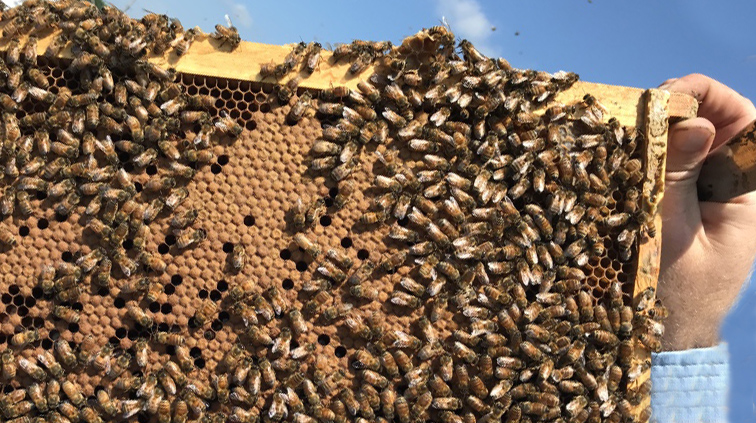
May Webinar: RNAi and Varroa Mites–A New Technology for Managing an Old Pest of Honey Bees
Dr. Matt O’Neal and Jarod Perez from Iowa State University will talk about a new option for pest control called RNAi. The RNAi method is an alternative to chemical control methods, and it also targets a specific problem species without harming other wildlife.
O’Neal and Perez will also provide an example of a new product for beekeepers that uses RNAi to target varroa mites within honey bee colonies.
This webinar qualifies for 0.5 CEU in IPM for Certified Crop Advisers.
This Pests and Progress webinar will be held on Wednesday, May 20, 2026, at 1:00 p.m. ET (12:00 p.m. CT). Pests and Progress webinars are free, and you must register to attend.
Webinar Recording: Are You Smarter Than a Lone Star Tick?
How do you kill a tick? If you were taught to flush them down the toilet or that clothes removed from the dryer are tick free, check out the improved recommendations from Dr. Holly Gaff from Old Dominion University in the webinar recording of “Are You Smarter Than a Lone Star Tick?”
This webinar is also an excellent opportunity to get acquainted with lone star ticks. Dr. Gaff’s team has been collecting tick samples since 2009, and 90 to 95% of ticks collected are lone star ticks. This has provided ample opportunity to test the amount of heat, cold and flooding that these ticks can survive.
Lone star ticks are particularly interesting because they prefer large mammal hosts, and larval ticks willingly feed on humans. Dr. Gaff shares details about what diseases lone star ticks can spread and what methods are available to reduce populations.
Whether you work in agriculture, public health, or just spend time outdoors, watch the full recording for practical takeaways on tick awareness and management—plus a few “wow” moments you won’t forget.

Diagnosing Nutrient Deficiencies Webinar
Become a plant detective and improve your ability to diagnose plant problems related to nutrient deficiencies. The Great Lakes Urban Agriculture Working Group hosted this informative webinar, and a recording is now available.
Learn from Michelle Wallace from Central State University as she shares how to distinguish between pests, diseases, environmental stress, and true nutrient issues.
Dr. Wallace uses real examples and practical tools like visual diagnostic keys for mobile nutrient deficiencies and immobile nutrient deficiencies to help you practice your diagnostic skills.
You may also be interested in two other webinar recordings available from the Great Lakes Urban Agriculture Working Group:
- Cover Crops in Raised Beds and Small Spaces featuring Kevin Allison, urban soil health specialist from Marion County Soil & Water Conservation District in Indiana
- Plant ID can be a Snap with an App! featuring Dr. Erin Hill, plant and pest diagnostician from Michigan State University
These webinars are part of the activities of the Great Lakes Urban Agriculture Working Group, which received funding from the North Central IPM Center in 2016, 2017, 2018, 2023, and 2024.
War Against Weeds Podcasts
- Teasel Control with Dr. Reid Smeda
Interviewee: Dr. Reid Smeda from the University of Missouri - Drones Update
Interviewees: Dr. Tom Wolf from Agrimetrix and Dr. Jason Deveau with Ontario Ministry of Agriculture, Food and Agribusiness. Together, they also run Sprayers101. - Glufosinate Resistance in Waterhemp: What We Know (and What Comes Next)
Interviewees: Dr. Karla Gage from Southern Illinois University Carbondale and Dr. Pat Tranel from the University of Illinois - PPO Resistant Kochia: From Field Failures to the Lab
Interviewees: Dr. Ingo Meiners and Dr. Aimone Porri from BASF - HRAC 2026 Update: Changes to the Herbicide Modes of Action Poster
Interviewee: Hudson Takano from Corteva Agriscience
I See Dead Plants Podcasts
- Documenting the Nation’s Grandest Trees: The Gathering Growth Foundation Part 1
Interviewee: Brian Kelley of the Gathering Growth foundation - Documenting the Nation’s Grandest Trees: The Gathering Growth Foundation Part 2
Interviewee: Brian Kelley of the Gathering Growth foundation - Dr. Banana vs. Tropical Race 4
Interviewee: Dr. Fernando Garcia-Bastidas from KeyGene
USDA
Here’s the latest news from the USDA.
Over $1B Invested to Accelerate Progress on Farm Modernization and Long-Term Food Supply Security
Three federal agencies are cooperating to support farming and make sure that US food is “the healthiest, most abundant, and most affordable in the world.”
The Environmental Protection Agency (EPA), U.S. Department of Agriculture (USDA), and National Institutes of Health (NIH) are dedicating $1 billion to fund:
- Research to better understand risks of chemicals to human health
- Regenerative agriculture practices and education
- Private sector innovation in farming modernization
It’s also important to note that $100 million will be used to identify new tools that reduce reliance on pesticide tools, which could be an excellent opportunity for IPM innovation.
IPM Highlights
Here’s interesting stories related to progress in integrated pest management.
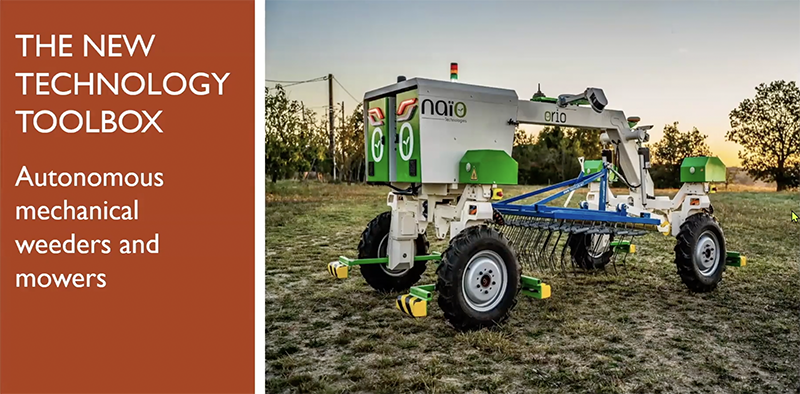
From Conventional to Connected: Integrating Emerging Technologies into Weed Management Systems
Check out this webinar to learn about new weed management options, including precision spraying, automation, and AI-guided systems. Grounded in real-world expertise, this webinar from the Northeastern IPM Center highlights how these innovations can be incorporated into existing practices to boost efficiency and address persistent challenges like herbicide resistance.
This webinar offers practical insights for bridging the gap between conventional methods and new technologies. You will also learn about advantages of using these new tools, including reduced inputs and enhanced sustainability in specialty crop production.
A Revived Device Reveals Scents that Attract and Deter Crop Pests
An old tool is being used in a new way. The electroantennogram is designed to detect scent and was used to determine the scents detected by an insect’s antennae. Now the device is offering a powerful edge in the fight against crop pests by revealing the scent molecules insects use to find food, mates, and danger.
Researchers anticipate using these scents to monitor insect populations and intervene more effectively with improved scent lures and repellants—potentially transforming how growers protect crops.
Battle of the Bots: AI Takes on Weed Management Questions
How well do chatbots handle questions about integrated weed management, herbicide use, herbicide resistance and weed biology? Check out the results from popular options like ChatGPT, DeepSeek and Google Gemini, along with results from a smaller bot that sources information from cooperative extension institutions.
Pests This Season
Watch for these pests in your fields.
Be on the Lookout for Lesser Celandine
Lesser celandine (Ficaria verna) is an invasive plant that is spreading in lower Michigan, southeastern Wisconsin, northern Wisconsin and southern Minnesota. Conservation professionals are asking for help from the public to help control this weed.
Resources for identifying lesser celandine, a map of current infestations, and methods for reporting sightings are included.
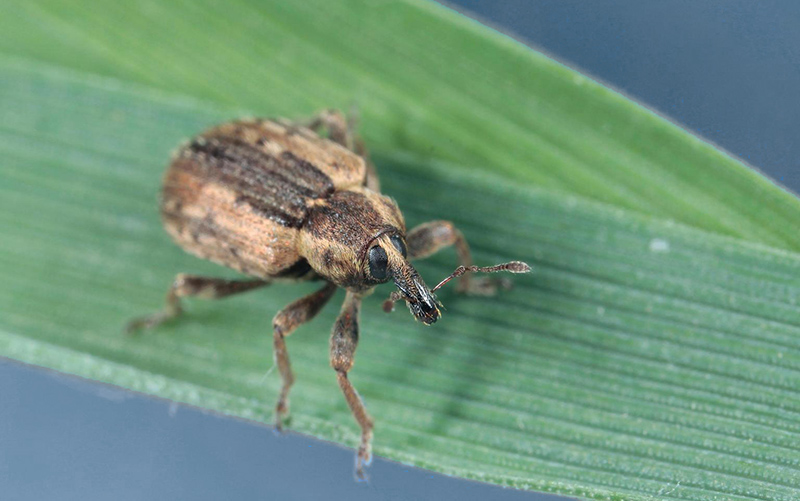
Scout Alfalfa for Weevil: Egg Hatch and Larval Feeding Underway in Missouri
Alfalfa weevil is already active in 2026 in Missouri. Since young alfalfa plants are more vulnerable to feeding injury, it’s important to start scouting fields now. Catching an infestation early also makes treatments more effective because smaller larvae are easier to control.
Black Cutworm Active in 2026
Black cutworm moth has been confirmed in Minnesota and Iowa this season, which indicates that larvae may be active in these areas by early May.
Learn how to scout for larval activity and how to manage an infestation when needed.
Elevated Corn Rootworm Pressure Projected For The Midwest
Using beetle capture data from 2025, Bayer CropScience is predicting medium to high rootworm pressure for several areas of the Midwest during the 2026 growing season. Check out this article to learn more about vulnerable areas, the two rootworm variants and management options.
Microdochium Patch (Pink Snow Mold) of Home Lawns and Golf Courses
Pink snow mold infests lawns and golf courses during periods of cool, wet weather, which includes September through June in Michigan. Fertilizer timing is important for prevention. Fungicide treatment is only recommended for golf courses, and management can be challenging due to resistance issues.
Resources
Read, use or share the latest IPM resources.
2026 Webinar Series for Greenhouse, Nursery & Garden Center Professionals
Managing insects and diseases in greenhouses can be difficult. The University of New Hampshire is hosting a series of webinars dedicated to greenhouse production again this year. These webinars are held on the last Tuesday of the month from 6:30 to 8:00 p.m. ET (5:30 to 7:00 p.m. CT).
Check out the list of topics below, and be sure to register in advance.
- April 28: Spider mites
- June 30: Weed management
- July 28: Broad mites and cyclamen mites
- Aug 25: Botrytis
- Sept 29: Growth regulation
- Oct 27: PGR applications
- Nov 24: Root rot
- Dec 15: Pesticide labels
Wheat Disease Management (MO)
It’s time to prepare for infestations of fusarium head blight (FHB). Use the Fusarium Risk Tool to confirm disease pressure in your area, and learn how to identify the best time to spray your fields.
Planting a moderately resistant or a resistant variety of wheat can help avoid the need to spray for FHB.
USDA Releases Updated New World Screwworm Response Playbook
A new publication is available to guide a coordinated response if and when New World Screwworm is confirmed in the United States. This publication called, New World Screwworm (NWS) Response Playbook, includes details about coordinating a response, reducing spread, preventing establishment, managing infestations, and monitoring recommendations.
Events
Learn and network at these upcoming in-person events.
National Urban Extension Conference
May 11-14, 2026; Detroit, Michigan
National Conference on Urban Entomology
May 17-20, 2026; Atlanta, Georgia
North American Invasive Species Management Association Conference
October 19-22, 2026; Alexandria, Virginia
Job Board
Consider applying for these job opportunities.
Assistant Professor of Entomology/Insect Ecology, Montana State University, Bozeman, Montana
Lecturer – Online Entomology Program, University of Nebraska, Lincoln, Nebraska
Regional Agronomist, Wysocki Family Farms, Plainfield, Wisconsin
IPM Cultivation Supervisor, Buckeye Relief, Madison, Ohio
Plant Pathologist, North Dakota State University, Williston, North Dakota