North Central IPM Center Updates
Stay informed with the latest news from the Center with the stories below. Be sure to share your favorites!
September Webinar: IPM Network – Measuring Capacity, Framing the Future
Dr. Daren Mueller, professor and extension plant pathologist at Iowa State University, will share, “IPM Network – Measuring Capacity, Framing the Future,” during the September Pests and Progress webinar.
Dr. Mueller will begin by describing the status of integrated pest management (IPM) in the United States. Then Dr. Mueller will outline strategies for strengthening the public IPM enterprise by enhancing collaboration, improving infrastructure, increasing IPM awareness, and expanding involvement beyond traditional pest disciplines.
Join the next Pests and Progress webinar on Wednesday, September 17, 2025, at 1:00 pm ET (12:00 pm CT) to learn more.
Pests and Progress webinars are free, and you must register to attend. More details are on the North Central IPM Center website.

New Episodes—I See Dead Plants Podcasts
- A Scarlet Plague: Red Crown Rot of Soybean
Interviewee: Dr. Carl Bradley from the University of Kentucky - Symp-tomb Check: Evolving Plant Disease Diagnostics
Interviewee: Dr. Carrie Harmon from the University of Florida Plant Diagnostic Center - Drowned in Dread: Phytophthora capsici
Interviewee: Dr. Lina Quesada-Ocampo from North Carolina State University
Pests This Season
Get ready for next year with these learning opportunities.
Southern Rust Threatens Midwest Corn Yields
Southern rust is spreading quickly in Midwest cornfields and can threaten yields. Late season fungicide applications may be helpful. Refer to the Crop Protection Network southern rust article to see whether your corn’s crop stage will benefit from spraying.
Southern rust is caused by Puccinia polysora and has been found in Iowa, Illinois, Nebraska, Minnesota and South Dakota this year.
Fight the Bite
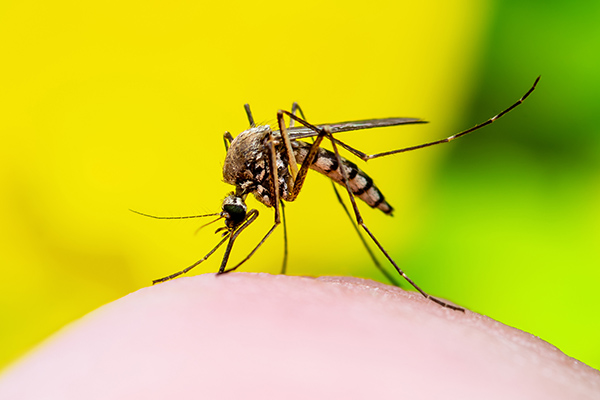
Midwestern states are reporting very high levels of West Nile virus (WNV) this August. In Iowa, WNV activity is the highest it has been in the last 20 years, and yet, there are more confirmed human infections in surrounding states.
As we wait for cold weather to reduce mosquito activity, prevention is the best medicine. Use these tips to minimize your risk of infection:
- Avoid time outdoors when Culex mosquitoes are most active (evenings).
- When you go outside, wear loose-fitting, long-sleeved shirts and pants.
- Wear bug spray that includes DEET or Picaridin and consider treating clothing and shoes with permethrin.
- Look for and dump standing water to remove mosquito breeding sites
Recommended 2025 Pumpkin Spray Schedule in Illinois
Use the forecasting tool in this article to decide when to monitor for cucurbit diseases in your field. Spray timing and product options are provided for downy mildew, Phytophthora, and bacterial spot.
Tar Spot And Southern Corn Rust August Update In Indiana
Northern corn leaf blight, tar spot, southern rust and gray leaf spot have all been found in Indiana this year. Check out this article for a photo that shows what these four diseases look like side by side. Two maps are provided and show which counties have confirmed cases of southern rust and tar spot. Advice for timing of fungicide applications is also included.
Weed Management Practices: Fall Scouting and Equipment Cleaning
Being proactive during harvest can help reduce weed pressure in your fields. Make notes about weeds you notice from the combine, and include weed species and location. If you already know where weedy areas are, harvest them last to avoid spreading weed seeds with your harvest equipment. Also be sure to use your combine’s “self clean” feature between fields. Other suggestions are also provided.
Free Oak Disease Testing Continues in 2025 (MO)
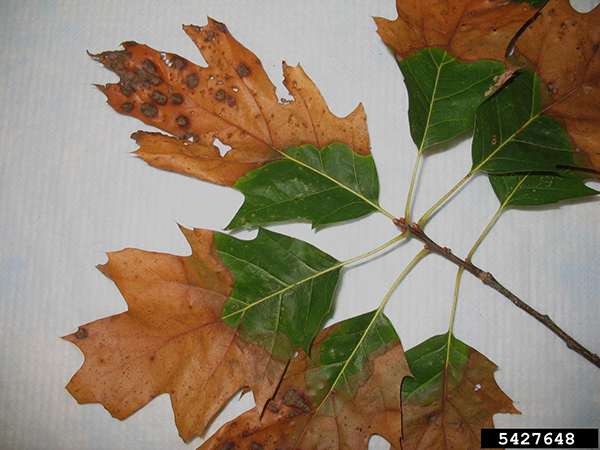
Have you noticed an oak tree in Missouri that is looking stressed? Free disease testing is available from the MU Plant Diagnostic Clinic for 2025. Scientists are particularly interested in tracking locations of bacterial leaf scorch and oak wilt outbreaks.
Resources
Read, use or share the latest IPM resources.
New Webinar Series on Major Pest Problems for Nursery Crops (MI)
A new webinar series called, “Major Pest Problems in Nursery Crops” begins in September. This 3-part series will share information about the top 35 pest issues experienced in nurseries in the past four years.
These webinars will benefit nursery growers, Christmas tree growers, landscapers and other commercial industry representatives. All three webinars are free, but you must register to attend. Restricted use pesticide credits have been requested for commercial and private core licenses and categories 3A and 3B.
Each webinar will be held from 12:30-2 p.m. ET (11:30 a.m. to 1 p.m. CT). The dates and topics include the following:
- Sept. 17: Major Insect and Mite Pests of Nursery Crops
- Sept. 24: Top Disease Problems Deciduous and Coniferous in Trees
- Oct. 1: Common Diseases of Herbaceous Perennials and Woody Ornamentals
Crop Disease Forecasting Tool Replaces Retired Apps
The Tarspotter and Sporecaster apps have been retired, and their functions have been rolled into the Crop Disease Forecasting Tool from the Crop Protection Network. This tool assesses the risk of tar spot and gray leaf spot in corn and white mold and frogeye leaf spot in soybeans based on location and the weather forecast.
The Crop Disease Forecasting Tool also provides risk assessment for the fungus Gibberella zeae (synonym Fusarium graminearum), which affects corn and can lead to mycotoxin issues in harvested grain.