
North Central IPM Center Updates
Stay informed with the latest news from the Center with the stories below. Be sure to share your favorites!
Webinar Recording: Integrating Long-Lasting Insecticide Netting into IPM Programs after Harvest
Even after harvest, crops are vulnerable to hungry insects. Dr. Rob Morrison, research entomologist with the USDA Agricultural Research Service’s Center for Grain and Animal Health Research, has been researching the effectiveness of long-lasting insecticide netting for protecting stored grain.
Nets treated with insecticides are placed in vents and around openings of storage facilities. These nets are effective: insects that come into contact with the net show reduced movement and even death with longer exposures.
Long-lasting insecticide netting can be used along with other practices that are already used in storage facilities. Even better, long-lasting insecticide netting is effective against phosphine-resistant insect populations.
Watch the full webinar to learn more about recent research related to long-lasting insecticide netting and the potential for reducing fumigation and pest damage.
July Webinar: Soybean Aphids are Resistant to Pyrethroids, Now What?
Are the soybean aphids on your farm surviving insecticide treatments? Dr. Matt O’Neal, professor of soybean entomology at Iowa State University, can tell you why.
Dr. O’Neal has spent three years assessing soybean aphids for resistance, and he will share results during the next Pests and Progress webinar. Since pyrethroids are such an important management tool, Dr. O’Neal will also provide suggestions for continued soybean aphid management.
Register now and join the next Pests and Progress webinar on Wednesday, July 16, 2025, at 1:00 pm ET (12:00 pm CT) to learn more. Please note the time change. Pests and Progress webinars are free, and you must register to attend.
Certified Crop Advisers may receive 0.5 continuing education units (CEUs) related to integrated pest management (IPM) for attending.
2025 Tick Academy Scheduled
Registration is open! You may attend for $25 a day if you register before August 31. CEUs are available. More details are available on the Tick Academy website.
New Episodes—I See Dead Plants Podcasts
- Crawlers of Compact Corn: Insect Pests and Short Stature Corn
Interviewee: Devin Radosevich from Iowa State University. - Tunnels of Terror: Soybean Tentiform Leafminer
Interviewee: Dr. Bob Koch from the University of Minnesota.
Pollinator Special Issue
Enjoy this collection of pollinator news.
Plant by Numbers
Ready to level up? Plant a pollinator garden with a focus on specific pollinators, such as bumble bees, specialist bees, butterflies and moths or even birds! These quick summaries from The Ohio State University will help you begin.
New Educational Resource for Veterinarians Looking to Build a Honey Bee Medicine Business
Finding support for an ailing bee hive can be a challenge, but this new resource makes it easier for aspiring honey bee veterinarians to launch a business. Check out the “Creating a Honey Bee Medicine Business” resource to get started.
Monarch Webinar Series
This webinar collection from the US Fish and Wildlife Service includes a wealth of knowledge about monarch conservation. From details about seed mixes for planting habitat to supporting monarchs in urban areas or preserving habitat in Mexico, you’re certain to learn something new from this series.
Pollinator-Friendly Native Plant Lists
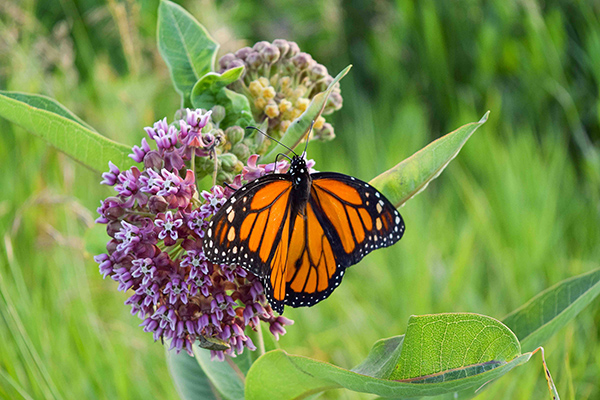
Are you thinking about starting a pollinator garden and wondering what plants are native? Check out these short handouts from the Xerces Society that will give you the confidence to get started. These handouts summarize plant names, bloom times, and flower color, along with sun and soil needs.
Pollinator Research
Lactic Acid Bacteria: A Probiotic to Mitigate Pesticide Stress in Honey Bee
Probiotics such as Lactobacillus and Bifidobacterium have the potential to reduce the effects of pesticides, boost immune systems, and lower disease rates in honey bee colonies. These gut microbes can break down organophosphorus pesticides using phosphatase enzymes, and they are also able to survive and continue their detox role in the presence of pesticides.
In addition, Lactobacillus and Bifidobacterium probiotic supplements improve colony growth, increase honey production, and boost pollen storage.
Pollinators Make a Big Impact on Edamame Marketability
The presence of pollinators in edamame fields can dramatically increase yields. While edamame plants can self-pollinate like other soybeans, cross pollination is more effective. Having a strip of wildflowers near edamame provides even more yield benefits, and this increases marketability of the crop because consumers appreciate edamame that have more seeds per pod.
Pesticides and Adjuvants Disrupt Honey Bee’s Sense of Smell
Adjuvants are often mixed with pesticides to improve their ability to stay in place. These adjuvants are considered inactive from a biological standpoint, and thus they are not tested with the same rigor as other insecticidal agents.
Recent research demonstrates that adjuvants used alone or in tandem with fungicides or insecticides can be toxic to bees. This study began exploring the effects of these chemicals on bees, and they appear to alter the olfactory system of honey bees. Specifically, bee antennal responses to certain pheromones were altered.
The Venom Preceded the Stinger: Genomic Studies Shed Light on the Origins of Bee Venom
Many bees, wasps, and ants in the insect order Hymenoptera can sting and inject venom. But which came first–the stinger or the venom?
Researchers at the Institute for Cell Biology & Neuroscience of Goethe University Frankfurt pursued genetic comparisons of members of Hymenoptera and found the presence of the venom genes in all species tested. This indicates that the ability to produce venom likely came from a common ancestor and that the stingers evolved later.
Asian Longhorned Tick News
The Asian longhorned tick is spreading in the Midwest. Check out the latest details.
Asian Longhorned Tick Pest Alert
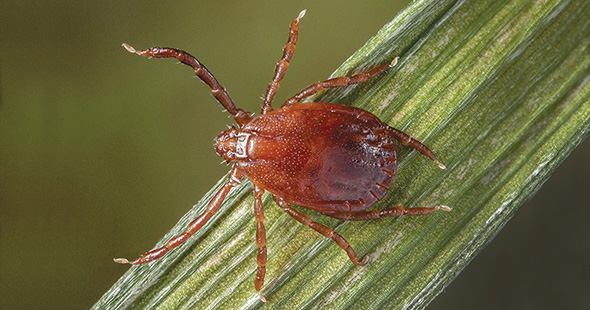
The Asian longhorned tick (ALT) has made its debut in two new Midwestern states in June of 2025. It’s a great time to review basic details about this tick so you are prepared to recognize it, especially if you own livestock, which is this tick’s preferred host.
The ALT is smaller than the ticks we are used to seeing so they can be easy to miss. However, because female ALTs can reproduce without mating, populations can increase rapidly.
More details are available in the Asian Longhorned Tick Pest Alert. Free printed copies are available through this request form.
Reducing tick populations can be a challenge, but research efforts are underway. Research on the ALT and management options are available in this webinar: “Ecological Epidemiology of the Asian Longhorned Tick: Insights from Ohio.”
Asian Longhorned Ticks Discovered in Berrien County (MI)
The Michigan Department of Agriculture and Rural Development has confirmed the first detection of the Asian longhorned tick (ALHT) in Michigan. Routine tick surveillance revealed the presence of two ALHT nymphs in Grand Mere State Park.
Livestock owners are encouraged to check for this tick on a regular basis and to seek veterinary advice for treating animals for ticks. Mowing pastures and lawns may also help.
Beef Cattle Disease Confirmed in Iowa for the First Time
The first Asian longhorned tick and the first cattle illness caused by this tick have been confirmed in southeastern Iowa. The protozoan parasite Theileria infects red and white blood cells, which can cause anemia or even death.
Livestock owners need to watch out for this new tick by screening cattle, especially when livestock are first introduced to a new pasture. The availability of a preferred host inspires female Asian longhorned ticks to lay thousands of eggs so tick populations increase rapidly.
Pests this Season
Stay informed and know which insects, diseases, and weeds are showing up in fields this season.
Upcoming Webinar: Identifying the Diversity of Phyllachora Species Causing Corn Tar Spot and Their Potential to Infect Grasses
The North American Invasive Species Management Association’s (NAISMA) is hosting a webinar about tar spot on July 9 from 2 to 3 pm ET (1 to 2 pm CT).
The speaker will be José E. Solórzano from the University of Minnesota, and he will share, “Identifying the Diversity of Phyllachora Species Causing Corn Tar Spot and Their Potential to Infect Grasses.” This webinar is free to attend, but be sure to register.
While tar spot of corn is a recent addition to the United States, it has been in areas of North and South America for over a century. Tar spot is caused by the pathogen called Phyllachora maydis. Solórzano is working to determine which other Phyllachora species are able to infect corn and whether these pathogens can infect grasses as well.
Ohio State is Supporting Ohio Strawberry Growers Facing Challenges from Fungal Disease
Neopestalotiopsis, commonly called “Neo-P,” is infesting strawberries in Ohio. This aggressive pathogen can spread rapidly so Ohio State University Extension is sharing resources to help farmers identify and manage the disease. Farmers can subscribe to Ohio Fruit News to stay informed.
There are not any resistant strawberry varieties available so options are limited, and strawberries in greenhouses and high tunnels are most vulnerable.
The C. Wayne Ellett Plant and Pest Diagnostic Clinic at Ohio State offers free disease diagnosis for commercial fruit and vegetable crops. Identifying infections early and early management can help protect crops.

Fusarium Research Under Watch: How Science and Regulation Work Together to Protect U.S. Agriculture
Fusarium graminearum has been in the news this month. While this pathogen can impact yield and grain quality and can cause unpleasant symptoms when ingested, quality control measures are in place to protect the public.
Under warm and wet conditions, Fusarium graminearum is known to cause Fusarium head blight in wheat and small grains and Gibberella ear rot in corn. Farmers actively manage crops to reduce disease spread, and harvested grain is routinely tested for the toxin.
More information about this pathogen is available from the Crop Protection Network: An Overview of Fusarium Head Blight.
Rootworm Eggs Reaching Peak Hatch in Iowa
Corn rootworm egg hatching peaked in mid-June in Iowa this year. Now is a great time to use the float test to scout for larvae, and this article describes the test and also connects to a video for more details.