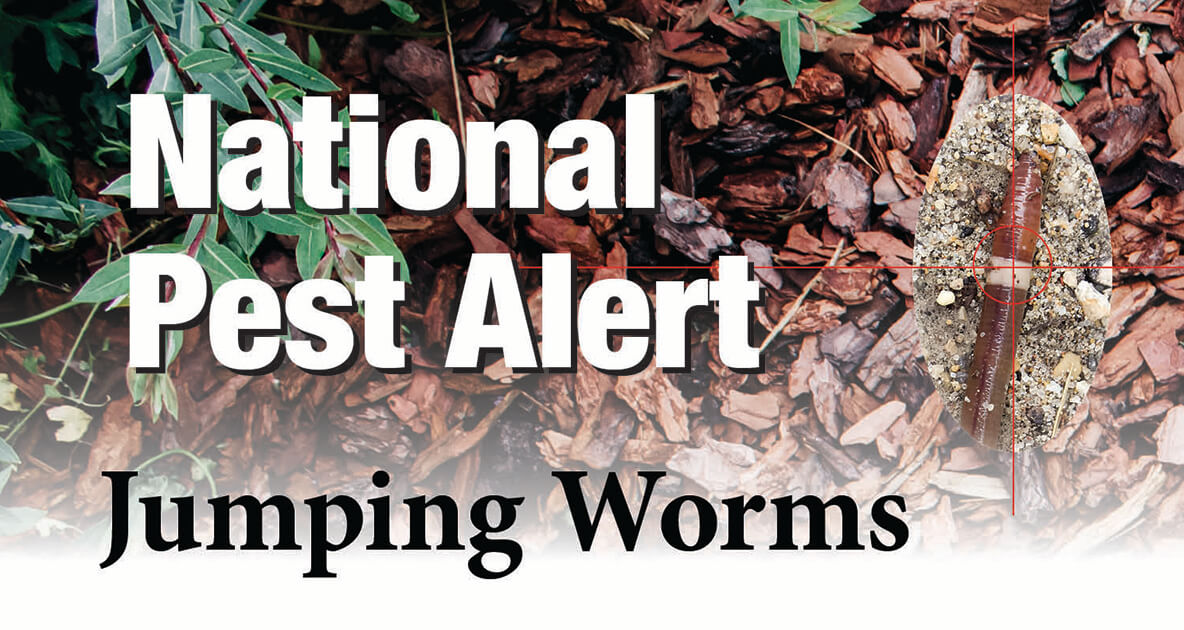
New Jumping Worm Pest Alert Published
Jumping worms (Amynthas spp.) are expanding their range across the United States and are easily spread through potting soil, mulch and compost.
Jumping worms harm woodlands and other natural areas by rapidly destroying soil structure and depleting soil nutrients, which also makes it difficult for native plants and soil organisms to thrive. Jumping worms produce “coffee ground” casts that also make soil vulnerable to erosion.
A map with known jumping worm locations is available in the pest alert, but experts suspect that more locations will be confirmed. Learn to identify jumping worms, and report any sightings along with a photo using EDDMaps.
Preventing spread of jumping worms is the currently the best method to protect wild areas. Several other management options are being explored. Check out the Jumping Worms Pest Alert for more information. Free printed copies of this pest alert are also available.
This pest alert is available thanks to the Regional IPM Centers and funding generously provided by the USDA National Institute of Food and Agriculture, Crop Protection and Pest Management Program (2022-70006-38001).