December 2024 Central Issue

News stories shared in the December 2024 Central Issue appear below. Subscribe to receive the Central Issue newsletter monthly via email.

North Central IPM Center Updates

Stay informed with the latest news from the Center with the stories below. Be sure to share your favorites!

Great Lakes Urban Agriculture Working Group 2024 Achievements

This was a busy year for the Great Lakes Urban Agriculture Working Group! The team published 15 pest cards focused on mammals and insects that can cause problems when growing crops in urban areas. Three virtual urban farm tours were also produced, including a photograph tour and video summaries. Maggie Rivera and Dr. Laura Ingwell promoted the team’s activities during the May Pests and Progress webinar, and an annual meeting was held to promote networking and information sharing. Learn more and get involved with these additional details!
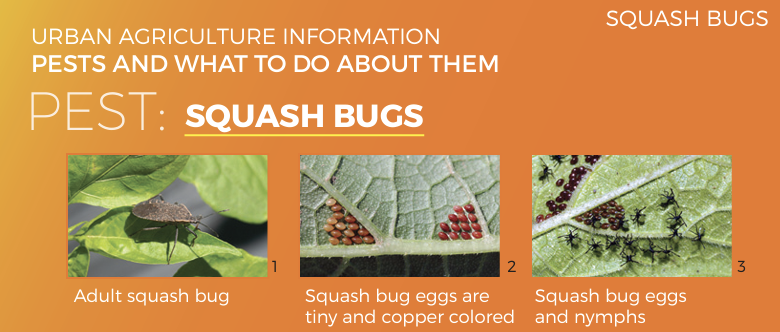
Urban Agriculture Information about Squash Bugs. Image of an adult squash bug next to an image of squash bug eggs next to image of squash bug nymphs.
One of many Pest Cards created by the Great Lakes Urban Agriculture Working Group.

January Webinar: Advances in Epidemiology and Phytopathometry: Leveraging Tar Spot as a Model System

Interested in tar spot or corn diseases? Learn about efforts to measure disease severity and tar spot dynamics in field conditions from Dr. C.D. Cruz, associate professor in the Department of Botany and Plant Pathology at Purdue University. Dr Cruz will share, “Advances in Epidemiology and Phytopathometry: Leveraging Tar Spot as a Model System” during the next Pests and Progress webinar on Wednesday, January 15, 2025, at 1:30 pm ET (12:30 pm CT).

Pests and Progress webinars are free, and you must register to attend. More details are on the North Central IPM Center website.
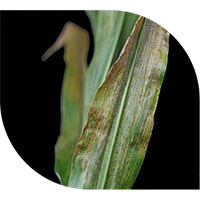
Corn leaves showing dark specks of tar spot disease.
Tar spot on corn. Photo by Dr. C.D. Cruz, Purdue University. 


Teaching Biocontrol of Invasive Species

The North Central School IPM Working Group recently used two new invasive species curricula in Chicago-area schools. Todd Breitenfeldt, biological weed control expert and retired science teacher, taught students about phragmites, spotted knapweed and Asian jumping worms. Learning activities were tailored to the ages of the students and included participants from both elementaries and high schools. The full jumping worm and phragmites curricula will be available via the online Pest Defense classes.

War Against Weeds Podcasts

New Episodes—I See Dead Plants Podcasts

US Fish & Wildlife Service Update

Here’s the latest news from the US Fish and Wildlife Service.

Fish and Wildlife Service Proposes Endangered Species Act Protection for Monarch Butterfly

The U.S. Fish and Wildlife Service has proposed listing the monarch butterfly as a threatened species under the Endangered Species Act. The “threatened” designation allows species-specific protections that would apply in both public and private lands within the contiguous United States, Puerto Rico and the U.S. Virgin Islands. Hawaii and other U.S. territories are not included because they are outside of the historical range of the species.

Under the proposed “threatened” status, these activities would still be allowed:

  • Maintenance, enhancement, removal or establishment of milkweed and nectar plants within the monarch’s breeding and migratory range
  • Implementation of conservation plans developed by state or federal agencies
  • Maintenance or improvement of monarch overwintering habitat in the United States when following an approved plan
  • Non-lethal collection, possession, captive-rearing, and release of 250 or fewer monarchs per year
  • Non-lethal scientific research and educational activities involving 250 or fewer monarchs per year
  • Possession of dead monarchs
  • Sale of 250 or fewer captive-reared monarchs


Adult monarch on pink crabapple tree flower.
Adult monarch on crabapple tree flower. Photo by Jacqueline Pohl, Iowa State University. 


The proposed listing is open for public comment for 90 days, which ends on March 12, 2025. The USFWS is particularly interested in comments about the need to include an exception for impact on monarchs associated with the use of pesticides.

Two public sessions are scheduled:

  • Tuesday, January 14, 2025, from 6:00 to 8:30 p.m. ET (5:00 p.m. to 7:30 p.m. CT)
  • Wednesday, January 15, 2025, from 8:00 to 10:30 p.m. ET (7:00 to 9:30 p.m. CT)

Related links:

IPM Highlights

Here’s interesting stories related to progress in integrated pest management.

ESA Monarch Listing Decision Toolkit

Now that the monarch is proposed for listing as threatened under the Endangered Species Act, you may wonder how these changes affect farmers and landowners. Fortunately, the Farmers for Monarchs organization has resources available to help you understand what the proposed listing means and how you can provide feedback about the proposed rules related to the threatened status. These resources are available in the ESA Listing Decision Toolkit.

Can Genetic Engineering Reverse Insecticide Resistance?

Is resistance reversible? Typically, when resistance to a pesticide develops in a pest population, the trait is retained even if it is no longer needed. Recent research in Drosophila flies shows potential as researchers are able to perform lab trials where the wild-type allele becomes more common despite the presence of a  resistance gene.  This may allow wild-type alleles to increase in the Drosophila population so the flies remain vulnerable to insecticide as a control method.

Help with Bulletins Live! Two is Available in Michigan

Pesticide labels now require applicators to check the Bulletins Live! Two website before spraying. Michigan State University Extension is offering six free, hands-on training sessions to help you learn how to use the new website. These sessions will include 50-minute presentations along with personalized, one-on-one training using the Bulletins Live! Two website.

Sessions are free, but space is limited so be sure to register.

Spotted-Wing Drosophila Impact Survey

Small fruit grower expertise is needed! What are the impacts of spotted-wing drosophila (SWD) on your farm? How have these impacts changed in the last decade? Please fill out this short survey (which will take 15 minutes or less) or share this survey with your contacts. The deadline is late February.

A national team of entomologists is working to understand where challenges still exist for SWD management and what improvements have been made over the last 10 years. Insights will be used to develop new research goals as part of a USDA Specialty Crop Research Initiative proposal. Results will also be shared in extension and research publications.

Blueberry with oviposition holes from female SWD.

Blueberry with oviposition holes from female spotted-wing drosophila. Photo by Tracy Hueppelsheuser, British Columbia Ministry of Agriculture and Food.

Preparing for Next Season

Get ready for next year with these learning opportunities.

Agronomy & Farm Management Podcast: Dealing with DON

Deoxynivalenol (DON) is a vomitoxin produced by a fungus that grows on corn ears. Levels of this toxin are tested at grain elevators before corn is sold, and its presence can affect profits (and even whether the crop can be sold). This is your chance to go behind the scenes of grain operations to look at testing, grain flow and market impacts of DON. Tips for DON management are also included.

2025 Crop Hour Webinars

Register now for January and February Crop Hour webinars! These webinars are hosted by South Dakota State University Extension and will be held at 11:00 a.m. ET (10:00 a.m. CT)  every Tuesday, Wednesday, and Thursday beginning January 7 and continuing through February 27, 2025.

Topics include integrated pest management related to insects, weeds and diseases, specialty crops, regenerative agriculture and more.

Strategic Farming: Let’s Talk Crops (MN)

Join University of Minnesota Extension to discuss timely issues and ask questions related to crop production during the “Strategic Farming: Let’s Talk Crops” webinar series. Topics range from herbicide spray technology, cover crops and corn, insect pests in corn, corn and soy diseases, drones and more.

Live Zoom sessions will be held from 10:00 to 11:00 a.m ET (9:00 to 10:00 a.m. CT) on Wednesdays from January 10 through March 27, 2025. View the full schedule, register, or watch recordings on the “Strategic Farming” page.

Vegetable Production Webinar Series

Learn how to manage vegetable crops for maximum yield with University of Missouri Extension in January and February! A wide range of topics are included from planning to soil health to weed, insect and disease management.

Webinars will be held on Tuesdays from 7:00 to 8:30 p.m. ET (6:00 to 7:30 p.m. CT) from January 6 through February 25, 2025. Be sure to register to attend.

2025 What’s Bugging You Webinar Series

What’s Bugging You? webinars are back for 2025! These webinars are hosted by New York State Integrated Pest Management Program and are held on the first Friday of each month at 12:00 p.m. ET (11:00 a.m. CT). Webinar topics for 2025 cover a variety of structural pests like cockroaches, rodents, and clothes moths, along with spotted lanternfly and spongy moth. Register once for an entire year of webinar access. 

Resources

Read, use or share the latest IPM resources.

Tool From The SCN Coalition Reveals the Pest’s Financial Toll

Soybean cyst nematode (SCN) is considered the most yield-limiting disease of soybean in the U.S. and Canada, but do you know how much it is affecting your profits? This calculator can help you estimate how much SCN is impacting your bottom line based on a few basic details you provide, such as an SCN egg count, the sand content of the soil and soil pH.

Integrated Pest Management in Swine Production Facilities

Insect bites can have large impacts on market swine health and thus profits. The bites can cause skin lesions that can result in as much as $6-$15/head trim loss in packing plants in the upper Midwest. Learn how to set up your facility and maintain the grounds to keep insect populations low. Other strategies for control, such as ventilation and insecticides, are included.

Plant Risk Evaluator Tool

The Plant Risk Evaluator Tool is an online database that describes the potential for ornamental and horticultural plants to become invasive weeds in different areas and environments. The goal of this tool is to prevent new weed pests by helping landscapers and garden centers avoid species with invasive potential.

Research

Keep learning with these IPM-related research articles.

Identification of the Pan-Allergen Tropomyosin from the Common Bed Bug

Tropomyosin is a protein that exists in all animals, but the tropomyosin in invertebrates is especially allergenic to humans. This recent study, published in Scientific Reports, demonstrates that common bed bugs (Cimex lectularius) contain tropomyosin and that infestations could lead to allergic reactions. Levels of tropomyosin were measured in bed bug bodies, feces, and exuviae (cast skins). Levels were measured over time to see if levels increased or declined. Finally, bed bug treatments were trialed to determine whether they effectively remediated tropomyosin levels as well.

Using Fungi to Control Soybean Cyst Nematode

This project explored the symbiotic relationships between soybean cyst nematodes and the fungi they carry. Some of these fungi were found to infect soybean cyst nematode eggs or reduce movement of the juvenile worms. Other fungi may help control the soybean cyst nematode by preventing the nematode from infecting a plant or inhibiting its development inside the plant.

Meet Amblyseius swirskii (Acari: Phytoseiidae): A Commonly used Predatory Mite in Vegetable Crops

The predatory mite, Amblyseius swirskii Athias-Henriot (Acari: Phytoseiidae), is a biological control agent that has been commercially available since 2005. This predatory mite has become one of the most popular biocontrol predators worldwide because it is an effective generalist predator that feeds on multiple soft-bodied insects and mite pest species. It can be used to suppress whitefly populations (Hemiptera: Aleyrodidae), thrips (Thysanoptera), and spider mites. The presence of this mite can benefit vegetables like peppers, eggplants, cucumbers, and squash and ornamentals like roses and chrysanthemums in fields and greenhouses.

Events

Learn and network at these upcoming in-person events.

11th International IPM Symposium: Early Bird Registration Deadline

Register soon to take advantage of  early bird pricing for the IPM Symposium, which is available through January 15, 2025! Registration options are flexible; come for the entire symposium or just a day. Discounted student registration rates and exclusive activities for students are available.

Virtual Beginning Farmer Program

Are you interested in starting your own farm? Learn how to get started by participating in the virtual Beginning Farmer Program, which will be held in January 2025. This program will help you develop a mission and vision for your farm, set goals, identify resources and networks, and anticipate opportunities and challenges.

This training will include 1.5 hours of weekly instruction, and sessions will be held on Thursday evenings from 7:00 to 8:30 p.m. ET (6:00 to 7:30 p.m. CT) between January 9 and February 27. Participants will benefit by spending an additional 1–2 hours per week reviewing materials.

You must register by Thursday, January 2. The cost is $85.

Job Board

Consider applying for these job opportunities.

Conservation Associate – Botanist, Michigan State University

Botany Field Technician, Michigan State University

Botanist – Research Assistant, Michigan State University

Director of Center for Sustainable Small Farms and Urban Agriculture, Prairie View A&M University

Endowed Chair in Raspberry Breeding, Washington State University

Assistant or Associate Professor Seed Biology and Technology, Cornell University

Extension Apiculture & Pollinator Health Specialist, University of Georgia