September 2026 Central Issue
The September 2026 Central Issue from the North Central IPM Center features the latest integrated pest management news, research, pest alerts, funding opportunities, webinars, podcasts, and upcoming events for agriculture and pest management professionals.
This issue highlights regional efforts to address red crown rot in soybeans and Asian copperleaf, new research on plant-parasitic nematodes and invasive pests, emerging IPM technologies, USDA funding opportunities, and seasonal pest management resources for the Midwest and North Central region.
Subscribe to receive the Central Issue newsletter monthly via email.
North Central IPM Center Updates
Stay informed with the latest news from the Center with the stories below. Be sure to share your favorites!
Red Crown Rot Collaboration Efforts Ramp Up
Since 2021, red crown rot has contributed to significant yield loss (>256 thousand bu) in U.S. soybeans. This emerging disease is particularly challenging because its symptoms are similar to other well-known soybean diseases, which makes accurate diagnostics difficult.
In 2026, a new working group led by Dr. Darcy Telenko from Purdue University was formed to bring together farmers, university scientists, soybean commodity groups, and agricultural industry personnel to improve communication and ensure a coordinated, effective response to red crown rot infestations.
The working group’s first event was held in August and featured a field tour of red crown rot issues in Illinois soybeans. After the field tour, attendees met to brainstorm about research and extension needs related to red crown rot and to set goals for the working group’s future efforts.
The Red Crown Rot Working Group received funding from the North Central IPM Center for the first time in 2026. If you are interested in joining the team, please contact Dr. Darcy Telenko at Purdue University.
October Webinar: Current Trends and Management of Plant-Parasitic Nematodes in Missouri Soybeans
Between 2024 and 2025, Dr. Mandy Bish and her team at the University of Missouri surveyed 200 soybean fields across 81 Missouri counties and all nine crop reporting districts to assess plant-parasitic nematode diversity and population densities.
Ten nematode taxa were identified, with spiral, root-lesion, and soybean cyst nematode (SCN) being the most prevalent. Nearly half of all fields were host to at least three different taxa. Notably, elevated SCN densities and reproduction rates on SCN-resistant soybean indicate underestimated SCN-related damage to Missouri soybean.
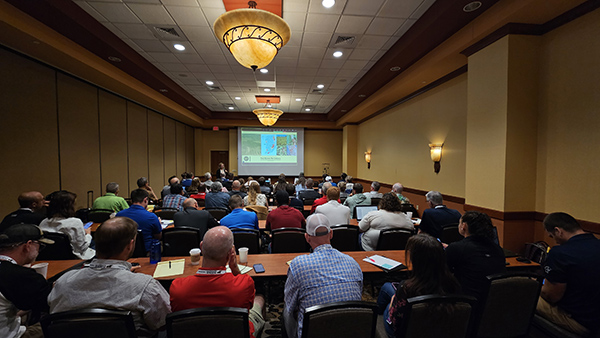
Join the October webinar to learn more about these findings. This webinar qualifies for 0.5 CEU in IPM for Certified Crop Advisers.
This Pests and Progress webinar will be held on Wednesday, October 21, 2026, at 1:00 p.m. ET (12:00 p.m. CT). Pests and Progress webinars are free, and you must register to attend.
War Against Weeds Podcasts
- New Host Introduction and a Look Ahead
- Revenge Sprays
Interviewee: Dr. Mark VanGessel from the University of Delaware - Fall Herbicide Applications
Interviewees: Dr. Joe Ikley from North Dakota State University and Dr. Tom Barber from the University of Arkansas
I See Dead Plants Podcasts
Bugging the Bugs: Inside the Insect Eavesdropper
Explore how researchers are using low-cost sensors, machine learning and plant vibrations to “listen” for insects inside crops. Dr. Emily Bick from the University of Wisconsin explains how the Insect Eavesdropper could improve pest detection and monitoring—and what this emerging technology could mean for IPM.
If this topic interests you, the North Central IPM Center also hosted a webinar featuring Dr. Bick, where she describes her work developing innovative tools for pest monitoring.
The Return of the Jassid: New Insights on Cotton Jassid in 2026
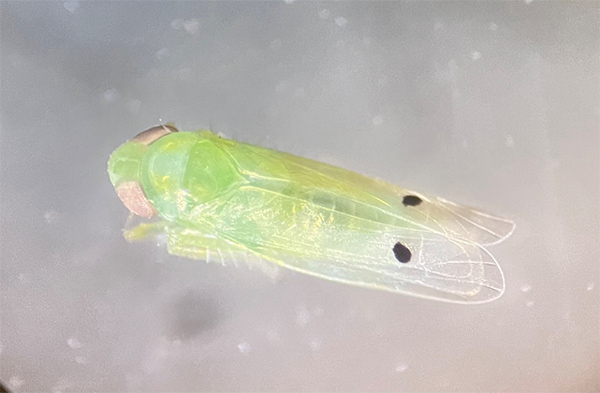
Learn more about the rapid spread and management efforts related to the invasive cotton jassid. Entomologists Dr. Scott Graham from Auburn University, Dr. Isaac Esquivel from the University of Florida, and Dr. Phillip Roberts from the University of Georgia share what they’ve learned after two years of tracking this emerging pest.
Hear how scouting, research and regional collaboration are helping farmers respond to cotton jassid crop damage.
USDA National Institute of Food and Agriculture Update
Here’s the latest news from the USDA National Institute of Food and Agriculture.1890 Institution Teaching, Research and Extension Capacity Building Grants Program
The USDA National Institute of Food and Agriculture’s 1890 Institution Teaching, Research and Extension Capacity Building Grants Program supports eligible 1890 land-grant institutions in strengthening their teaching, research and extension activities through partnerships with federal and non-federal organizations. Funding is currently available for both 2026 and 2027 in this notice of funding opportunity (NOFO). Almost $56 million is available in this NOFO with $50,000 as a minimum award amount and opportunities for up to $750,000 for projects that include teaching, research and extension activities. Applications for 2026 funding are due November 4, 2026; applications for 2027 funding are due August 25, 2027.Innovation Proposals Being Accepted for Ag Outlook Forum
Applications for USDA-funded projects are now being accepted for the 2027 Agricultural Outlook Forum’s Science Innovation Exhibits, which will be held February 18 and 19 in Arlington, Virginia. To apply, submit a one‑page proposal by October 9 that describes your innovation, its alignment with USDA priorities, its USDA funding support, and its current and projected impact. Email proposals to Dr. Rich Derksen (rich.derksen@usda.gov) and include the subject line “2027 AOF Science Innovation Proposal.”IPM Highlights
Here’s interesting stories related to progress in integrated pest management.
“This is IPM” Podcast Launched
Integrated pest management (IPM) brings together science, practical experience and collaboration to address pests that affect our food, farms, homes, forests, businesses and communities.
The new “This is IPM” podcast explores how real-world pest challenges are solved by the people working across the IPM network, highlighting the partnerships and knowledge-sharing that help us respond to emerging threats.
In the first episode, “IPM is Collective Action,” Dr. Daren Mueller of Iowa State University discusses the IPM Infrastructure Survey, while Dr. Jim Farrar of the University of California shares insights from California’s Sustainable Pest Management Roadmap. The episode also offers plenty of IPM wisdom along the way.
Scientists Hope Deeper-Rooted Soybeans Can Withstand Climate Extremes
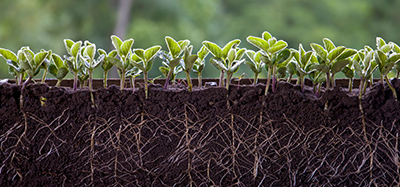
Scientists are field-testing genetically engineered soybeans with deeper, larger root systems that could help crops withstand drought and other climate stresses while storing more carbon underground.
Researchers from the Salk Institute for Biological Studies are testing the soybeans in Illinois, Missouri, Kansas and Iowa to determine whether the deeper roots can improve drought resilience and carbon storage without reducing yields.
Early laboratory results are promising, but field trials are needed to determine how the plants perform under real-world growing conditions.
Crop Protection Network: Ten Years and Going Strong
The Crop Protection Network (CPN) brings university extension specialists and researchers together to create unbiased resources that help agricultural professionals make informed crop-management decisions.
CPN resources include CPN TV and the Crop Scouting school, web publications, the “I See Dead Plants” podcast and a collection of forecasting tools.
Learn more about CPN during the November 4 webinar called, “Crop Protection Network: Ten Years and Going Strong,” at 11:15 am to 12:15 pm ET (10:15 am to 11:15 am CT), which is part of the Cornell Integrated Pest Management academic seminar series.
Dr. Daren Mueller, co-director of CPN and professor and extension plant pathologist at Iowa State University, will talk about how CPN was started and how it has expanded. Be sure to register to receive the link.
Pests This Season
Get ready for next year with these learning opportunities.
Asian Copperleaf on the Move Again
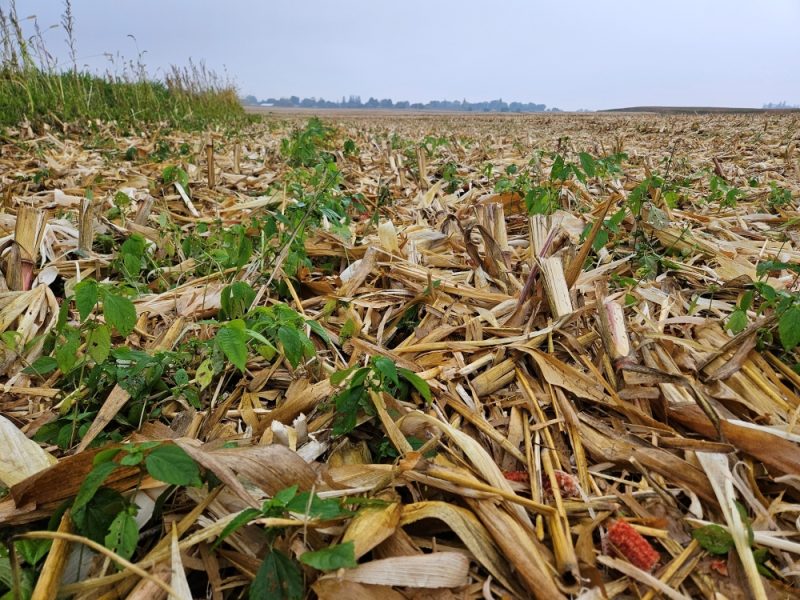
Now is the time to scout for Asian copperleaf in crop fields in Iowa, southern Minnesota and in Illinois near Stephenson County and Carroll County. Identifying Asian copperleaf infestations early makes it much easier to manage.
Information about identification is available in this short article but we recommend confirming identification with your local Plant and Diagnostic Clinic because id can be difficult.
New Asian copperleaf discoveries can be submitted to EDDMapS.
The North Central IPM Center is funding a working group focused on Asian copperleaf for the first time in 2026.
Options for Late-Season Sericea Control
Early fall is a good time to manage an invasive, perennial legume species called sericea lespedeza. Prescribed fire, sheep and goat grazing, and herbicide applications can reduce sericea cover and seed production, and combining control methods often provides better results than using a single approach.
Managing Raspberry Cane Borers This Fall
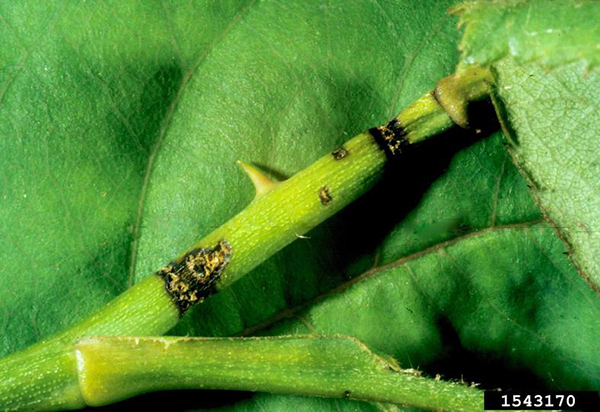
Raspberry growers, now is the time to scout for raspberry cane borer damage. Look for wilted or dead cane tips with two rings of puncture holes; affected canes can be cut a few inches below the damage and removed from the field.
Removing infested canes reduces the number of larvae overwintering in the plants and is an effective management approach.
Spotted Lanternfly is Spreading in Michigan, and MSU Extension is Helping Michiganders Prepare
As spotted lanternfly continues to spread, Michigan State University (MSU) Extension is helping communities and growers prepare with new “lampshade” traps that help detect egg masses. MSU Extension is also holding workshops to help people learn to recognize, monitor and report spotted lanternfly populations.
Guidance for Michigan vineyard owners is also a priority, emphasizing early detection and public reporting as important tools for tracking the insect’s spread.
Utilizing Cool-Season Crops for Weed Management
Herbicide-resistant Palmer amaranth and waterhemp are making weed management increasingly challenging, but diversifying crop rotations can be a useful strategy in an integrated approach.
Cool-season crops such as wheat, rye, oats and canola can establish before peak emergence of warm-season weeds, increasing competition and reducing opportunities for weeds to produce seed. Growing winter wheat can also combine weed management benefits with forage and grain production.
Events
Learn and network at these upcoming in-person events.
Double Down on Biosecurity: Preventing Bird Flu in Poultry (virtual)
Tuesday, September 29, 2pm ET (1 pm CT)
USDA APHIS
- The latest biosecurity best practices
- Free biosecurity resources for poultry farms of all sizes
- Biosecurity assessments for farms with 500+ birds – including how to get paid to fix the highest-risk issues!
Leveraging IPM and Conservation-Agriculture Practices to Improve Control of Invertebrate Pests in Corn and Soybean Production
October 21, 2026
11:15 am – 12:15 pm ET (10:15 to 11:15 am CT)
Biocontrol Summit
November 30 to December 2, 2026
Sacramento, California
North Central Weed Science Society
The North Central Weed Science Society meeting will be held in Columbus, Ohio,
December 7 to 10, 2026.
Early bird pricing ends November 13, along with the option of joining the hotel room block pricing. You must register by December 7 to attend.
Great Lakes Expo
The annual Great Lakes Expo will be held in Grand Rapids, Michigan, from Tuesday, December 8 through Thursday, December 10, 2026. The Expo includes educational sessions on industry topics, a large trade show for networking and discovery, and specialized workshops and meetings.
Job Board
Consider applying for these job opportunities.
Assistant Professor – Insect Declines, University of Illinois Urbana-Champaign, Urbana, Illinois
Assistant Professor in Insect Ecology, North Carolina State University, Raleigh, North Carolina
Assistant Professor in Plant Pathology, North Carolina State University, Raleigh, North Carolina
Assistant Professor of Agronomic Entomology, Montana State University, Bozeman, Montana
Corn and Small Grains Agronomist, Mississippi State University, Starkville, Mississippi