May 2024 Central Issue

News stories shared in the May 2024 Central Issue appear below. Subscribe to receive the Central Issue newsletter monthly via email.

North Central IPM Center Updates

Check out the latest updates from the Center!

Tick IPM Webinars

The Tick IPM Working Group holds regular virtual meetings that usually include presentations about tick research. Presentation recordings are now available online. Check out the 2024 topics so far:

  • “Project ITCH: Is Tick Control Helping?” feTick Academy will be held Oct. 16 and 17, 2024aturing Dr. Andrew Lover from the New England Center of Excellence in Vector-Borne Disease
  • “Dr. Ilia Rochlin on Asian Long-horned Tick;” Dr. Ilia is a research assistant professor at Stony Brook University
  • “Oxitec’s Innovation in Tick Control” featuring Dr. Mattia Poletto, Oxitec’s Molecular Team Lead
  • “The Effect of Prescribed Fires on Controlling Tick Abundance in South Texas” featuring Dr. Alynn Martin and Dr. Sandra Rideout-Hanzak from the Caesar Kleberg Wildlife Research Institute, Texas A&M University-Kingsville

The Tick IPM Working Group has also created the “Ticks and Tick-Borne Diseases” pest alert and the “Asian Longhorned Tick” pest alert and holds an annual Tick Academy event each fall.

June Webinar: Back to Basics on Endangered Species Conservation
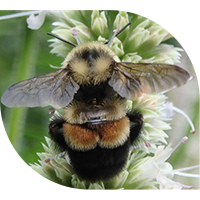
Rusty patched bumblee bee on white flower
Rusty patched bumble bee; listed as endangered in 2017. Photo by Barbara C. Williams

As policies related to endangered species are revised, news and changes seem to be updated daily. In the June Pests and Progress webinar, wildlife specialist Dr. Adam Janke from Iowa State University will take a step back from the headlines and review the basics of endangered species designations, populations, and conservation measures applied in North Central states.

While new regulations may sound daunting, Janke will describe practices that promote mutual thriving of rare and declining wildlife on profitable and productive farms.

Register now to receive the webinar link. This webinar will be held on Wednesday, June 26 at 1:30 pm ET (12:30 pm CT). “Pests and Progress” webinars are free, and more details are on the North Central IPM Center website.

Webinar Recording: Urban Farm Resources Developed by the Great Lakes Urban Ag Working Group

Maggie Rivera and Dr. Laura Ingwell share details about the Great Lakes Urban Agriculture Working Group, urban farm characteristics, farmer demographics and urban farm resources in this webinar called, “Urban Farm Resources Developed by the Great Lakes Urban Ag Working Group.”

Check out the recording to learn why urban farms are “small but mighty.” New working group members are welcome, and the group is seeking urban farms to tour later this year.

Community garden next to apartment buildings

Yellow-Legged Hornet Pest Alert Supports Georgia Eradication Efforts

The yellow-legged hornet was first found in Georgia in 2023. Like the northern giant hornet, the yellow-legged hornet targets honey bee hives and feasts on honey bees. The goal is to eliminate the yellow-legged hornet population before it becomes established. The public’s help is needed to set and monitor traps.

The Georgia Department of Agriculture has taken the lead to communicate with the public, set traps, and locate and eliminate nests. A new two-page summary is available to support outreach efforts and help the public learn how to set traps and report sightings.

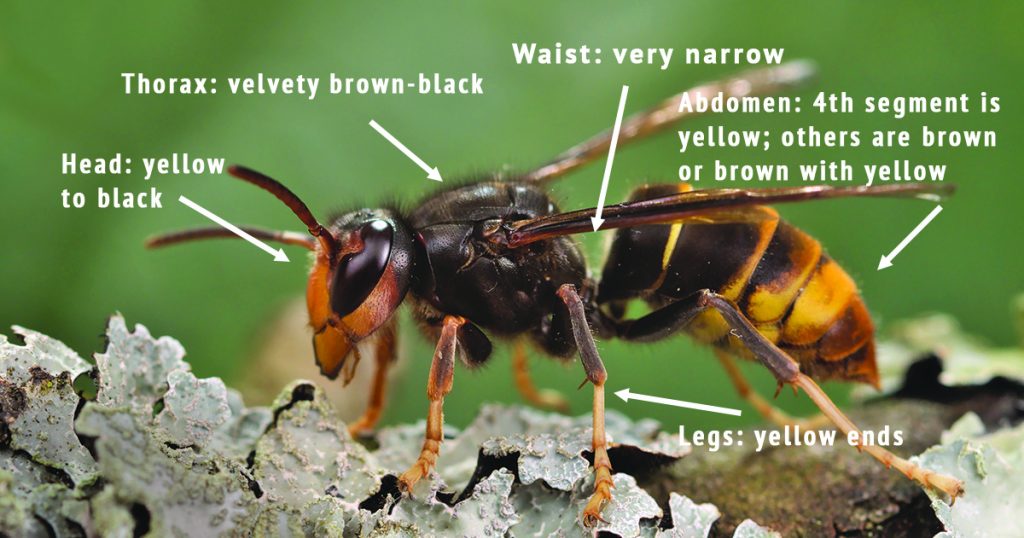
Yellow-legged hornet id tips: yellow-black head; velvety brown-black thorax; narrow waist; legs with yellow ends; the 4th segment of the abdomen is yellow while the others are brown or brown with yellow
Adult yellow-legged hornet. Photo by Gilles San Martin; licensed under CC BY-SA 2.0. (Labels and arrows were added).

Pest Defense Webinar: An Overview of IPM and the Department of Defense in the Eastern US

The next webinar hosted by the School IPM Working Group will cover pest issues and solutions related to school programs on military bases. This webinar will be held on Friday, May 31 at 1:00 pm ET (12:00 pm CT.) James Butler, a teacher and medical entomologist for the US Army Public Health Command, will share case studies about how the Department of Defense takes an IPM-focused approach to managing issues to reduce the health risks associated with pest management.

Help Improve the War Against Weeds Podcast

You can help improve the “War Against Weeds” podcast by filling out this survey, which will take under 5 minutes to complete. The “War Against Weeds” podcast has over 100 full-length episodes available on Spotify and iTunes.

I See Dead Plants Podcasts: New Episodes

Tick and Lyme Disease Awareness Special Section

Enjoy this tick-related news.

5 Questions About Alpha-Gal Syndrome with Dr. Paulina Maldonado-Ruiz

Learn the basics of alpha-gal syndrome from Dr. Paulina Maldonado-Ruiz, assistant professor in the Department of Entomology at the University of Arizona. Alpha-gal syndrome is caused by a carbohydrate molecule in lone star tick saliva (not a pathogen). This syndrome can lead to a red meat allergy in humans. Learn how to explain alpha-gal to the public.

You may also want to listen to this podcast that describes alpha-gal in more detail.

What Eats Ticks? Study Puts an Old Technique to New Use

Natural predators can be a useful tool for managing pests, but predators of ticks are not well known. To explore whether 252 arthropod species eat ticks, researchers used a stable isotope of nitrogen, 15N, to label live tick nymphs. These nymphs were then exposed to potential soil predators for eight days. When predators consumed tick nymphs, they also ingested the nitrogen isotope. Isotope levels were measured in all the potential predators, and two spider species, three Geostiba circellaris beetles, and one sample each of two gamasid mite species were found to have eaten the nymphs.
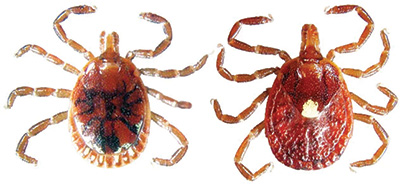
Lone star tick. Adult male on left; adult female on right.
Lone star tick adults: male is on left and female is on the right. Photo by University of Rhode Island TickEncounter.

CDC Tickborne Pathogen Surveillance

Use this virtual dashboard to keep up with tick disease prevalence in your area. Several species of Borrelia, Anaplasma phagocytophilum, Ehrlichia muris eauclairensis, Babesis microti, and Powassan virus can be mapped.

Tick YouTube Playlist from Ohio

The Ohio State University IPM Program has a YouTube playlist dedicated to ticks. Learn how to avoid ticks, use tick repellant and how to remove a tick.

Creepy, Crawly and in the Post: Researchers Asking Wisconsinites to Mail in Ticks

The Marshfield Clinic Research Institute is working to establish a virtual map to track tick species and pathogens in Wisconsin. The project is called the “Tick Inventory via Citizen Science,” or TICS, and residents of Wisconsin are invited to use free collection kits to mail ticks they encounter to the research institute for identification and testing.

Michigan Tech University ‘Tick Talk’ Research Calls for Community Involvement

Michigan Tech University has created the “Tick Talk” website to track tick species and tick diseases in Michigan. Vials for tick collection are available on Michigan Tech’s campus. This project will wrap up later in 2024, and you can learn more about the project in this Michigan Public Radio Stateside podcast.

2024-2025 Appalachian Ohio Tick Project

The Appalachian Ohio Tick Project began in Mrs. Brady’s AP biology class in New Philadelphia City Schools. Students collected ticks, extracted DNA, duplicated the DNR using polymerase chain reaction (PCR), and finally analyzed it to screen for Borrelia burgdorferi (the pathogen that causes Lyme disease).

This year, the class received a grant worth $50,000 from the Ohio Environmental Education Fund to expand tick collection and testing in other high schools in southeastern Ohio.

Keep on Ticking: Entomologist Tells of Ticks’ 27-Year Lifespan

Soft ticks (Argas brumpti) native to eastern and southern Africa were kept in optimal temperature and humidity conditions. Some female ticks survived up to 27 years even though they endured a period where they did not feed for eight years.
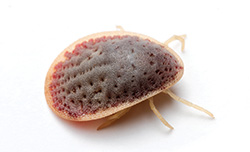
Soft tick adult.
Soft tick adult. Photo by Matt Bertone, North Carolina State University.

Vaccinating Dogs Against Lyme Disease: Two Points of View

A vaccine is available to protect dogs from Lyme disease. Learn what to consider as you decide whether to vaccinate your dog.

Lyme Disease Is Spreading. Why Don’t We Have Drugs to Stop It?

There is a vaccine for Lyme disease in dogs so you may wonder why there isn’t a Lyme vaccine for people. Learn about past efforts to provide a vaccine and the potential of two new Lyme vaccine options.

USDA National Institute of Food and Agriculture Update

Check out this funding opportunity from USDA NIFA. 

Funding Opportunity: Rapid Response to Extreme Weather Events

As weather extremes become increasingly common, USDA National Institute of Food and Agriculture has created a program to support strategies for protecting the nation’s food and agricultural supply chains from drought, wildfire, extreme temperatures, downpours or any other weather extreme. Funding up to $300,000 per project is available. Projects must focus on one of these three areas:

  • Agroecosystem resilience
  • Food safety, nutrition security, and agricultural commodity security
  • Health, well-being, and safety

Applications must be turned in within 45 days of the extreme weather event, and the project must be completed within 12 months of project initiation. A Q&A webinar will be held on Monday, June 25 at 6 pm ET (5 pm CT). 

US Environmental Protection Agency Updates

Catch up on the latest news from the Environmental Protection Agency.

EPA Proposes to Register New Herbicide Active Ingredient Glufosinate-P

The proposed registration decision for pesticide products containing the new active ingredient glufosinate-P is available for public comment until Saturday, June 8. Glufosinate-P can be used to control weeds in non-tolerant and glufosinate-resistant corn, sweet corn, soybean, cotton, and canola. The US Environmental Protection Agency (EPA) has also released its draft biological evaluation for Glufosinate-P under the Endangered Species Act (ESA).

Preparing for Next Season

Here are some ways that you can prepare for managing and avoiding pests next year.

Cover Crops and Residual Herbicides Team Up Against Palmer Amaranth

While Palmer amaranth is known for being difficult to control with herbicides, new research from Kansas State University demonstrates that combined use of cover crops and glyphosate application helps to reduce Palmer populations.  The Palmer amaranth that did emerge also experienced slower growth as it competed with the cover crops.

The Planting Date Conundrum for Corn

Wet soil has made it difficult to get corn planted in Indiana this year, but how important is planting date, really? It is one of several factors that influences yield. Dr. Bob Nielsen from Purdue University Extension reflects on differences between late and early planting and relationships to the other variables that matter.

Farmers, Ag Industry Professionals Reap Dividends from Planter University

A new educational opportunity offered at Iowa State University helps farmers use their equipment more efficiency. Participants of “Planter University” say that learning how to make adjustments in the field, evaluate and calibrate their equipment, and obtain maximum planter performance helps increase yield and profits.

Pests This Season

These pests have been spotted recently in the North Central region. 

Biennial Weed Species Have Started to Emerge

Biennial weed species are showing up earlier than normal this year. In South Dakota, thistle species and common mullein were growing as early as April. Other common biennial weeds to watch for include poison hemlock and wild parsnip. Management options and mowing considerations are described.

Pay Close Attention to Potential Cutworm Feeding when Scouting this Spring

Traps for black cutworms in southern Minnesota have had significant captures since mid-April. It is important to watch for pieces of corn or weed leaves that are missing or on the ground and to scout vulnerable fields as corn seedlings emerge. Learn how to identify vulnerable fields and review tips for scouting.

Pest Management in Cotton – Thrips and Other Early Insects

Thrips are a consistent insect pest of cotton in Kansas and cause the most damage when they arrive as cotton seedlings emerge. Tips for scouting for thrips and management options are described.

Periodical Cicadas are Here…Now What?

As cicadas continue to emerge and reach unusually large populations, you may encounter questions like

  • How loud will it get?
  • Why are some cicadas white?
  • What trees are affected?
  • Can I eat them?

Prepare your answers with this informative article from Illinois Extension.

Research

Here’s a few of the latest efforts to learn about insect, disease, and weed issues.

Single Mow of Park Trails Not Enough to Reduce Ticks

Mowing has been considered as a management strategy for reducing ticks in lawns and parks. However, research trials along trails in three large recreational parks did not show measurable impacts to nymphal and adult blacklegged tick and American dog tick (Dermacentor variabilis) populations after a single mowing in early June.

New Discovery Identifies “Don’t Eat Me” Protein that Allows Lyme Bacteria to Evade Body’s Immune Response

A new research study from the Massachusetts Institute of Technology has identified a specific protein that allows Lyme disease to evade the immune system. Essentially, this Borrelia protein serves as a “don’t eat me” cue to the person’s immune system in people infected with Lyme disease, which helps explain how the illness persists in some patients. This finding may also inspire new research and potential for novel treatments.

New Testing Method Improves Detection of Powassan Virus in Ticks

Powassan virus is a disease that is transmitted by ticks. Although still rare, it causes serious illness in people so efforts are underway to track the presence of this virus in ticks, especially in the Northeast and Great Lakes regions of the United States. A new polymerase chain reaction (PCR) detection method has proven to be as accurate as past screening methods and is even more reliable because it includes a strategy for avoiding false negatives due to inadequate samples.

MIT Scientists want to Create a ‘Lyme Block’ with Proteins Found in your Sweat

A new study from the Massachusetts Institute of Technology in Cambridge shows that a protein in human sweat has antimicrobial properties and can inhibit the growth of the Borrelia bacteria that causes Lyme disease. While all people have this protein, some people have a form that is more effective against Borrelia bacteria. There is interest in using this protein as a way to protect people from getting Lyme disease.

New Study Points to Management Strategies for Invasive Tick on Cattle Farms

Three farms in Tennessee implemented strategies for reducing Asian longhorned tick (Haemaphysalis longicornis) infestations on their farms. Reductions were effective; learn which techniques helped the most.

Partial Trailside Japanese Barberry (Ranunculales: Berberidaceae) Removal did not Reduce the Abundance of Questing Blacklegged Ticks (Acari: Ixodidae)

It is hypothesized that invasive Japanese barberry provides excellent habitat for blacklegged ticks, allowing them to hide and climb to reach hosts that pass by. This study’s researchers attempted removal of barberry plants to gauge resulting effects on tick encounters, but the barberry removal was far less effective than planned. There was no apparent change to adult or nymph tick numbers.

Evaluation of Landscaping and Vegetation Management to Suppress Host-Seeking Ixodes scapularis (Ixodida: Ixodidae) Nymphs on Residential Properties in Connecticut, USA

The first one meter of forest habitat surrounding residential lawns in the Northeastern United States has been shown to be a breeding ground for blacklegged ticks (Ixodes scapularis Say). The focus of this study was to identify which specific habitat characteristics were associated with a higher population of host-seeking tick nymphs. Tick habitat that included stone walls had nearly three times as many nymphs as other areas, providing insight into where to target treatment efforts. Researchers also evaluated the effect of leaf litter removal, unmowed lawns and woodchip barriers.

Efficacy of Unregulated Minimum Risk Tick Repellent Products Evaluated with Ixodesscapularis Nymphs in a Human Skin Bioassay

Products containing DEET have been confirmed to repel ticks, but there are other products that use alternative, mostly botanical active ingredients to repel ticks. Since these ingredients are not considered harmful to human heath, they do not have to be registered with the US Environmental Protection Agency. However, this also means that their effectiveness has not been proven. This study evaluates the efficacy of several alternative tick repelling products.

Events

These professional training opportunities are coming up soon!

American Phytopathological Society Annual Meeting

The 2024 American Phytopathological Society Annual Meeting will be held July 27 to July 30 in Memphis Tennessee. 

Pest Expo 2024

The 2024 Pest Expo will be held June 24 to 26 in Fort Worth, Texas. Pest control professionals, including operators, managers, manufactures, suppliers are invited.

Job Board

Program Specialist II focusing on monarch conservation, Department of Natural Resource Ecology and Management, Iowa State University