The corn leafhopper (Dalbulus maidis) is a threat to corn production in America because it is an efficient vector of pathogens belonging to the corn stunt disease complex. Three of these pathogens, corn stunt spiroplasma (CSS), maize bushy stunt phytoplasma (MBSP), and maize rayado fino virus (MRFV), have been previously detected in the United States.
Identification
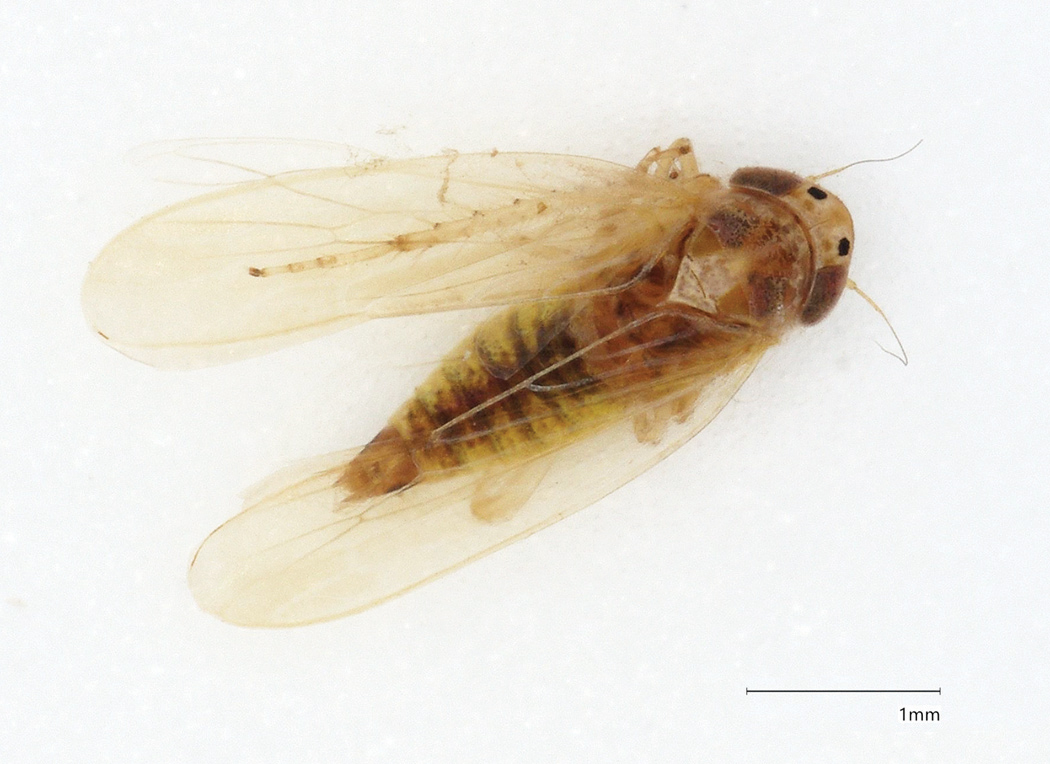
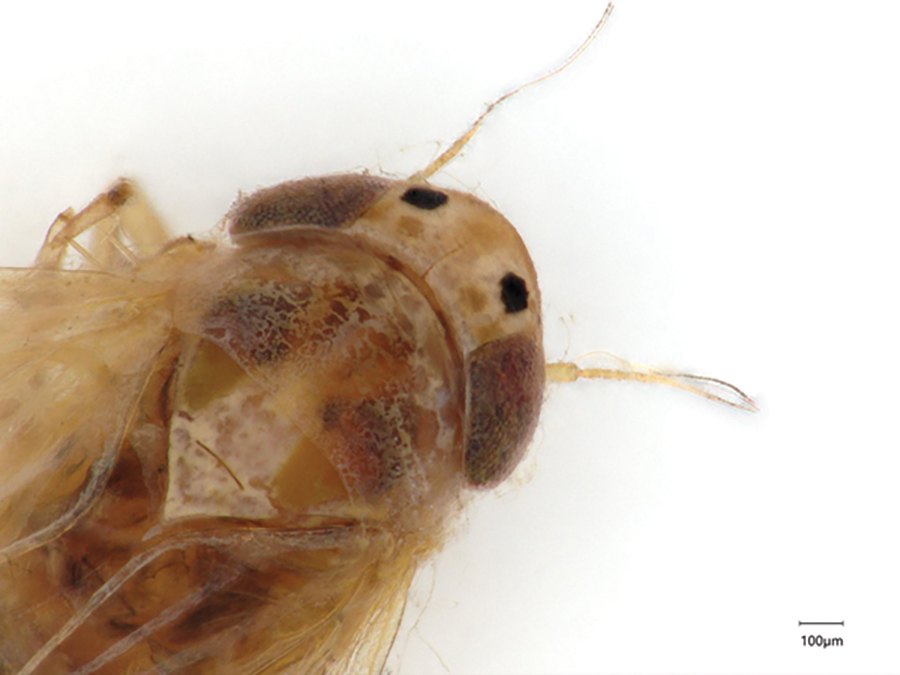
Adult corn leafhopper ranges in size from 3.7 to 4.3 mm, and they are mostly a solid white, yellow or tan color with two distinct black spots on the forehead. From above, these spots have an uncanny resemblance to nostrils. Besides these black “nostrils,” corn leafhoppers have a clean face and no other body markings, which helps distinguish them from other leafhoppers.
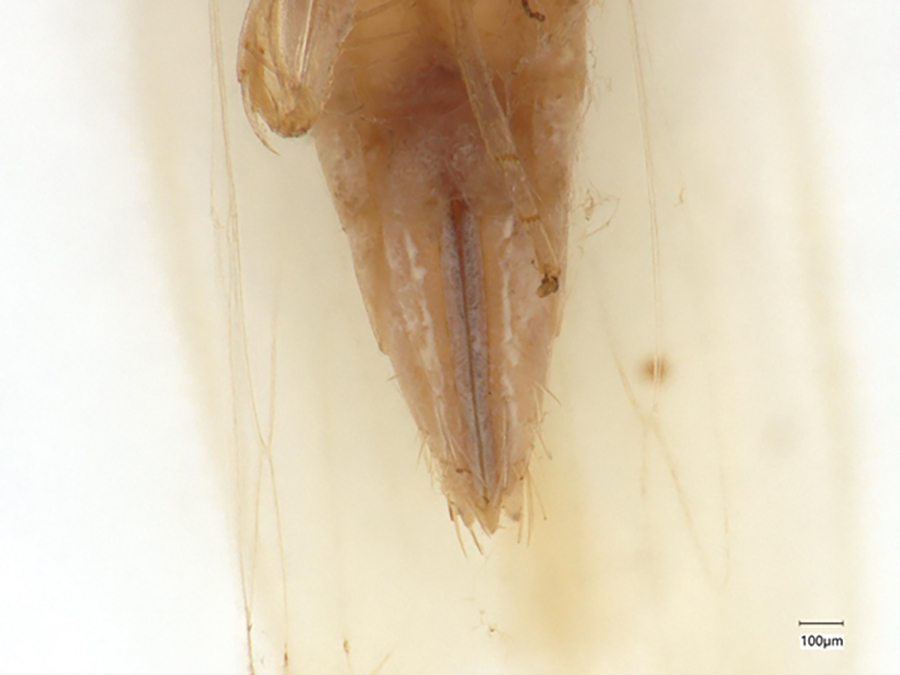
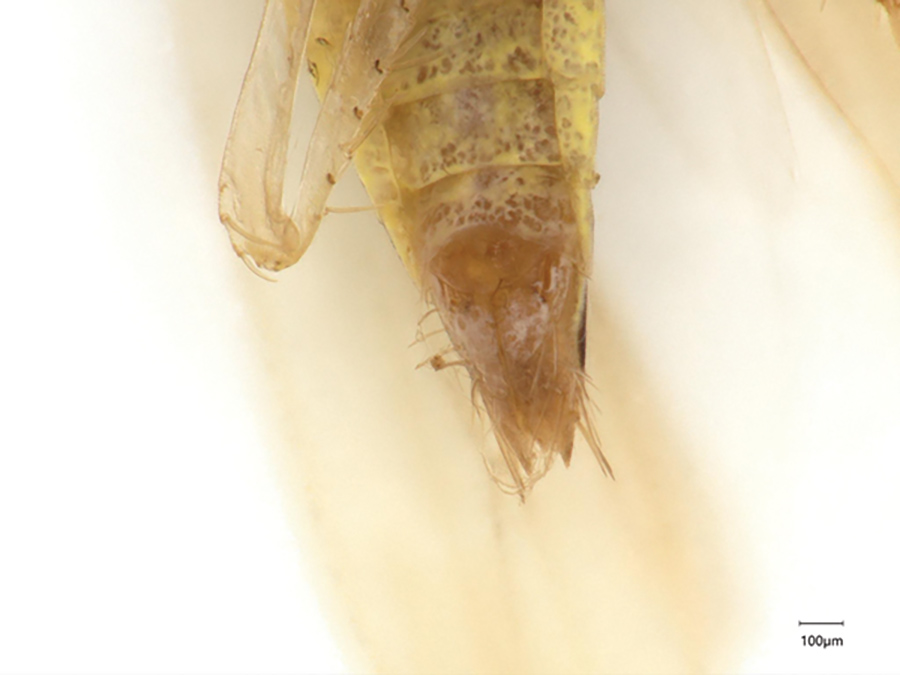
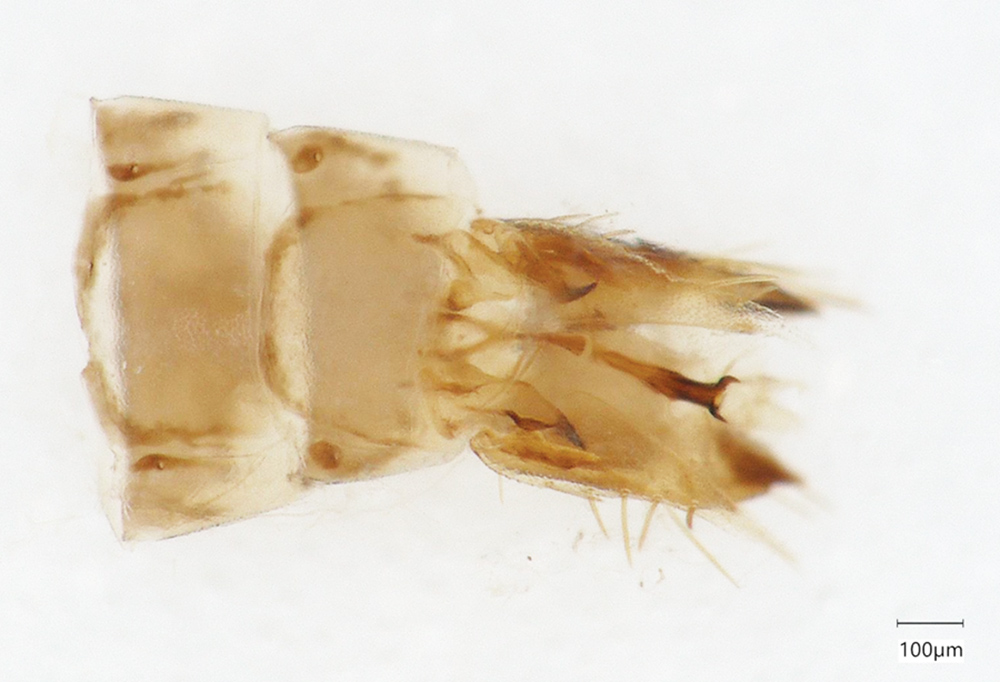
To confirm the leafhopper species, males must be dissected to verify that there are two hooks on the genitalia. Females are like males in size and coloration. They are typically collected with corn leafhopper males, and their pregenital abdominal segment has a hollow, needle-like ovipositor. Nymphs are shaped like miniature adults with similar coloration, but the black spots on the forehead are lighter or absent.
Dorsal view of an adult corn leafhopper. Photo by Doris Lagos-Kutz.
Dorsal view of the head showing the two distinct black spots on the forehead. Photo by Doris Lagos-Kutz.
Ventral view of the last abdominal segments of a female corn leafhopper. Photo by Doris Lagos-Kutz.
Ventral view of the last abdominal segments of a male corn leafhopper. Photo by Doris Lagos-Kutz.
Ventral view of male genitalia without skin tissue showing aedeagus, styles, and connective. The two hooks in the male genitalia are one of the diagnostic characters to identify the corn leafhopper. Photo by Doris Lagos-Kutz.
Life Cycle
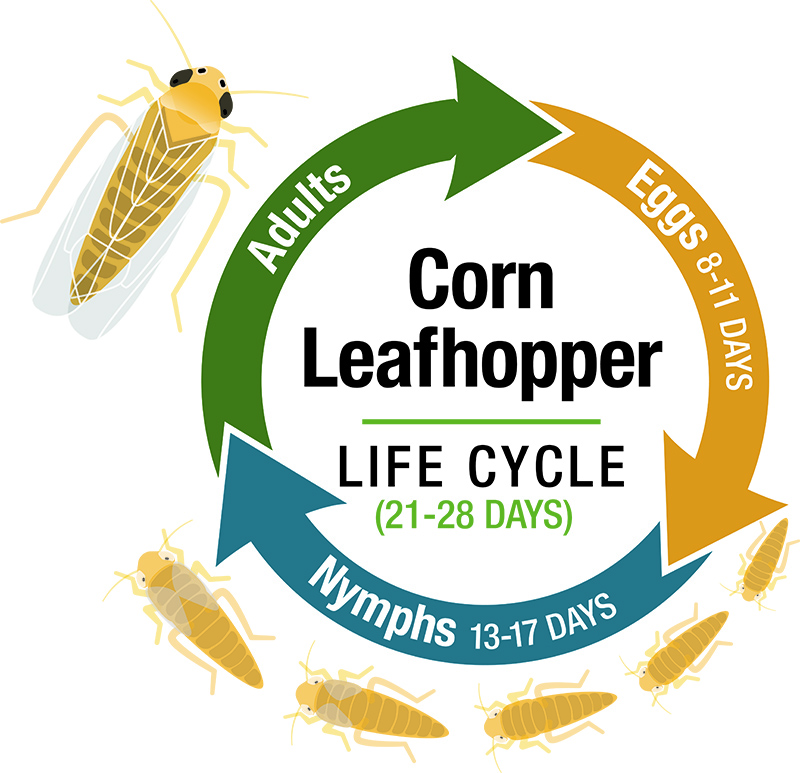
It takes about 4 to 6 days for corn leafhopper eggs to hatch after they are laid inside the leaf tissue (midrib) of corn plants. Corn leafhoppers develop through gradual, or incomplete, metamorphosis, passing through five nymphal stages directly into adulthood without a pupal phase.
Each nymphal instar lasts about 3 to 4 days, unless cool temperatures cause a delay. Adults can live between 28 and 80 days. While females typically have shorter lifespans, once they reach maturity, females lay an average of 15 eggs per day.
Corn leafhoppers are migratory insects that move northward from Mexico each year. Populations tend to expand north as corn is planted because females will travel in order to lay eggs in young corn plants. Leafhopper populations continue to increase as multiple generations occur within a growing season.
Host Plant or Damage
Adult corn leafhoppers reproduce only on corn and its wild relatives, known as teosintes (Zea spp.). However, they have been found on related grass species such as gamagrass (Tripsacum spp.) and Johnson grass (Sorghum halepense).
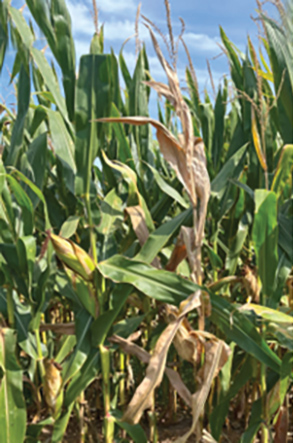
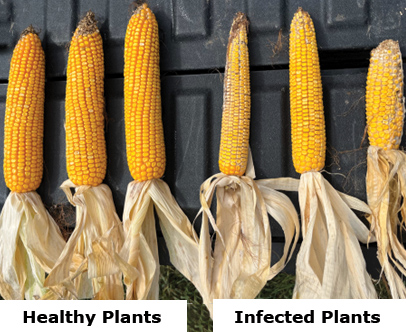
Corn leafhoppers are sap feeders and can damage corn when populations are high, but the main concern is the transmission of corn stunt pathogens. Corn stunt pathogens block nutrient flow in the phloem, causing yellowing or reddening of leaf edges and tips and stunted growth. In severe cases, plants and ears may be weak or deformed.
Symptoms of corn stunt spiroplasma in a corn plant. Photo by Tim Schnakenberg, field specialist at the University of Missouri.
Comparison of ears from healthy corn plants and plants infected with corn stunt spiroplasma. Photo by Tim Schnakenberg, field specialist at the University of Missouri.
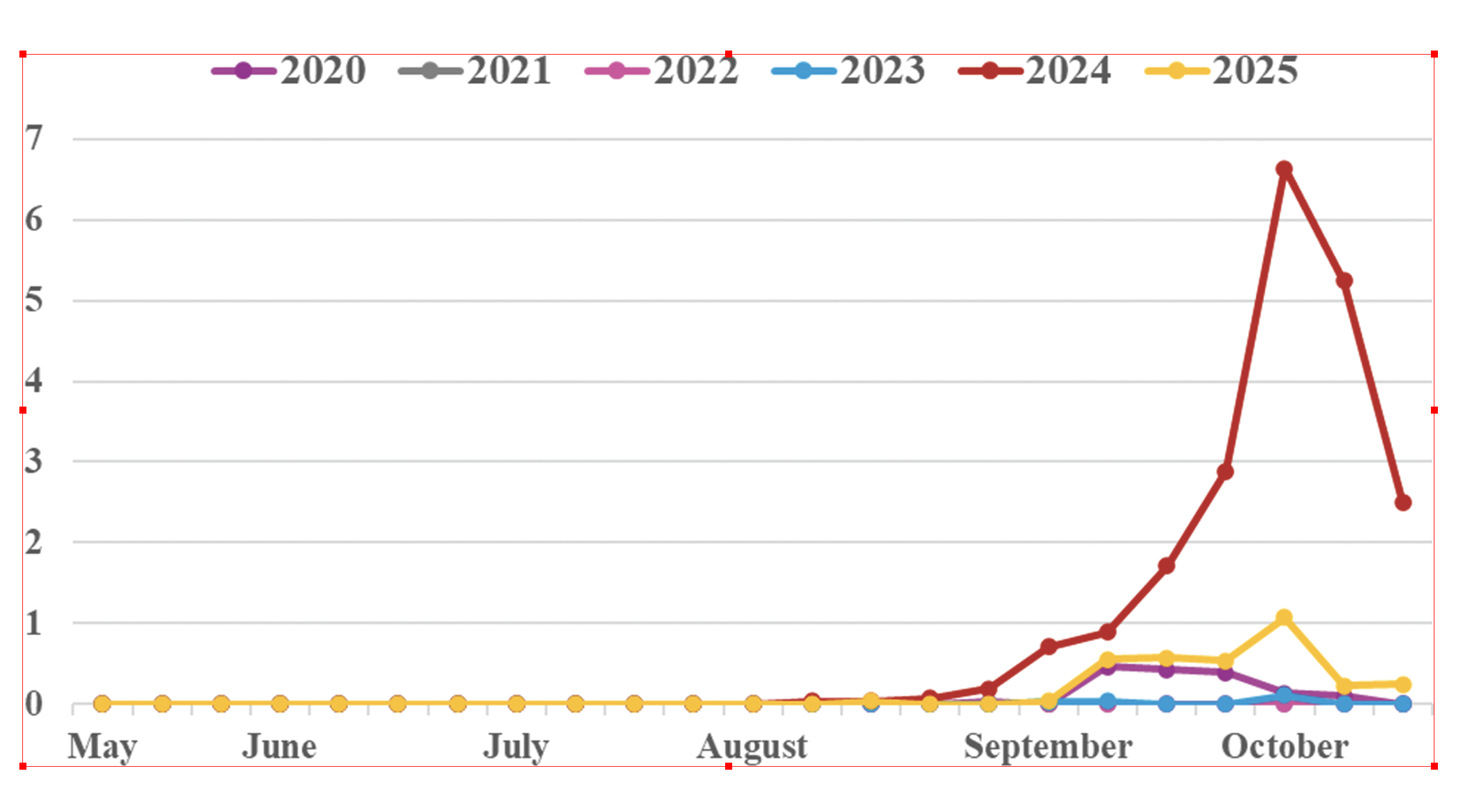
Average number of corn leafhoppers caught in Suction Trap Network between 2020 and 2025 across the Midwestern United States.
Corn Leafhopper Monitoring
In the United States, corn leafhopper and corn stunt disease were first recorded during an outbreak in several states in the 1940s, and a similar outbreak occurred between 1979 and 1980. This combination was observed in the United States again in the summer of 2024 thanks to extensive and consistent sampling by researchers, Extension specialists, and farmers.
The Suction Trap Network monitors corn leafhopper populations as they arrive in the United States each year. Sightings can begin in January in southern Texas and spread northward as the season progresses. In Kansas and Missouri, corn leafhopper populations start to peak in mid-August.
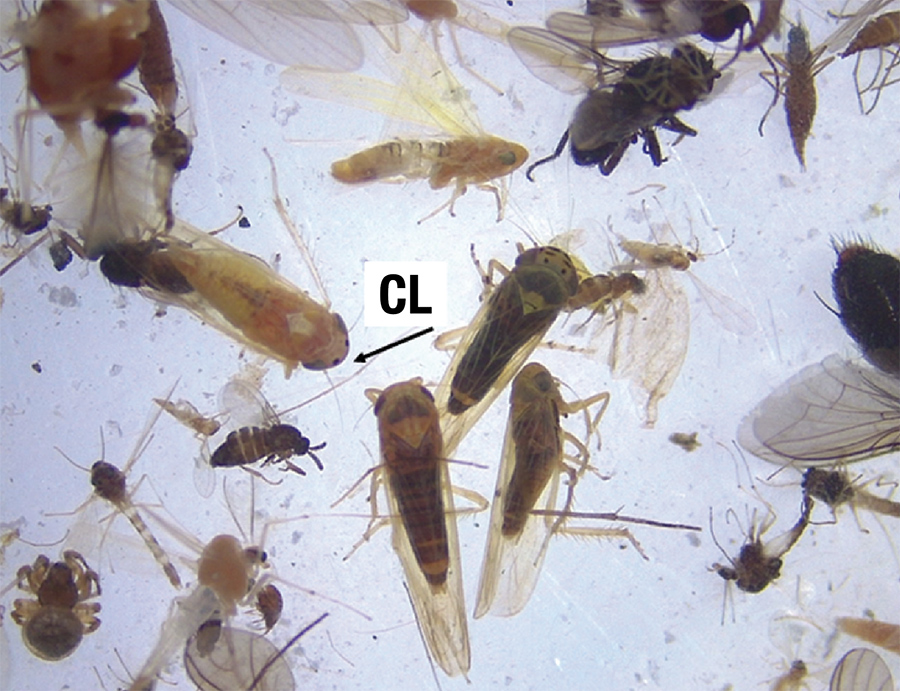
Example of insect sample collected in the Midwestern United States showing the presence of corn leafhopper (CL). Photo by Doris Lagos-Kutz.
Further north, in states like Iowa, Michigan, Minnesota, Nebraska, and Wisconsin, corn leafhopper activity started in mid-August and peaked between mid-September (2020) and early October (2023, 2024, 2025).
Regular field inspections are recommended, using visual assessments, sweep nets, and insect vacuum samplers, along with monitoring via yellow sticky traps. You can stay informed about corn leafhopper sightings using this EDDMapS map.
Questions about the Suction Trap Network and how to identify corn leafhoppers can be directed to Suction Trap Network project leader, Dr. Doris Lagos-Kutz.
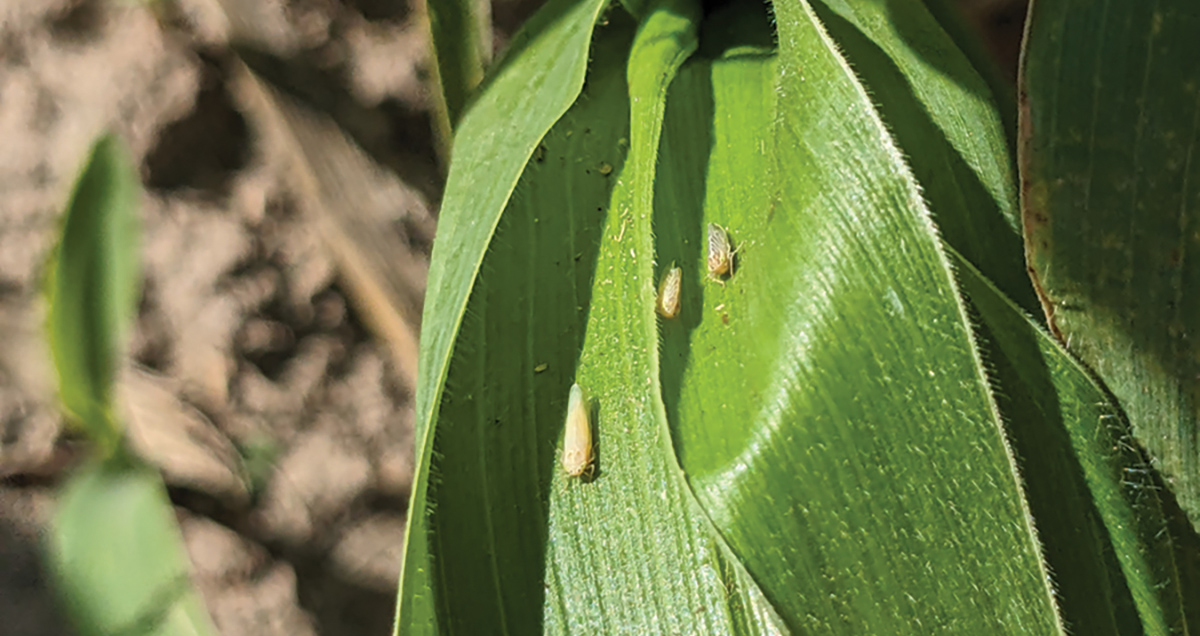
Corn leafhopper found on corn in early October in Illinois. Photo by Nicholas Seiter.
Management
Preventing corn stunt diseases requires active monitoring and management of corn leafhoppers as soon as they are found in fields. Seed treatments provide early season control, but contact insecticides may be necessary until corn reaches the reproductive stages if corn leafhoppers are found.
Your local extension agents are an important source of management information, current population levels and movement of corn leafhoppers.
Acknowledgments
This publication is available thanks to members of the Suction Trap Network and the Corn Leafhopper and Corn Stunt Working Group with special thanks to Dr. Doris Lagos-Kutz (University of Illinois at Urbana-Champaign), Dr. Ivair Valmorbida (University of Missouri), Dr. Raul Villanueva (University of Kentucky, deceased), Dr. Ashleigh Faris (Oklahoma State University) and Maira Rodrigues Duffeck (Oklahoma State University).
This work is supported by North Central Soybean Research Program, the United States Department of Agriculture Hatch #DEL00854, and the Crop Protection and Pest Management Program (2022-70006-38001) from the U.S. Department of Agriculture’s National Institute of Food and Agriculture.
Any opinions, findings, conclusions, or recommendations expressed in this publication are those of the authors and should not be construed to represent any official USDA or U.S. government determination or policy.