August 2026 Central Issue
The August 2026 Central Issue from the North Central IPM Center highlights current integrated pest management (IPM) news, pest activity, research, and upcoming events across the North Central region.
This issue features spotted lanternfly detection and management, upcoming NCIPMC Critical Issue and Working Group grants, USDA and EPA regulatory updates, advances in weed and pest management, soybean aphid and soybean tentiform leafminer activity, sunflower pests, fall armyworm, southern rust, and other seasonal pest concerns. This newsletter also includes IPM podcasts, educational resources, and a 2026 Tick Academy announcement.
Subscribe to receive the Central Issue newsletter monthly via email.
North Central IPM Center Updates
Stay informed with the latest news from the Center with the stories below. Be sure to share your favorites!
Webinar Recording: From Detection to Action: eDNA, 3D Printing, and Grower Outreach for Spotted Lanternfly IPM
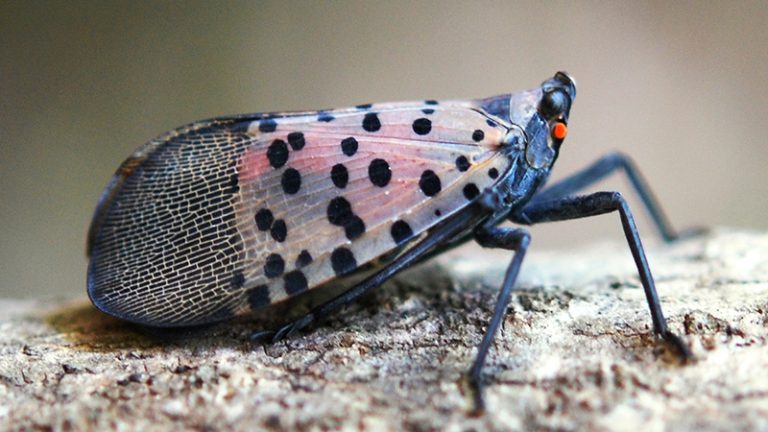
Spotted lanternfly continues to spread across the Midwest, making early detection and grower preparedness increasingly important. In the latest North Central IPM Center webinar, Ohio State University researchers Dr. Ashley Leach and Dr. Natalie Constancio share innovative approaches to spotted lanternfly detection and management, including environmental DNA (eDNA), traditional scouting, trapping, and 3D-printed training tools.
Their research offers valuable insights for growers and extension professionals, including how eDNA can provide an early warning of SLF infestations and how hands-on 3D-printed models can improve identification of SLF egg masses.
Read more about the research, key findings, and implications for spotted lanternfly IPM in the full webinar summary.
Prepare to Apply: Notice of Funding Opportunity Coming Soon
The North Central IPM Center plans to release our Notice of Funding Opportunity (NOFO) in September or early October for our two funding programs—Critical Issues and Working Groups.
Critical Issue grants provide short-term funding to address critical pest issues—including diseases, weeds, insects, and other pests—impacting agricultural crops, livestock, natural ecosystems, urban areas, and human health or safety across the North Central region.
Working Group grants support multi-state and multidisciplinary collaboration among researchers, extension professionals, regulators, and industry stakeholders tackling shared pest management challenges across the North Central region.
Things to Know
- In compliance with updated USDA NIFA terms and conditions, all senior and key personnel will be required to generate both their Biographical Sketch (CV) and Current & Pending Support documents using SciENcv (Science Experts Network Curriculum Vitae). If you do not already have documents within SciENcv, we encourage you to start working with your institution now to set up an account and begin the process.
- For those of you who have applied before, there are changes to how proposals will be submitted, NOFO requirements, and North Central IPM Center priorities. Be sure to carefully read the new NOFO when it becomes available.
Supporting IPM adoption across our region through Critical Issue and Working Group grants is not only central to our mission—it is one of the most rewarding parts of our work.
Our region has always had a strong focus on practical, stakeholder-identified needs, and we continue to be impressed by the ideas, partnerships, and solutions that grow from these grants. We look forward to seeing what you come up with next!
The Big World of IPM
- Invasive Annual Grasses and Indaziflam
Interviewee: Tom Getts from the University of California Cooperative Extension - Perspective Shifts with Silicon
Interviewee: Joanna Bloese from New Mexico State University
I See Dead Plants Podcasts
Aisles Under Attack: Food Distribution and Plant Pests
How does a plant disease in one part of the world affect the food on your grocery store shelves? In this episode, food distribution expert Dr. Sylvain Charlebois from Dalhousie University explores the fascinating connection between plant diseases, global food distribution, and consumer prices.
From supply chain resilience and food security to the economics behind grocery store shelves, learn how everything is connected—from the farm all the way to your fork. Whether you’re interested in agriculture, plant pathology, economics, or simply where your food comes from, this episode offers a fresh perspective on the science and logistics behind feeding the world.
USDA National Institute of Food and Agriculture Update
Here’s the latest news from the USDA National Institute of Food and Agriculture.
USDA Seeks Public Comment on Petition to Deregulate Insect-Resistant Soybean Developed Using Genetic Engineering
USDA’s Animal and Plant Health Inspection Service (APHIS) is requesting public comment on a petition to deregulate a genetically engineered soybean designed to control some lepidopteran pests.
Public comments are being accepted through October 19, 2026. More details are available in the Federal Register.
US Environmental Protection Agency Update
Here’s the latest news from the US Environmental Protection Agency.
Proposed Settlement Agreement: Unreasonable Delay Claim Regarding NRDC Petition
The US Environmental Protection Agency has announced an open comment period on the Natural Resources Defense Council’s (NRDC) petition to revoke all food tolerances for neonicotinoid active ingredients: acetamiprid, clothianidin, dinotefuran, imidacloprid, and thiamethoxam.
Comments may be submitted through September 21, 2026, and must include Docket ID No. EPA-HQ-OGC-2026-6172.
IPM Highlights
Here’s interesting stories related to progress in integrated pest management.
Latest Advances & Challenges in Developing & Implementing IPM
What does it take to develop and implement effective integrated pest management (IPM) programs? This webinar explores the latest advances in IPM as well as the challenges researchers, growers, and other pest management professionals face when putting IPM strategies into practice.
Learn more about emerging approaches, ongoing challenges, and opportunities to strengthen IPM implementation.
Revolutionary Tracking Study Follows Monarch Butterflies
This movement information will help researchers understand migration pathways and identify habitats that are important for monarch conservation. Check out the results from the monarch tags that were deployed in 2025.
Mid-Infrared Radiation Can Bake Some Weeds Instantly
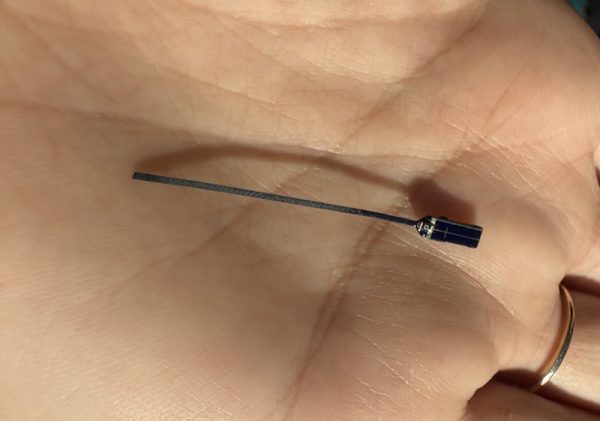
Researchers at Texas A&M University are exploring mid-infrared radiation (MIR) as a potential nonchemical weed control tool. Greenhouse studies found that MIR was highly effective against small broadleaf weeds such as Palmer amaranth, kochia, and ivyleaf morning glory, while some grasses were much more tolerant.
The technology requires more energy as weeds grow larger, making early, targeted applications particularly promising.
Researchers are now moving this work into field studies with the goal of developing precision systems that could selectively “bake” weeds while reducing energy use. Although MIR technology is still several years from commercial availability, researchers emphasize that it would be most effective as one component of an integrated weed management program, rather than a replacement for other weed control strategies.
Pests This Season
Get ready for next year with these learning opportunities.
Late-Season Soybean Aphid Scouting and Management in Minnesota
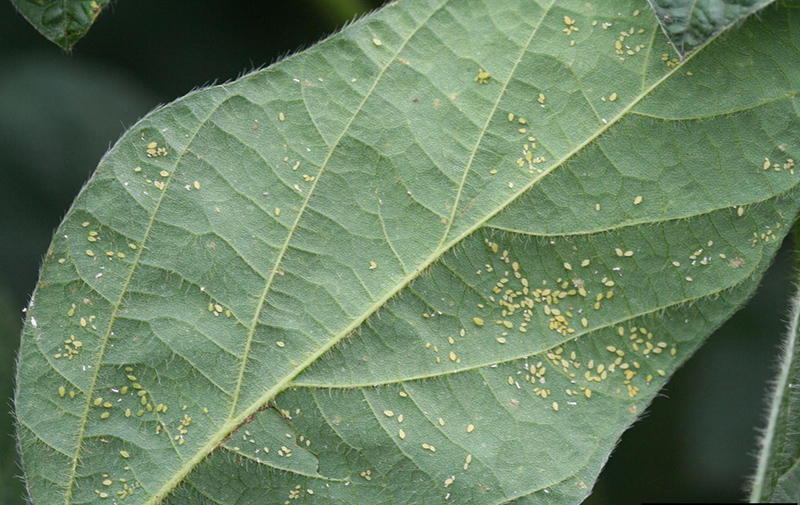
Soybean aphid populations are increasing in some Minnesota fields as cooler temperatures create more favorable conditions for aphid reproduction. Note that pyrethroid-resistant soybean aphids are widespread, and unnecessary pyrethroid applications can actually make aphid problems worse by killing beneficial insects.
Also, if a spray treatment is necessary, be sure to scout for two-spotted spider mites before selecting an insecticide so you can avoid multiple spray treatments.
Red Crown Rot Confirmed in Iowa
Red crown rot (RCR), a soybean disease that can resemble sudden death syndrome (SDS), has been confirmed for the first time in Iowa. The disease was found in a soybean field in Des Moines County in southeast Iowa, where a recurring problem area had previously been attributed to SDS.
Red crown rot causes yellowing and browning between leaf veins, but infected plants can be distinguished by reddish discoloration on the stem near the soil line and, under some conditions, tiny red fungal growths.
Iowa State Extension encourages farmers and agronomists to submit suspected samples to the ISU Plant and Insect Diagnostic Clinic for confirmation; testing is currently free for Iowa farmers thanks to support from the soybean checkoff.
Identifying RCR accurately will be important for preparing for future scouting and management decisions. Researchers are evaluating potential management strategies, including seed treatments, resistant soybean genetics and cultural practices.
Second Finding of New Soybean Pest Confirmed in Missouri
University of Missouri Extension has confirmed a second instance of the soybean tentiform leafminer (Macrosaccus morrisella) in Missouri. This insect was also found in August in 2025.
Since 2021, this leafminer has been reported in Minnesota, South Dakota, North Dakota, Iowa and Nebraska.
Missouri farmers are encouraged to scout soybean fields and contact MU Extension if a suspected leafminer is found. Photos are available in this MU Extension article and in this Journal of Integrated Pest Management paper.
Sunflower Pest Recap
High activity of banded sunflower moths continue across central South Dakota according to South Dakota State University Extension’s latest sunflower pest monitoring report. Arthur’s sunflower moth was also detected at two locations but remained at relatively low levels.
Red sunflower seed weevil populations appear similar to 2025 but are still lower than levels seen from 2019–2024. Growers should continue scouting for seed weevils until sunflowers pass R5.7 (70% pollination), particularly in later-planted fields.
Fall Armyworm Moth Numbers Increasing, Signaling Time to Scout Alfalfa and Pastures
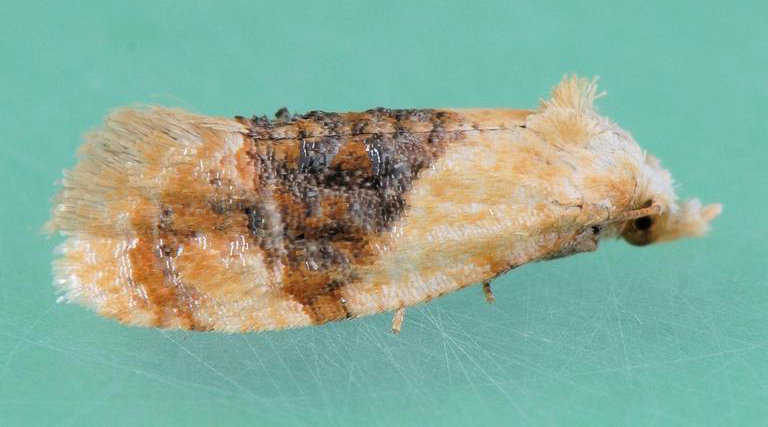
Increasing fall armyworm moth captures in eastern Nebraska are signaling growers to scout alfalfa and pasture fields now. Caterpillars can cause rapid defoliation as they develop, making early detection important.
Nebraska Extension recommends using a sweep net and checking areas with damaged foliage, particularly because caterpillars often hide near the soil surface during the day.
The threshold for chemical control is 2–3 larvae per square foot, but insecticides become less effective as caterpillars grow. For heavily infested alfalfa, cutting may be an alternative when timing permits, although late-season cutting can affect winterization.
Southern Rust Builds in Eight Midwest States, Prompting Questions About Treatment
Southern rust has been confirmed in at least eight Midwest states, including Iowa, Illinois, Indiana, Minnesota, Missouri, Nebraska and Wisconsin, with disease severity varying by location. University and industry agronomists recommend that growers intensify scouting, particularly in late-planted, irrigated and still-filling corn where there may be enough yield potential to justify protecting the crop.
The presence of southern rust does not automatically mean a fungicide application is warranted. Consider disease severity, crop growth stage, weather, field conditions and treatment cost when making field-by-field decisions.
The Crop Protection Network’s interactive map and return-on-investment tools can help inform management decisions.
Events
Learn and network at these upcoming in-person events.
Tick Academy
The 2026 Tick Academy will be held Wednesday, October 14, and Thursday October 15, from 11:00 a.m. t0 3:30 p.m. ET (10:00 a.m. to 2:30 p.m. CT).
Early bird pricing ends this Sunday, August 31! Be sure to register before prices increase.
Job Board
Consider applying for these job opportunities.
Lead Landscape Architect, Frisella Nursery Inc – Richmond Heights, Missouri
Landscape Spray Technician, Frisella Nursery Inc – Richmond Heights, Missouri