June 2024 Central Issue

News stories shared in the June 2024 Central Issue appear below. Subscribe to receive the Central Issue newsletter monthly via email.

North Central IPM Center Updates

One Million Acres of Monarch Habitat Established

Prairie with flowering plants around power lines

In April of 2020, the Rights-of-Way as Habitat Working Group finalized the Candidate Conservation Agreement with Assurances (CCAA) for energy and transportation lands to support the monarch butterfly. Since then, over 1 million acres of pollinator habitat have been committed for monarch conservation! The Rights-of-Way as Habitat Working Group now has more than 50 partners enrolled in the agreement across 42 states, building partnerships to support habitat conservation at a national level.

You can learn more about the Rights-of-Way as Habitat Working Group on their website, and more achievements are summarized in this 2023 CCAA Annual Report.

3D Printing Takes Shape in IPM Research: A Successful Workshop at NC APS

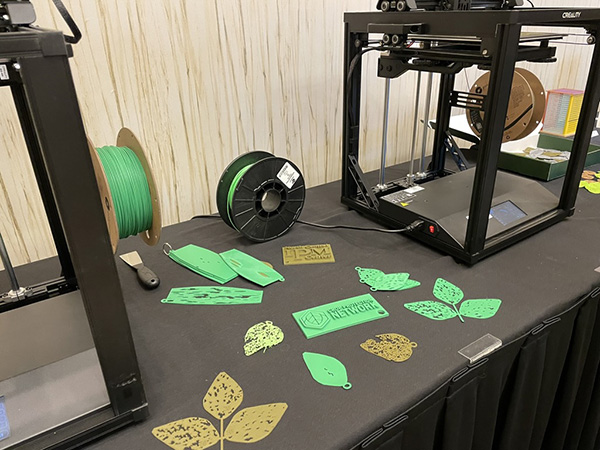
People gathered around 3d printing machine demonstrationThe North Central Division of the American Phytopathological Society meeting in Manhattan, Kansas hosted a successful 3D Printing Workshop on June 12th, drawing 45 attendees. Led by project directors from The Ohio State University and Iowa State University, the workshop explored how 3D printing can revolutionize integrated pest management (IPM) practices.

Traditionally, visual assessment of crop disease and insect damage can be subjective. 3D printing offers a unique solution: tactile training tools. By interacting with physical models, participants gain a deeper understanding of various damage levels, improving data collection accuracy. The workshop featured presentations by industry experts who demonstrated 3D printers in action. Attendees learned about materials needed, the 3D printing library being developed, future applications, and the benefits for crop scouts, researchers, and extension educators. A recording will be available soon.

Join the group! The Tactile Toolbox Working Group is building a community to explore the potential of 3D printing in IPM. If you’re interested in improving diagnostics, assessment, and decision-making in IPM, join the group to stay informed. By signing up, you will be added to the group’s online collaboration space on Basecamp.

3d printers sitting on table with examples of 3d-printed leaves

3D printers next to examples of 3D-printed leaves and logos.

Reminder: June Webinar Date Change

The June Pests and Progress webinar date has changed to Wednesday, June 26. Join in to learn about the basics of the Endangered Species Act and conservation measures for protecting at-risk species from Dr. Adam Janke from Iowa State University. If the new timing does not work with your schedule, the session will be recorded and available on the Center’s YouTube Channel.

New Episodes—I See Dead Plants Podcasts

Pollinator Special Section

New Prairie Strip Partial Budget Tool

Prairie strips are a conservation practice that can be used in farm fields, and they provide benefits, such as reducing nutrient loss, preventing soil erosion and also providing pollinator habitat. When installed in the right areas, the strips save money because seeds are not wasted in areas of the field that do not yield well. The new Prairie Strip Budget Tool from Michigan State University helps farmers estimate the costs and savings of installing prairie strips in their fields.

Bumble Bee Atlas Project

Bumble Bee Atlas logoThe Bumble Bee Atlas project is a citizen-science project focused on collecting bumble bee data to better understand population declines and to implement effective conservation efforts. So far, 20 states have joined the project, including the North Central states of North Dakota, South Dakota, Nebraska, Kansas, Minnesota, Iowa and Missouri.

Free online workshops teach everything you need to know to catch and release bumble bees and help with the survey. The Bumble Bee Atlas is led by the Xerces Society for Invertebrate Conservation. 

Your Hub for Illinois Pollinators

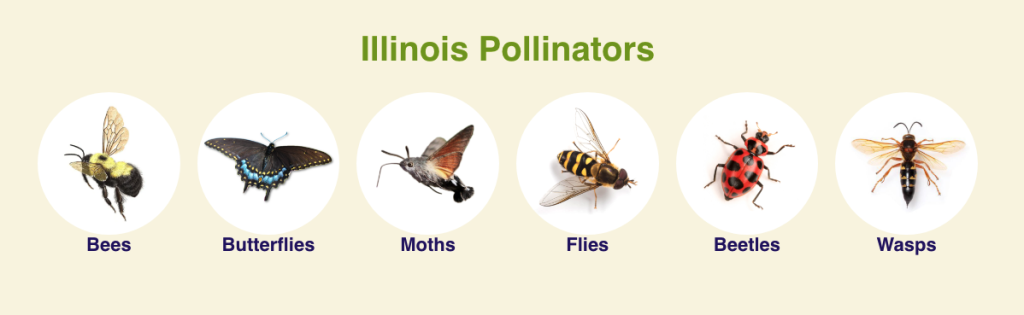
Helping pollinators just became easier. The University of Illinois Extension horticulture team launched a new website in March to share information about pollinators, from basic information about pollinators to what plants they use, how to design pollinator gardens and even what research is happening. Don’t miss the plant selector tool, which allows you to select options such as light conditions, soil conditions, bloom time and flower color to find plants you may want to include in your garden.

Illinois Pollinator categories: bees, butterflies, moths, flies, beetles and wasps

Illinois Pollinator categories: bees, butterflies, moths, flies, beetles and wasps. Image is from the new Illinois Pollinators website.

The Use of IPM in Beekeeping to Control Parasitic Varroa Mites (webinar)

Dr. Robyn Underwood, Penn State’s extension educator of apiculture shares a variety of options for controlling Varroa mites in bee hives. Integrated practices such as breeding for mite resistance, cultural and mechanical controls, and chemical controls for both organic-approved and synthetic are discussed.

Pollinator Research

Pollinator Planting Establishment and Bee Visitation
are Influenced by Seeding Rate and Post-Seeding
Management

When large areas are planted with native species to support pollinators, it’s helpful to know what preparation and management is needed to help the seedlings thrive. Researchers tried several techniques to evaluate the effects of pre-seeding weed control, seeding density and post-seeding management. Increasing seeding density has a direct impact on the number of wildflowers established in years one and three, and site preparation that included mowing, herbicide spraying or cover crops reduced the weed populations in the plots.

Neonicotinoid Exposure Worsens Varroa Mite Infestations in Honey Bees, Study Shows

In the last decade, researchers have been working to understand colony collapse disorder in bee hives. Both neonicotinoid use and Varroa mite infestations have been suspected culprits, but what if the interaction is more complex? Researchers recently found that two neonicotinoids may increase Varroa mite infestations among honey bees.

Project GNBee (Ground Nesting Bees!)

Project Ground Nesting Bee (GNBee) is working to understand the habitat needs for native ground nesting bees. Volunteer community scientists are needed to find and report nesting sites of ground nesting bees. This data will be used to create bee habitat near agricultural areas to improve fruit production. People from all over the world may report sightings using iNaturalist.

New Study Reveals that Bees Cannot Taste even Lethal Levels of Pesticides

A research study at the University of Oxford shows that bumblebees consumed the same amount of food, regardless of whether they were given plain nectar or nectar containing neonicotinoid or sulfoximine pesticides, even when pesticide concentrations are lethal. This suggests that the bees would not avoid nectar sources that have been sprayed with pesticides near agricultural fields, where bumblebees could be useful to help pollinate crops.

Small-Scale Beekeepers Earn More With Best Management Practices

Most beekeepers in the United States have small-scale hive facilities housing 50 colonies or fewer. The economics of small-scale beekeeping is not well understood, but a recent study from the University of Maryland and Washington State University showed that beekeepers that used best management practices were more profitable, despite impacts from parasites, pathogens, pesticides or inadequate nutrition.
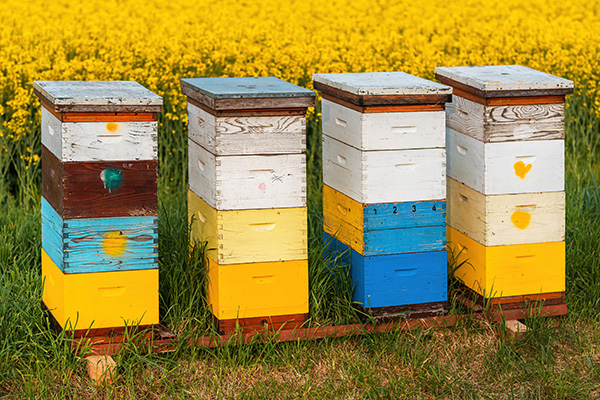
Four wooden bee hives near a flowering field
Wooden beehive boxes in a blooming canola field. Photo from AdobeStock.

IPM Hour Webinar – Asymmetric Species Responses to Hot Weather

In this webinar, Dr. Mitzy Porras, assistant professor at San Francisco State University discusses her research, which examines interactions between solitary bees, a pathogen called Crithidia than infects them, fungicide exposure and heat waves.

Bees Follow Linear Landmarks to Find their Way Home, just like the First Pilots 

Honey bees are well known for their navigation abilities. A study in Germany shows that the bees use landmarks, such as streams, rivers, field edges and roads to guide movements. When bees were released in unfamiliar locations, they looked for landmarks they were used to seeing and flew parallel to them, likely in search of their home hive. Before the invention of GPS, pilots used similar strategies to navigate.

IPM Highlights

Nebraska-Developed Wheat Variety to Address New Fungal Threat
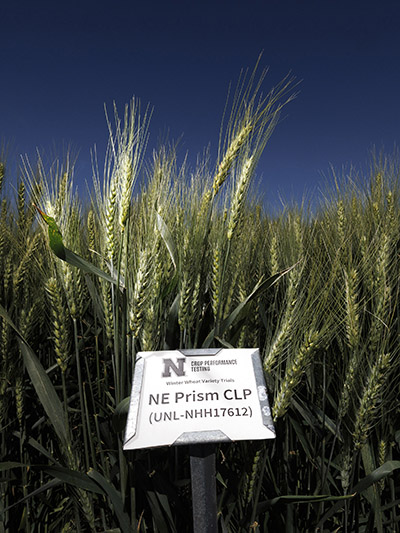
Wheat growing in field with the NE Prism CLP label
Photo by Craig Chandler, University of Nebraska, Communication and Marketing

A new wheat variety called NE Prism CLP has been released from the University of Nebraska-Lincoln. This new cultivar has improved resistance to fungal disease, including fusarium head blight, which was a problem for western Nebraska farmers in 2023. The disease is difficult to detect until it is widespread and affects yields and contaminates grain with mycotoxins.

Since fusarium head blight can be hard to detect, it is also beneficial to know whether conditions favor the disease in your area. This Fusarium Risk Tool maps the likelihood of fusarium head blight across the United States.

Bats Are the Perfect Predator for Destructive Moths — If Farmers Can Coax Them In

Codling moths are a key pest in apple orchards, where their caterpillars invade and eat apples from the inside. Unchecked, a population can destroy an entire crop. Insecticide control is limited, and multiple generations of codling moth hatch each season. Perhaps a natural predator can help. Bats are known to eat thousands of insects in one night. Recent research in Italy shows that bats do help reduce moth numbers and fruit damage. However, more work is needed to determine how to encourage bats to live and hunt in the orchard areas where their presence is needed.

Making New Endangered Species Rule Workable

A workshop held in the Western United States recently explored logistics of restrictions for pesticide use that would protect endangered and threatened species and their habitats. The 40 attendees want the restrictions to work… for both protecting at-risk species and for farmers. The attendee’s collaboration led to suggestions that may help the effort to succeed nationally.

Pests This Season

Alfalfa Weevil Season Begins in 2024

Alfalfa weevils are showing up in Minnesota, but treatment may not be necessary. Learn how to scout for and identify alfalfa weevils as well as how to manage them when needed.

First 2024 Cucurbit Downy Mildew Spores Identified (MI)

It’s time to start scouting for cucurbit downy mildew in Michigan. The first spores have been confirmed in Saginaw County, although no disease outbreaks have been confirmed. Follow the Downy Mildew News page to stay informed about spore trap results and related news.

Western Bean Cutworm Moth Monitoring (IN)

Join the monitoring effort for western bean cutworm moths in Indiana. Traps should go out this week, but you can still request traps. Peak activity is expected in two to three weeks. Monitoring for this moth is important as the Bt traits are becoming less effective at controlling this pest.

Tar Spot and Fungicide Applications

Tar spot has been found in northeast Kansas, east central Iowa, and northern Indiana in 2024 so far. Now is a great time to review details about what conditions favor tar spot, management options and the importance of treatment timing.

Events

IPM Symposium Webinar Series

A new biologic product has the potential to reduce the spread of Lyme disease, but the process of making the product widely available may not be straightforward. Join Dr. John Brooke with US Biologic on Tuesday, June 25 at 2:00 pm ET (1:00 pm CT) to learn about commercialization of biological products and how companies with a breakthrough technology can unexpectedly struggle when new methods don’t fit existing regulations. A recording will be available.

The 11th International IPM Symposium 2025 will be in San Diego, CA, March 3-6, 2025. Registration opens soon!

Job Board

Extension Educator –Terrestrial Invasive Participatory Science, University of Minnesota

Water & Cropping Systems Extension Instructor, University of Nebraska-Lincoln

Research Associate, Entomology Agriculture And Natural Resources, Michigan State University