
360-Degree Field Tours Highlight Three Detroit Urban Farms
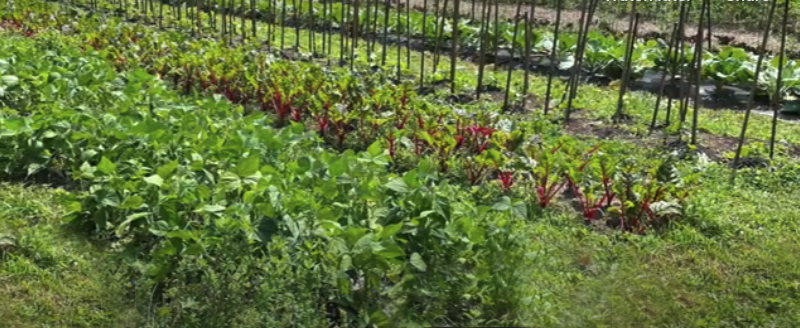
Urban farms have the potential to earn as much as $10,000 per half acre, but each urban farm is unique, especially when compared to rural farms. Check out these virtual tours of three urban farms in Detroit, Michigan.
Watch the tours to learn about a no-till system, insect pests and management options in urban settings, and equipment challenges and opportunities in small spaces. These virtual tours were created by the Great Lakes Urban Agriculture Working Group.
Webinar Recording: Ecological Epidemiology of the Invasive Asian Longhorned Tick, Insights from Ohio

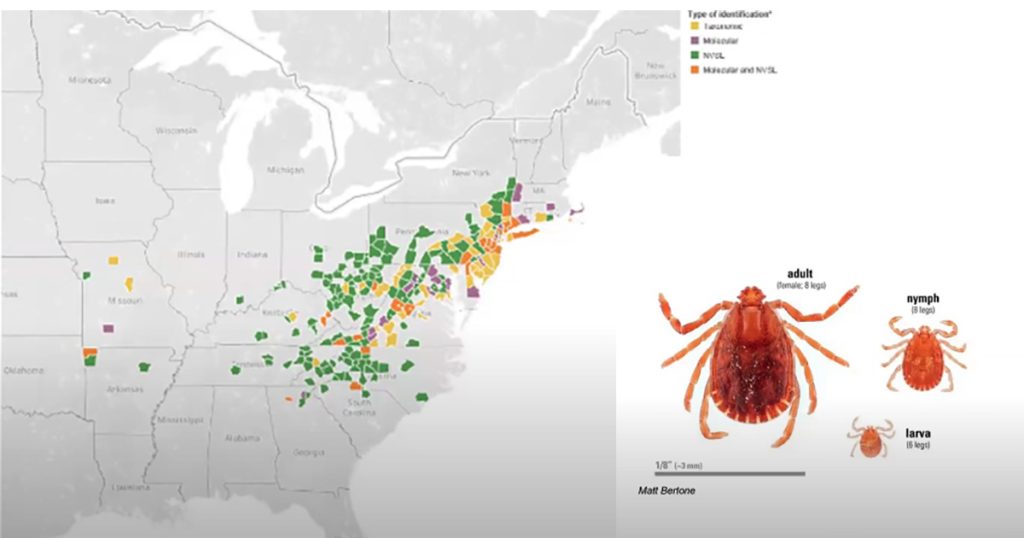
Asian longhorned ticks (ALHT) are special. If one tick makes it to a new location, it can begin a new ALHT population all by itself. This is because most ALHTs are female, and they can clone themselves, laying up to 2,000 eggs. This reproductive superpower means that treatment for ALHT infestations may need to begin sooner than we would treat other tick population explosions.
In this webinar, Dr. Andreas Eleftheriou, a veterinary public health resident in the Department of Veterinary Preventive Medicine at The Ohio State University, shared recent research on the ALHT population in Ohio.
Watch the webinar to learn whether the ticks were found to carry any infectious pathogens, what habitats they inhabit, what host species they prefer, when they are active and special management considerations for this rapidly reproducing species.
New Episodes: War Against Weeds Podcasts
- Poison Hemlock
Interviewee: Dr. Bill Johnson from Purdue University - Broadleaf Weeds in Rangelands
Interviewee: Dr. Brian Mealor from the University of Wyoming; Director of Sheridan Research & Extension Center; Director of the Institute for Managing Annual Grasses - Weed Control Failures
Interviewee: Dr. Peter Sikkema, (retired) from the University of Guelph - Interseeding
Interviewee: Dr. Karla Gage from Southern Illinois University
New Episodes—I See Dead Plants Podcasts
The most recent episodes of “I See Dead Plants” focus on the southern corn leaf blight epidemic that occurred in 1970.
Interviewees include Dr. Snook Pataky, professor emeritus at University of Illinois; Dr. Sung Lim, former department chair and retired professor from the University of Arkansas plant pathology department; and Dr. Dave Smith who has been employed at Dekalb, Monsanto and Zea Sage.
Researcher Uses Automated Imaging Technology for Fast Detection of Destructive Soybean Pest
Detecting nematodes is a challenge because these parasites are so tiny that they cannot be seen with the naked eye during most life stages. Dr. Lei Zhang is working with PhD student Vijay Kunwar, the Ag Alumni Seed Phenotyping Facility team and Dr. Jianxin Ma to find a way to detect nematodes fast and early using two imaging technologies called hyperspectral imaging and chlorophyll fluorescence imaging.
Both the hyperspectral imaging and the fluorescence imaging focuses on the leaves to detect changes in photosynthesis caused by the nematode infection.
Here’s Your Chance to Name a Bug!
The Entomological Society of America (ESA) is working to make sure that insect common names are respectful and descriptive. You can join the Better Common Names Project to suggest insect names that need to change or to join a working group to study, evaluate, and propose new common names.
Help is needed to review names of the nine insects listed below.
- Japanese beetle (Papilia japonica)
- Japanese broadwinged katydid (Holochlora japonica)
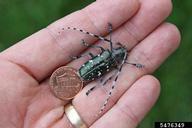
Male Asian longhorned beetle. Photo by Joe Boggs. Asian longhorned beetle (Anoplophora glabripennis)
- Asian longhorned tick (Haemaphysalis longicornis)
- Asian citrus psyllid (Diaphorina citri)
- Asian subterranean termite (Coptotermes gestroi)
- Oriental stink bug (Plautia stali)
- Asiatic rice borer (Chilo suppressalis)
- African mole cricket (Gryllotalpa africana)
Preparing for Next Season
Do’s and Don’ts for Managing Invasive Plants in the Spring: Webinar
Learn what weeds are best managed in the spring, along with effective management methods from Christopher Evans, forestry extension and research specialist with Illinois Extension. This free webinar will be held on Thursday, April 11 at 2 p.m. ET (1 p.m. CT).
Early Season Soil Tarping Impacts on Weed Pressure and Onion Yield
Onions have a small canopy that provides weed seeds with plenty of sunlight to aid germination. In this study, tarps were used to shade soil to reduce weed germination. Weed pressure was reduced, but onion yield did not improve.
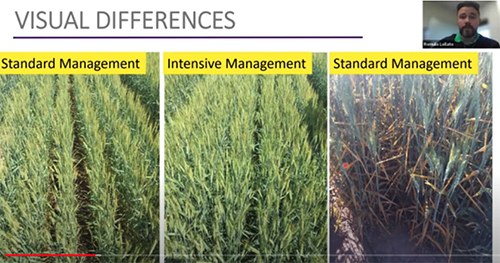
Management Tactics in Wheat Production (video)
Learn how to increase wheat yields in Kansas with Dr. Romulo Lollato, extension wheat specialist from Kansas State University.
Strategic Farming 2024: Fungicides for Managing Specific Corn and Soybean Diseases (video)
A number of fungal pathogens can reduce soybean yield. Dr. Kiersten Wise, professor and extension plant pathologist from the University of Kentucky, shares insight into how fungicide efficacy ratings are generated so you can choose the best product for your needs.
Free Wheat Virus Testing in 2024–MO
The University of Missouri Plant Diagnostic Clinic is providing free testing for five wheat viruses in 2024: wheat streak mosaic virus (WSMV), wheat spindle streak mosaic virus (WSSMV), soil-borne wheat mosaic virus (SBWMV), barley yellow dwarf virus (BYDV), and cereal yellow dwarf virus (CYDV). Now is a great time to submit samples.
2023 Evaluation of Newly Established Clover Cover Crops as a Living Mulch for Sustainable Broccoli Production
Clover cover crops were grown as a living cover crop during broccoli production. While clover cover crops can help reduce soil erosion, provide nitrogen and suppress weeds, broccoli crops and yields were significantly affected. It is not recommended to plant broccoli into kura clover, red clover or white clover.
Research
Spotted Lanternfly Reveals a Potential Weakness
Spotted lanternfly nymphs and adults are attracted to 60 Hz vibrations. This offers interesting opportunities for the development of traps and lures.
Shattercane Populations on Rise in Midwest Fields
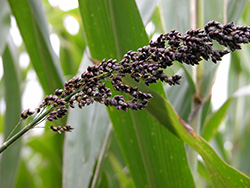
Shattercane weed populations are increasing in Midwestern corn fields. Research at the University of Missouri (MU) shows that shattercane can germinate whenever moisture is available, even as late as September. Shattercane can produce seed within three weeks so new scouting and management strategies may be needed. MU researchers are also screening shattercane seedlings for resistance.
Applications of Germicidal Ultraviolet Light as A Tool for Fire Blight Management (Erwinia amylovora) in Apple
Exposure to germicidal UV light (UV-C) at night was tested as a treatment for fire blight, which is caused by the Erwinia amylovora bacterium. Two night UV-C applications while apple trees were blooming were shown to be as effective as standard treatments with antibiotics or biopesticides.
Loss-of-Function of an α-SNAP Gene Confers Resistance to Soybean Cyst Nematode
A soybean resistance gene called GmSNAP02 provides soybean plants with a unique mode of resistance to soybean cyst nematode (SCN). Using this gene to add variety to commercial soybean cultivars will provide additional options for integrated pest management in fields with SCN.